State Of Charge serves as a premier destination for all things electric vehicles, offering in-depth reviews, rigorous range tests, and thorough analyses of EV charging infrastructure. This distributor is committed to providing viewers with the most current and comprehensive information available in the rapidly evolving world of electric mobility.
With a focus on practical insights and user-focused content, State Of Charge demystifies the complexities of EV ownership. From evaluating the latest automotive innovations to exploring the nuances of charging solutions, the channel equips enthusiasts and prospective buyers with the knowledge needed to navigate the transition to electric transportation.
With a focus on practical insights and user-focused content, State Of Charge demystifies the complexities of EV ownership. From evaluating the latest automotive innovations to exploring the nuances of charging solutions, the channel equips enthusiasts and prospective buyers with the knowledge needed to navigate the transition to electric transportation.

How Many Amps Do You Need For Home EV Charging?
This video provides a comprehensive guide to selecting the appropriate amperage for home EV charging. The host clearly explains essential EV charging terminology, differentiating between EVSE and onboard chargers, and detailing Level 1, Level 2, and DC fast charging. Key considerations for choosi...


Latest Additions
Showing 24 of 276 total titles. Page 10 of 12.

Tesla Supercharger vs Electrify America With CCS1 Adapter: Which Charges Faster?
This video provides a detailed comparison between charging a 2021 Tesla Model 3 on an Electrify America 350 kW charger using a CCS1 adapter versus a T... moreesla V3 Supercharger. The reviewer found the Electrify America station surprisingly competitive, even beating the V3 Supercharger in their initial 0-100% charging session, particularly in the crucial 0-80% range. Key takeaways include the adapter enabling faster charging on non-Tesla networks and the Model 3's generally strong charging curve. However, the reviewer notes potential discrepancies in reported energy delivery between the car and the charger, and acknowledges that the V3 Supercharger comparison might be skewed due to battery degradation and a different pre-charge driving condition. The video also emphasizes the importance of home charging for most EV owners and recommends professional installation for home charging equipment. Ultimately, the CCS1 adapter is presented as a valuable tool for those who frequently road trip, effectively doubling charging location options. less

Tesla And Non-Tesla EV Charging Adapters: Everything You Need To Know
This video provides a comprehensive overview of EV charging adapters, focusing primarily on the North American market. The reviewer meticulously detai... morels various adapters, categorizing them into those enabling Teslas to use non-Tesla chargers (J1772) and those allowing non-Tesla EVs to use Tesla chargers (Tesla to J1772). A significant portion is dedicated to DC fast charging adapters, including CHAdeMO to Tesla and CCS1 to Tesla. The reviewer strongly advises against third-party CCS1 to Tesla adapters (like Lectron/CTEK and EVHub) due to Tesla's firmware updates that block their functionality and potential safety concerns regarding locking mechanisms. The Tesla-manufactured CCS1 to Tesla adapter is highly recommended for its compatibility, safety, and affordability. For non-Tesla EVs, the video clarifies that they cannot currently use Tesla Superchargers, though Tesla plans to open its network. The reviewer also emphasizes the importance of safety in EV charging installations, recommending professional help for home charging setups. Overall, the video is informative, practical, and safety-conscious, guiding viewers through the complex world of EV adapters. less

How Fast Does The Rivian R1T Charge? We Have The Full Analysis
This video provides a comprehensive analysis of the Rivian R1T's DC fast charging capabilities, utilizing a 350 kW Electrify America charger. The... more R1T demonstrates impressive initial charging speeds, reaching over 200 kW within minutes and maintaining over 150 kW until 45% state of charge, averaging 183 kW during this initial phase. However, the charging rate significantly tapers off after 75% state of charge, with the final 10% taking a disproportionately long time. The reviewer highlights that while the R1T's peak charging rate is higher than the Ford F-150 Lightning, their 15-80% charging times are nearly identical, suggesting the charging curve is more critical than peak speed. The cost of a full charge on Electrify America is noted at $46.28 without a membership, making home charging a more economical and convenient option for daily use. The reviewer advises against charging past 90% at a DC fast charger due to diminishing returns in added range per minute. less

How Fast Will The Ford F-150 Lightning Charge?
This video provides an in-depth analysis of the Ford F-150 Lightning's DC fast charging capabilities, utilizing exclusive data provided by Ford. ... moreThe reviewer tested a charge from 61% to 90% state of charge, adding 29% in 30 minutes and dispensing 41.2 kWh. While the initial charging rate peaked at 142 kW, it quickly settled around 117-121 kW until 80% state of charge, after which it dropped significantly to 59 kW and then 30 kW by 90%. The reviewer emphasizes that most owners will charge at home, but for long-distance travel, a 0-90% charge is estimated to take around 1 hour and 7 minutes. While Ford's data suggests a 15-80% charge in 41 minutes (averaging 138 kW), the reviewer believes Ford can improve the 0-90% time by about 15 minutes to make it more competitive for towing and hauling needs. The reviewer is generally satisfied with the current performance, noting it's workable, but anticipates future over-the-air updates to further enhance charging speeds. less

Is the EcoFlow Delta Pro the Perfect Portable EV Charging Station?
The EcoFlow Delta Pro is evaluated as a portable power bank with the capability to charge EVs, rather than a dedicated EV charging solution. While it ... moreoffers extensive features for home backup power and general portable use, its effectiveness for EV charging is limited. The reviewer found that charging a Tesla Model 3 from 87% to 90% state of charge (adding 12 miles of range) took a lengthy two and a half hours using a 120V connection. A significant drawback is the need for a special grounding plug and a specific 240V adapter for faster charging, which are not included. Compatibility issues were also noted, with the Delta Pro failing to communicate with popular home charging stations like the ChargePoint Home Flex and NLX JuiceBox, although it did work with a public ChargePoint station. The reviewer highlights its impressive multi-recharge options (including EV charging stations) and a user-friendly app as positives. However, the substantial 99-pound weight and a high price tag of $3,600 make it impractical and expensive for users solely seeking a portable EV charger. Ultimately, while a capable power bank, it's deemed not the ideal or perfect solution for EV owners focused solely on emergency EV charging. less

Everything You Need To Know About Charging The Hyundai Ioniq 5 - And Its V2L Feature
This video provides a comprehensive guide to charging the Hyundai Ioniq 5, covering Level 1, Level 2, and DC fast charging. The reviewer highlights th... moree Ioniq 5's impressive DC fast charging capabilities, noting its 800-volt system allows for a 10% to 80% charge in as little as 18 minutes on a 350kW charger, though real-world cold-weather performance can extend this to 30 minutes. Level 2 charging is also efficient, with a 40-amp station adding 25-30 miles of range per hour. The reviewer praises the vehicle's V2L (Vehicle-to-Load) feature, which allows it to power external devices up to 1.9kW, particularly useful for small appliances or tools, and notes its availability on the Limited trim via an adapter or a built-in outlet when the car is on. The video also details useful infotainment features like scheduled charging and preconditioning, and offers practical advice on using charging apps and understanding charging terminology. less

Hyundai Ioniq 5 DC Fast Charge Test
This video thoroughly investigates the Hyundai Ioniq 5's DC fast charging capabilities in cold weather conditions. The reviewer highlights that c... moreontrary to Hyundai's advertised 18-minute 10-80% charge time, the actual charging time in temperatures around 20°F was 30 minutes. Notably, there was no significant difference in charging speed between 150 kW and 350 kW chargers, suggesting the cold battery temperature is the primary limiting factor. The reviewer criticizes Hyundai's lack of an effective battery pre-conditioning system, unlike some competitors, which exacerbates slow charging in the cold. The video also details a 0-100% charge session, taking 56 minutes and confirming the limitations imposed by cold weather. While the charging curve is consistent and repeatable, the peak charging rate of ~147 kW was lower than expected due to the cold. The reviewer plans to re-test in warmer weather to see if Hyundai's advertised speeds can be met. less

The Chevy Bolt EV Recall Bonus Nobody Is Talking About
This video details a significant range test comparison for the Chevrolet Bolt EV, focusing on the impact of the battery replacement program. The revie... morewer highlights that GM is not only replacing faulty battery packs but is also upgrading them to a larger 66 kWh capacity for 2017-2019 models, a move praised as generous. The core of the video is a 70 mph highway range test comparing a 2017 Bolt EV with its original 73,000-mile battery against the same vehicle after receiving the new, larger battery. The results show a substantial improvement, with the new battery achieving 188 miles at 2% state of charge compared to the original battery's 165.7 miles, a 13.5% increase. Factors like new winter tires on the tested vehicle were noted as potentially limiting the absolute maximum range, suggesting even greater gains with all-season tires or warmer conditions. The reviewer concludes that Bolt owners are ultimately faring well with this recall, receiving upgraded batteries and extended warranties, despite the initial difficulties. less

Everything You Need To Know About Charging The BMW iX xDrive50
This comprehensive guide delves into the charging specifics of the 2022 BMW iX xDrive50, focusing on North American market standards. The reviewer hig... morehlights the significant difference in charging times between Level 1 (slow, ~2-4 miles/hour) and Level 2 charging (much faster, ~30 miles/hour with a 40A source, up to 48A for ~11kW). A key takeaway is the recommendation to install a 240V outlet (NEMA 14-50) for efficient home charging, as the included portable charger is limited to 40A, while the iX can accept up to 48A. The video also covers charging from Tesla's AC Level 2 chargers using an adapter (stressing the need for a 48A-rated adapter) but clarifies that Tesla Superchargers (DC fast chargers) are incompatible. Public charging, including DC fast charging, is discussed, with the iX capable of accepting up to 195kW, though the charging rate tapers significantly after 80%. The reviewer advises against charging to 100% daily for optimal battery health, suggesting 80-85% for typical use. Useful insights into charge port LED indicators and in-car charging settings like scheduled charging and preconditioning are also provided. less

TurnOnGreen EV700 EV Charging Station Review
The TurnOnGreen EV700 32-amp charging station offers a compelling package for both home and public charging scenarios, particularly in multi-unit dwel... morelings. Its NEMA 3 rated steel enclosure, integrated connector holster with LED lighting, and the option for RFID or app-based activation provide robust security and user convenience. The unit performs well, delivering up to 7.7 kW, and its ability to de-rate power via the touchscreen or app is a valuable feature for circuits with lower capacity. The reviewer highlights the excellent build quality, passing both deep freeze and connector drop tests. However, the EV700 is not without its drawbacks. The standard 18-foot cable is considered too short, and the lack of integrated cable management is a notable omission. The companion app, while functional for initiating charging and restricting access, lacks historical charging data. Despite these points, the EV700 is recommended for its unique public charging management capabilities and solid performance at a competitive price, especially with current discounts. less

How To Charge The Mini Cooper Se
This video provides a comprehensive guide to charging the MINI Cooper SE, specifically tailored for the North American market. The reviewer highlights... more the vehicle's limited EPA-rated range of 114 miles, emphasizing the necessity of frequent charging due to its 29.8 kWh usable battery. The content thoroughly explains Level 1, Level 2, and DC fast charging, detailing the standard Level 1 portable charger's slow speed (3-4 miles per hour) and recommending home Level 2 charging for most owners. The reviewer notes the Cooper SE's onboard charger capacity of 7.4 kW and suggests considering higher-powered home chargers for future vehicles. A significant portion is dedicated to using Tesla charging stations with adapters, clarifying that these adapters work for Level 2 (Destination Chargers) but not for Tesla Superchargers. The video also covers public charging etiquette, app recommendations (PlugShare, ChargeWay), and the importance of joining charging networks. DC fast charging is presented as the quickest option, with the reviewer confirming BMW's claim of 0-80% charge in 33-36 minutes, yielding 2-3 miles of range per minute. Finally, the guide touches upon the car's scheduling and preconditioning features, though it points out a quirk in the MINI's implementation requiring a departure time for low-cost charging. less

Lucid Air Dream Edition DC Fast Charge Comparison
This video provides a detailed comparison of the Lucid Air Dream Edition Range's DC fast charging performance on 150 kW and 350 kW Electrify Amer... moreica stations. The reviewer found that while the 350 kW station offers a significant advantage in the initial 10-15 minutes, especially when charging from a very low state of charge (adding approximately 100 miles of range in 5.5 minutes vs. 9 minutes on the 150 kW charger), the difference narrows considerably over longer charging sessions. By 40 minutes, the state of charge difference is only 7%, and by 70 minutes, both stations achieve 98% state of charge. The 150 kW charger even begins to pull more power than the 350 kW charger after about 16 minutes due to the Lucid Air's battery thermal management. Ultimately, the total charging time from 0 to 100% differs by only 6 minutes (82 minutes on 350 kW vs. 88 minutes on 150 kW). The reviewer concludes that while the 350 kW charger is superior for quick top-ups at low states of charge, the 150 kW charger is more than adequate for longer road trips, with minimal impact on overall journey time. The video also touches on charging losses, noting slightly higher losses on the 350 kW charger due to higher peak power. less

Ford F-150 Lightning Intelligent Backup Power: Everything You Need To Know
This video thoroughly explores Ford's Intelligent Backup Power system for the F-150 Lightning, addressing 15 common user questions. The reviewer ... morehighlights the system's capability to power a home during outages, delivering up to 9.6 kW. Key clarifications include the debunking of the 320-amp service requirement, confirming that a 100-amp circuit for the Charge Station Pro is sufficient, and that the backup power function is independent of the charging circuit's rating. The 25-foot cable length is noted as the maximum allowed by code. While the Charge Station Pro uses a CCS connector, it functions as a Level 2 AC charger, not a DC fast charger. The system requires specific equipment, including the Ford Charge Station Pro and a Home Integration System (transfer switch, inverter, and a small battery), with Sunrun being the recommended installer, though not mandatory. Importantly, the system is available on all F-150 Lightning trims, including the standard range battery, though costs for the necessary equipment can be substantial, potentially rivaling dedicated home battery systems. A significant positive is that frequent use of the backup power system will not affect the vehicle's battery warranty, at least for now. Users can choose between automatic or manual activation during outages and can set a minimum state-of-charge limit to preserve driving range. The duration of backup power is highly variable, depending on home energy consumption, but Ford's estimate of up to three days for an average home with an extended-range battery is provided as a guideline. The reviewer expresses excitement about this V2H capability, seeing it as a major advancement for EVs. less

Electrify America HomeStation EV Charging Station Review
The Electrify America HomeStation is a robust 40-amp smart EV charger that excels in its app integration and overall build quality, though it falls sh... moreort in a few key areas. The reviewer praises the seamless pairing with the Electrify America app, allowing unified control for both home and public charging, and highlights the unit's solid construction and UL certification. However, the HomeStation's considerable size and thickness are noted as drawbacks compared to more compact competitors. The connector holster is identified as a significant weak point, requiring assembly and lacking sturdiness, though easily replaceable. While the cable performs adequately in cold weather tests, it's not best-in-class. The reviewer also points out that advanced features like power sharing and utility demand response are not yet enabled but are planned for future updates. Despite a higher price point than some competitors and these minor shortcomings, the HomeStation is ultimately recommended for its smart features and integration, earning a strong 4.3-star rating. less

How to Charge The Ford F-150 Lightning Deep Dive
This comprehensive guide delves into the intricacies of charging the Ford F-150 Lightning, catering specifically to new EV owners. The video meticulou... moresly breaks down Level 1, Level 2, and DC fast charging, offering practical insights into charging times and range replenishment for both standard and extended-range battery packs. It highlights Ford's proprietary charging solutions, including the Mobile Charger, Charge Station Pro, and Connected Charge Station, detailing their capabilities and installation requirements. A significant portion is dedicated to the Intelligent Backup Power feature, explaining its functionality and the necessary equipment like the Charge Station Pro and a transfer switch. The review also touches upon third-party charging options and the potential use of Tesla's network. While thorough, the video emphasizes the importance of understanding charging speeds and the necessity of appropriate home charging infrastructure for optimal daily use. less
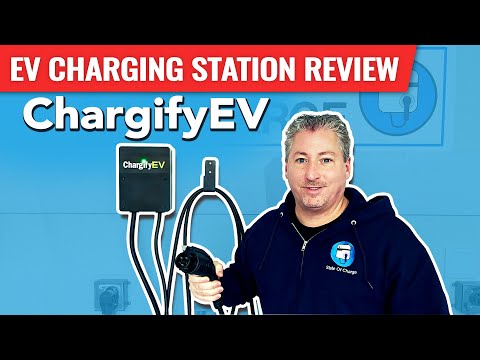
Chargifyev Electric Vehicle Charging Station Review
This review covers the ChargifyEV 32, a 32-amp electric vehicle supply equipment (EVSE) from a US-based startup. The unit is praised for its competiti... moreve pricing, with the 32-amp version costing $399 and the 40-amp version $419. The reviewer highlights its compact, polycarbonate construction and a 24-foot cable that, while stiff in sub-zero temperatures, is manageable due to its thinness. The Phoenix Contact connector is noted as a positive feature. However, a significant drawback is the lack of safety certification (e.g., UL listing) for the assembled unit, which is attributed to the startup's financial constraints. This omission, along with the absence of an integrated connector holster, impacts the ChargerRater score. The unit's NEMA 3R rating suggests it's suitable for outdoor use, though not the most weatherproof. The reviewer also notes the current lack of smart features, with only an Ethernet port for basic data access, though a Wi-Fi upgrade is planned. Despite the safety concerns, the reviewer finds it a decent first product from ChargifyEV, offering good value for money. less

Tesla J1772 Wall Connector Review
This review examines the Tesla J1772 Wall Connector, a 40-amp charging station notable for adopting the industry-standard J1772 connector instead of T... moreesla's proprietary one. The reviewer highlights its robust build quality, a comfortable and well-designed J1772 connector, and the return of a 24-foot cable, a significant improvement over the Gen 3 model's shorter offering. Key features include adjustable power delivery in 4-amp increments and the capability for power sharing among up to four identical units. However, a major drawback is the inability to power share with Tesla's Gen 3 Wall Connector. The reviewer also notes the unit's NEMA 3R rating, which is adequate for outdoor use but less robust than NEMA 4 for severe weather. A significant concern is the unit's mysterious disappearance from Tesla's website shortly after its release, leaving its future availability uncertain. Despite this, the reviewer praises its value at $417, considering its features, build, and safety certifications. less

Tesla Charging Losses Explained
This video provides a thorough explanation of EV charging losses, using a 2021 Tesla Model 3 and an Electrify America DC fast charger with a CHAdeMO a... moredapter as a case study. The reviewer highlights that Tesla's in-car display, unlike some other EVs, does not show dispensed energy, leading to a common misconception among owners about charging efficiency. The experiment revealed approximately 10% charging loss when charging from 7% to 57% state of charge, translating to about 7 kWh lost over a full charge cycle. A significant portion of these losses, particularly at lower states of charge, is attributed to the vehicle's thermal management system, which can consume up to 12 kW to cool the battery. The reviewer also touches upon AC charging losses, noting higher percentages due to onboard charger conversion, and details the three main areas where DC fast charging losses occur: the charging station, the vehicle's thermal management, and battery inefficiency. While acknowledging that exact loss percentages vary, the video concludes that around 10% is a reasonable average for Tesla vehicles, with other EVs sometimes exhibiting higher losses. less
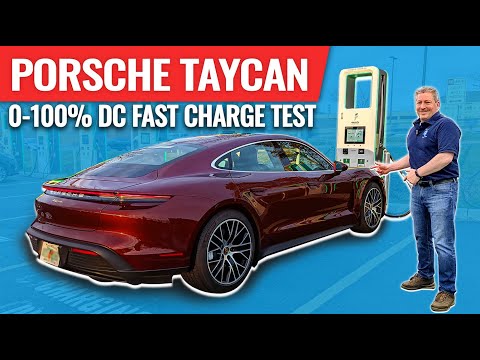
Porsche Taycan 0 to 100% DC Fast Charge Test
This video thoroughly tests the DC fast charging capabilities of the 2021 Porsche Taycan RWD with the Performance Plus battery. The reviewer highlight... mores the Taycan's exceptional charging speed, particularly in the initial stages, reaching 80% state of charge in just 21 minutes and adding approximately 200 miles of range in 14 minutes based on his highway test data. The vehicle consistently pulls high wattage, exceeding 200 kW until 56% SOC and maintaining over 150 kW until 73% SOC. A notable observation is the thermal throttling experienced, causing a temporary dip in charging speed, attributed to the car pushing its limits for rapid charging. While the Taycan is praised for its charging prowess, the reviewer notes that the Lucid Air, due to its larger battery and greater efficiency, ultimately delivers more miles per minute over longer charging sessions, dethroning the Taycan as the 'best' charging EV in that specific metric. The reviewer also discusses charging costs and advises against charging to 100% on DC fast chargers, recommending unplugging around 80% for optimal time efficiency. less

World's First: Lucid Air 0-100% DC Fast Charge Review
This video provides the first independent 0-100% DC fast charging review of the Lucid Air Dream Edition Range. The reviewer confirms Lucid's clai... morem of the fastest charging EV, with the Air hitting a peak of 304 kW. While the peak rate was brief, the vehicle maintained high charging speeds for a significant duration, adding 100 miles of range in just 5.5 minutes and reaching 80% charge in 37 minutes. The reviewer highlights the impressive efficiency, noting that 50 kWh were added in less time than comparable Tesla Model S and Porsche Taycan, with the Lucid Air traveling further on that energy. A full 0-100% charge took 1 hour and 22 minutes, dispensing 134 kWh, slightly more than expected due to charging losses. The reviewer advises against charging beyond 80% due to significantly slower rates, making the last 20% take nearly as long as the first 80%. Overall, the Lucid Air's charging performance is deemed exceptional, particularly for road trips, though the reviewer plans a follow-up range test for more definitive real-world mileage figures. less

Wallbox Pulsar Plus 48 EV Charging Station Review
The Wallbox Pulsar Plus 48 is a powerful and feature-rich EV charging station, offering up to 11.5 kW of power. While it shares many similarities with... more its 40-amp predecessor, the reviewer highlights a significant drawback: the new, less rubberized connector feels cheaper and less premium than the previous version. A major concern for those in colder climates is the cable's poor performance in freezing temperatures, becoming extremely stiff and difficult to manage, a significant downgrade from the ChargePoint Home Flex. Despite these issues, the Pulsar Plus 48 boasts robust smart features, including Wi-Fi and Bluetooth connectivity, an intuitive app for session monitoring and scheduling, OTA updates, and load-sharing capabilities. Its NEMA 4 enclosure provides excellent protection against weather, as demonstrated by a successful dunk test. While the 48-amp version offers slightly faster charging (28-45 miles of range per hour vs. 24-35 for the 40-amp), the reviewer suggests the 40-amp model might be a better value due to its lower cost and plug-in convenience, especially since the speed difference may not be critical for overnight charging. Overall, it's a highly recommended, albeit expensive, smart charger, particularly for those who don't frequently experience extreme cold. less

Tesla Model S Plaid V3 Supercharging Complete Recording And Analysis
This video provides a comprehensive analysis of the Tesla Model S Plaid's V3 Supercharging capabilities, detailing a full 0% to 100% charging ses... moresion. The reviewer highlights the Plaid's impressive ability to maintain the maximum 250 kW charging rate from 5% to 33% state of charge, adding approximately 150 miles of range in under 15 minutes. A key takeaway is that while a full 0-100% charge takes just over an hour, this is not representative of real-world usage. For typical road trips, charging to 50% is achieved in about 14.5 minutes, and 80% in around 31.5 minutes, offering a practical charging experience. The reviewer notes a minor charging interruption at 80% but was able to resume charging without significant delay. A slight critique is the desire for the vehicle to hold the 150 kW rate for a longer duration after 50% state of charge. The analysis emphasizes optimizing charging sessions for shorter stops, typically not exceeding 50-60% for efficiency on long journeys. less

Shell Recharge EV Charging Station Review
The Shell Recharge 40-amp portable EV charging station is reviewed, highlighting its dual voltage capability (Level 1 & 2) and adjustable power de... morelivery. While it offers a robust carrying case and a clear display showing charging status, temperature, and voltage, several critical flaws detract from its overall score. The reviewer noted issues with the Tesla adapter not locking securely due to a large gasket and the lack of audible feedback upon connection. More significantly, the unit failed a cable pull test where the plastic jacket detached from the NEMA 1450 plug, and it is not currently safety certified, which are major concerns. The cable also proved extremely stiff in a deep freeze test, making it difficult to handle in cold weather. Despite its competitive pricing and useful features like scheduled charging, these durability and safety issues prevent it from achieving a higher rating. less

2021 Mustang Mach E GT First Drive Review
The 2022 Ford Mustang Mach-E GT and GT Performance models significantly elevate the electric SUV's performance credentials. The GT boasts 480 hor... moresepower and 600 lb-ft of torque, achieving 0-60 mph in 3.8 seconds. The GT Performance, while sharing the same horsepower, increases torque to 634 lb-ft and shaves off 0.3 seconds for a 3.5-second 0-60 mph time, thanks to a more powerful front motor and software calibration. The reviewer highlights the GT's more direct steering and tighter feel compared to the standard Mach-E. However, the GT Performance truly shines with its MagneRide adaptive suspension, offering superior handling, minimal understeer, and a sports-car-like driving experience. The seats in the GT Performance are also noted as being more aggressive and supportive. A key limitation discussed is thermal management; the GT Performance can only complete two hot laps before power is limited, a significant drawback for a Mustang-branded performance vehicle. Ford's introduction of 'Unbridled Extend' mode aims to mitigate this by providing sustained performance over multiple laps, though it still requires further refinement. Future over-the-air updates promise increased usable battery capacity and a revised DC fast-charging curve, pushing the rapid charging taper from 80% to 90%. less