
Auto Expert John Cadogan positions itself as a vital resource for navigating the complexities of the automotive world, particularly within the highly competitive Australian market. The channel delves into the everyday realities of car ownership, addressing common frustrations and offering insights into the decision-making processes behind purchasing and maintaining vehicles. It aims to demystify the automotive landscape for consumers, providing expert guidance on a range of topics.
With a focus on practical advice and in-depth analysis, Auto Expert John Cadogan covers essential aspects of vehicle ownership, from the nuances of upgrading older cars to the critical factors influencing tyre performance and safety. The channel also engages with contemporary issues such as electric vehicle (EV) technology, exploring both the potential and the challenges associated with their widespread adoption and integration into existing infrastructure.
With a focus on practical advice and in-depth analysis, Auto Expert John Cadogan covers essential aspects of vehicle ownership, from the nuances of upgrading older cars to the critical factors influencing tyre performance and safety. The channel also engages with contemporary issues such as electric vehicle (EV) technology, exploring both the potential and the challenges associated with their widespread adoption and integration into existing infrastructure.

When Should I Upgrade My Old Car? | Auto Expert John Cadogan
John Cadogan tackles the perennial question of when to upgrade a vehicle, offering a pragmatic perspective that challenges the industry's push for constant turnover. He argues that keeping a car longer significantly reduces depreciation and environmental impact, directly refuting the "greenwashin...



Latest Additions
Showing 21 of 285 total titles. Page 12 of 12.

Hyundai Announces E-GMP Dedicated EV Platform
Hyundai has unveiled its dedicated E-GMP platform, a significant step towards its goal of selling one million EVs by 2025. The platform promises impre... moressive performance figures, including 0-100 km/h in 3.5 seconds and a top speed of 260 km/h for high-performance models, alongside a WLTP range exceeding 500 km and 18-minute fast charging (80% capacity). A key innovation is the multi-charging system supporting both 400V and 800V, plus bi-directional power conversion for powering external devices. The platform is modular, allowing for various vehicle sizes, and features a bias towards rear-wheel drive for enhanced driving dynamics, with all-wheel drive available. The reviewer highlights the platform's engineering advancements, such as oil-cooled motors and ultra-high-strength steel for crashworthiness, and its potential to challenge Tesla's performance dominance. However, a major concern remains the high purchase price of EVs, which Hyundai declined to address, suggesting price parity with internal combustion engines is not on the immediate horizon. The ambitious sales target amidst global supply chain issues also raises questions about feasibility. less

EV Vs ICE: What Really Handles Better?
John Cadogan delves into the nuanced handling dynamics of EVs, particularly those derived from internal combustion engine platforms. He explains that ... morewhile EVs might feel 'awesome' to average drivers due to their immediate responsiveness, performance enthusiasts may find them lacking. The core issues identified are the compromises made for range, leading to the use of 'eco tires' that reduce grip. Furthermore, converting ICE platforms to EVs significantly alters weight distribution, often leading to a heavier rear end, which can result in tail-happy behavior at the limit. Cadogan also highlights the challenge of modal separation, where suspension tuning for roll performance negatively impacts vertical (bump) performance, and vice-versa. He concludes that while current EVs derived from ICE platforms have inherent compromises, the future of EVs on dedicated platforms promises superior, well-rounded handling. less
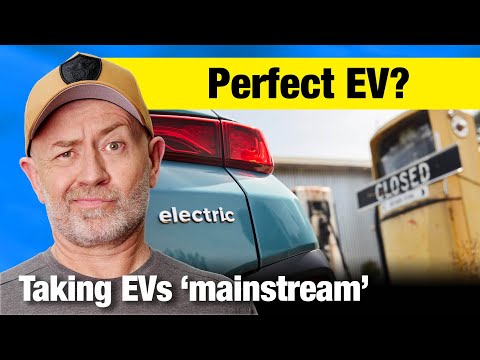
I Just Designed the Perfect Real-World EV. Tell Me I'm Wrong.
John Cadogan presents a compelling argument for a "shitbox EV" – a no-frills, affordable second car designed for short urban commutes. He cr... moreitiques the current EV market for its premium pricing, citing the Hyundai Kona Electric as an example where the EV version costs significantly more than its petrol counterpart, hindering mainstream adoption. Cadogan's ideal "shitbox EV" would have minimal features, a modest range (around 120km), and a low cost of entry, making it an economically rational choice for everyday tasks like school runs and shopping. He believes such a vehicle, unlike current "evangelical" EVs, would catalyze mass adoption by addressing the fundamental price barrier and offering a practical, disposable solution for consumers. less

Should I Buy a Hybrid Car? (And, If So, Which One?) | Auto Expert John Cadogan
John Cadogan addresses a viewer's query about purchasing a hybrid vehicle, questioning the necessity and practicality of such a purchase for the ... moreaverage Australian driver. He highlights that hybrids are most effective in dense, stop-start traffic, offering minimal advantage on highways where their added complexity becomes 'excess baggage.' Cadogan suggests that for highway-focused driving, a conventional, efficient car like the Kia Seltos with an Atkinson cycle engine might be a more sensible choice. He also touches upon the higher cost of Plug-in Hybrids (PHEVs) due to larger batteries and motors. While acknowledging the environmental intentions behind hybrid purchases, he stresses the importance of aligning the technology's benefits with the owner's actual driving conditions, particularly for those in less congested areas like Canberra. The review also briefly covers other viewer questions regarding car modifications and tool specifics. less

Best Automotive Industry Job Ever - Available Now!
John Cadogan humorously dissects a job opening for a Director of Evil Policy and Underhanded Advocacy within the Feral Chamber of Automotive Industrie... mores. While presenting the role's requirements with satirical flair, Cadogan highlights the predictable nature of lobbying positions, emphasizing the need for influencing policy, managing relationships, and developing loyal subordinates. He playfully suggests his own suitability for the role, drawing parallels to his past interactions with car manufacturers like Toyota. The review also touches upon the broader automotive industry's challenges, including margin compression and the reliance on add-on sales, all delivered with Cadogan's signature wit and Australian colloquialisms. The video's core message is an invitation for viewers to apply for the position, framed as a 'Darwinian' competition. less

Mercedes Launches Robot S Class - But Divorces Reality
John Cadogan critically assesses Mercedes-Benz's claims of Level Three autonomy, deeming the comparison of this technology to the Apollo moon lan... moreding as "offensive" and "divorced from reality." While acknowledging Level Three autonomy as a significant technical achievement, Cadogan highlights Daimler's perceived hubris and disconnect from practical engineering realities. He points to ongoing issues with right-hand drive, all-wheel-drive Mercedes models exhibiting "crab-like" behavior as evidence of the company's engineering shortcomings. Cadogan contrasts the immense complexity, risk, and sacrifice involved in the Apollo program with the relatively contained challenges of Level Three autonomy, suggesting Daimler's leadership is out of touch. He concludes that while Level Three is impressive, it is far from the monumental feat of space exploration. less

Living with Hyundai Kona Electric EV
John Cadogan, known for his pragmatic and skeptical approach to EVs, spent three months with the Hyundai Kona Electric. He highlights its impressive r... moreeal-world range of approximately 450 km on a full charge, attributing this to its 64 kWh battery with active liquid cooling and an eight-year warranty. Cadogan praises the regenerative braking system, noting its effectiveness in reducing reliance on conventional brakes and extending range. He contrasts the Kona Electric's charging capabilities with the much slower "trickle charger" included, emphasizing the significant time savings offered by an upgraded 7.2 kW charger, which allows for overnight full recharges. While acknowledging the higher initial cost of EVs, Cadogan argues that the Kona Electric offers tangible benefits in terms of cleaner city air and energy security, making it a rational choice for consumers, even if it doesn't single-handedly save the planet. He also commends the vehicle's rapid acceleration, comparing it favorably to performance gasoline cars. less

Responding to Your Nissan Leaf Premature Battery Failure Criticisms
John Cadogan addresses criticisms regarding his previous report on Nissan Leaf battery longevity. He defends his stance, asserting that a 7-year-old E... moreV battery failing and costing $5,000 to replace, resulting in a significant range reduction, is not indicative of customer care or environmental sustainability. Cadogan argues that Nissan's lack of active battery cooling is a design deficiency, leading to premature failure. He criticizes the company for not taking responsibility, suggesting that owners should not have to fund inherent design flaws. While acknowledging the $5,000 repair cost might seem reasonable to some, Cadogan believes Nissan should cover the cost entirely, citing Australian consumer law and ethical considerations. He also advocates for component-level battery repair rather than full replacement, deeming the latter environmentally irresponsible. Cadogan advises potential EV buyers to prioritize models with liquid-cooled batteries to avoid similar issues. less

Your Car Vs Greenhouse Gas & Climate Change (Warning: Contains Facts)
John Cadogan critically dissects the common misconceptions surrounding cars and their contribution to greenhouse gas emissions. He debunks the frequen... moretly cited statistic that vehicles are responsible for 60% of emissions, presenting data from the Australian government's Department of the Environment and Energy to show that cars account for approximately 9% of total national greenhouse gas emissions. Cadogan argues that the focus on cars, and electric vehicles (EVs) as a solution, is misplaced and distracts from the primary driver of emissions: coal. He criticizes media figures and politicians for spreading misinformation, emphasizing that tackling coal consumption and exports is crucial for addressing Australia's actual greenhouse gas contribution. While acknowledging the benefits of EVs for urban air quality and energy security, he asserts they are a 'sideshow' for the larger greenhouse problem. less

Bmw Announces 3.5-tonne Tow Upgrades For X5 & X7
BMW has significantly upgraded the towing capabilities for its X5 and X7 models, with most variants now capable of a 3.5-tonne maximum tow capacity. T... morehe reviewer highlights that this requires the factory-fit tow package, which is a worthwhile, albeit optional, addition. Specific variants, like the entry-level diesel and the hybrid X5, have lower limits (2.7 tonnes with reduced tow ball download). The review emphasizes the importance of understanding Gross Vehicle Mass (GVM) and payload calculations when towing, cautioning against overloading. The X5 M50i is lauded as an excessive but desirable performance beast, capable of out-accelerating an unladen Toyota Prado even while towing its maximum load. The reviewer also touches on the competitive landscape, suggesting BMW's current strength in this segment is partly due to competitors' missteps. less

2019 Lexus UX Small SUV Review & Road Test
John Cadogan reviews the 2019 Lexus UX, positioning it as an excellent entry-level prestige vehicle despite its identity crisis as a small SUV/hatch. ... moreHe praises Lexus's reliability and customer support, contrasting it favorably with German competitors. The UX is built on the Toyota C-HR platform with a Corolla-derived 2.0-liter engine, available as a hybrid which offers better performance and fuel economy for city driving, though the hybrid premium takes a long time to recoup. The F Sport trim, driven here, features multiple drive modes and a G-meter, while the Sports Luxury offers a premium stereo and ventilated seats. Cadogan finds the UX quiet, composed, and well-equipped, with a solid cabin feel. However, he heavily criticizes the counter-intuitive and dangerous touchpad infotainment control, suggesting a touchscreen would be a significant improvement. Cargo space is deemed adequate but could be better optimized. He also notes the rear seats are cramped for adults. The reviewer strongly advises against the expensive AWD option unless living in snowy conditions. Overall, the UX is considered a competent and polished vehicle that avoids the excessive upsell tactics common with German rivals, making it a strong contender in its segment. less

When Should I Upgrade My Old Car? | Auto Expert John Cadogan
John Cadogan tackles the perennial question of when to upgrade a vehicle, offering a pragmatic perspective that challenges the industry's push fo... morer constant turnover. He argues that keeping a car longer significantly reduces depreciation and environmental impact, directly refuting the "greenwashing" narrative often employed by manufacturers, particularly highlighting Tesla's marketing. Cadogan emphasizes that the "greenest" car is the one you already own. However, he acknowledges valid reasons for upgrading, such as advancements in safety features (auto emergency braking, LED headlamps) and technology (Android Auto). Ultimately, the decision hinges on individual priorities, financial capacity, and a realistic assessment of a car's lifespan, generally around 200,000-250,000 kilometers, beyond which major repairs become economically unviable. He commends Colin's plan to keep his Santa Fe for his daughter, citing the known history and maintenance as key advantages for a learner driver's vehicle. less

Australian Auto Trade Show Sparks International Incident
This video critiques the corporate espionage incident at the Auto Aftermarket Expo involving NOCO and CTEK. The reviewer, John Cadogan, expresses stro... moreng disbelief and disdain for NOCO's handling of the situation, particularly their alleged carelessness in leaving sensitive sales strategy documents unsecured in a notebook. He highlights the irony of a company with advanced jump starter technology lacking basic operational security. Cadogan mocks NOCO's press release and subsequent lawsuit, framing it as a typical 'Murican response to incompetence. The review emphasizes the perceived lack of intelligence within NOCO's management and criticizes their PR strategy. Ultimately, the reviewer advises against purchasing NOCO products due to their demonstrated incompetence. less

Best Home/Portable Tyre Inflation Solution Ever? | Auto Expert John Cadogan
John Cadogan reviews the Ryobi One+ Inflator-Deflator, deeming it a highly effective and convenient home tire inflation solution. He praises its light... moreweight design, ease of use, and the significant advantage of avoiding service station queues and inaccurate cold inflation pressure readings. The reviewer highlights its utility for quick repairs in remote locations, especially when combined with a tire plug kit. While acknowledging the battery ecosystem lock-in, he finds the $99 price point (skin only) reasonable, especially for existing Ryobi tool owners. The auto-cutoff feature is a key differentiator from cheaper models. Cadogan concludes that while not suitable for hardcore off-roading, it's an excellent, cost-effective alternative to expensive shop compressors for everyday users concerned with proper tire maintenance and occasional emergency repairs. less

The Awful Truth About Hydrogen as a Transport Fuel
John Cadogan delivers a scathing critique of hydrogen as a transport fuel, labeling much of the industry's promotion as "greenwashing."... more He argues that the primary method of hydrogen production from hydrocarbons is energy-intensive and produces significant CO2 emissions, directly contradicting the "zero-emissions" claims. Cadogan highlights the thermodynamic inefficiency, stating that it's more energy-efficient to use hydrocarbons directly as fuel. He criticizes Toyota's investment in a small-scale hydrogen electrolyzer, questioning its alignment with the company's stated zero-emissions goals, especially given their continued sales of high-emission vehicles like the LandCruiser and Prado. The review emphasizes that hydrogen is an industrial chemical, not an ideal fuel, and its production cost and environmental impact make it a poor choice for widespread transport adoption compared to alternatives like compressed natural gas or direct electrification. less

Rolling Resistance & Hysteresis Costs You Thousands (Part I)
In this installment, John Cadogan delves into the physics of hysteresis and rolling resistance, explaining how these phenomena lead to significant ene... morergy loss in vehicles. He uses the analogy of a bouncing ball to illustrate how energy is dissipated as heat during impact and rebound, a process that directly translates to the rolling tire. Cadogan highlights that approximately 25% of all fuel burned is used to overcome rolling resistance. He emphasizes that this energy loss impacts all vehicles, including EVs, reducing their range by about 25%. The video sets the stage for a deeper dive into the pervasiveness of hysteresis in automotive systems, promising to explore its effects on cruise control and air conditioning accuracy in the next part. less

The Complete Guide to Owning Tyres (Boost Safety, Performance & Life) | Auto Expert John Cadogan
John Cadogan delivers a comprehensive and practical guide to understanding car tires, demystifying common confusions for the average owner. He address... morees critical aspects like tire pressure, explaining the difference between under- and over-inflation, and introduces the concept of a 'Goldilocks pressure' for optimal wear and grip. Cadogan emphasizes the importance of checking tire pressure regularly (fortnightly) and advises using the placard pressure plus a 20% buffer as a starting point, while monitoring tread wear for accuracy. The video also covers tread function (primarily for water displacement), the trade-off between grip and longevity, deciphering tire sidewall codes, the importance of breaking in new tires, and determining when tires are truly worn out (both by mechanical wear and age). Finally, he provides essential advice for remote travel, including carrying repair kits, compressors, and potentially a second spare, and stresses the safety implications of using aged tires, especially on trailers. The review is highly informative, focusing on actionable advice to improve safety and save money. less

Which Hyundai Ioniq Should You Buy: EV, Plug-in or Hybrid?
John Cadogan evaluates the Hyundai Ioniq range, comparing the Hybrid, Plug-in Hybrid, and full EV variants. He highlights the significant price jump b... moreetween models, particularly the substantial cost increase for battery capacity. While acknowledging the EV's polished nature and zero tailpipe emissions, Cadogan points out its "range limitation" and high cost, deeming it suitable for "cashed-up green evangelists." The Plug-in Hybrid is presented as a more practical "drive-anywhere proposition" offering a balance of long-distance capability and domestic zero-emission commuting. However, the reviewer's ultimate verdict, based on "green rationalism and economic rationalism," favors the Hybrid Ioniq as the most sensible choice for buyers prioritizing logic over environmental statements. Criticisms include the basic charging cable bag, the lack of a full-size spare in the Plug-in variant for the Australian market, and the controversial foot-operated parking brake. Cadogan also advises potential EV buyers to consider the upcoming Kona EV, which he anticipates will surpass the Ioniq EV. less

Hyundai Ioniq EV: Top 10 Things You Must Know Before You Test Drive An Electric Car | Auto Expert
This video offers a comprehensive guide for prospective EV buyers, focusing on ten essential points to consider before test driving any electric car, ... moreusing the Hyundai Ioniq EV as a primary example. The reviewer highlights key differences from internal combustion engine (ICE) vehicles, such as the silent operation, the absence of a traditional gearbox, and the unique regenerative braking system controllable via steering wheel paddles. A significant point is the potential for drivers to misjudge speed due to the lack of engine noise, emphasizing the importance of watching the speedometer. The video also delves into practical aspects like charging times, the necessity (or lack thereof) of home charging stations based on daily mileage, and crucial safety considerations for charging in imperfect environments, stressing the importance of RCDs/GFCIs. While acknowledging the Ioniq's packaging and potential for lower servicing costs compared to ICE cars, the reviewer expresses a mixed feeling, finding the car "very good" where it excels but noting "glaring" deficiencies. Ultimately, the experience of driving an ICE car after a period in an EV leads to a strong appreciation for the refinement and quietness EVs offer. less

Best Car Battery Jump Starter Ever: Use Capacitor Storage Instead
John Cadogan reviews the OzCharge Rescue Mate 1000, a capacitor-based jump starter that offers a significant advantage over traditional battery jump p... moreacks. He highlights the frustration of flat batteries, noting that they often retain energy but lack the power to crank an engine. The Rescue Mate addresses this by slowly absorbing energy and then delivering it in a high-power burst, capable of jump-starting even a severely depleted battery. Cadogan praises its ease of use, safety features, and the fact that it doesn't require regular recharging like battery packs, which often fail when needed. He concludes that it's a superior and more reliable solution for jump-starting vehicles, especially in remote areas, and a worthwhile investment for both professionals and everyday users. less

The Mad Metallurgy of Advanced High Strength Steel in Modern Cars
John Cadogan delves into the often-overlooked world of advanced high-strength steel (AHSS) in modern automotive manufacturing, using the 2018 Hyundai ... moreSanta Fe as a prime example. He highlights how AHSS significantly increases torsional stiffness (by 15.4%), contributing to better handling, a more predictable ride, and crucially, a safer passenger cell during collisions. The video contrasts AHSS with mild steel and high-speed steel, explaining its unique balance of strength (up to 1500 MPa) and workability (up to 25% elongation). Cadogan argues that this material science is 'proper engineering porn,' far more significant than flashy infotainment features. The increased use of AHSS allows manufacturers to reduce vehicle weight (potentially saving 100kg per vehicle), leading to improved fuel economy, acceleration, and braking, while also offering substantial environmental benefits through reduced steel consumption on a global scale. The review praises the material's role in creating a rigid safety cage and enabling crumple zones, making cars more survivable and predictable in crashes. less