Plug and Play EV is a dedicated channel for electric vehicle enthusiasts, offering insights into the transition to all-electric transportation. Led by Steve, the channel features regular content on EVs, including detailed looks at driving experiences with vehicles like the 2022 Hyundai IONIQ 5 Limited and 2017 Chevy Bolt EV, as well as broader family vehicle discussions.
The channel also delves into the crucial development of charging infrastructure, providing updates and analysis. Viewers can expect coverage of EV technology, real-world charging sessions, myth-busting regarding electric car performance, and explorations of emerging EV models and their features. Plug and Play EV serves as a comprehensive resource for anyone interested in the evolving world of electric mobility.
The channel also delves into the crucial development of charging infrastructure, providing updates and analysis. Viewers can expect coverage of EV technology, real-world charging sessions, myth-busting regarding electric car performance, and explorations of emerging EV models and their features. Plug and Play EV serves as a comprehensive resource for anyone interested in the evolving world of electric mobility.
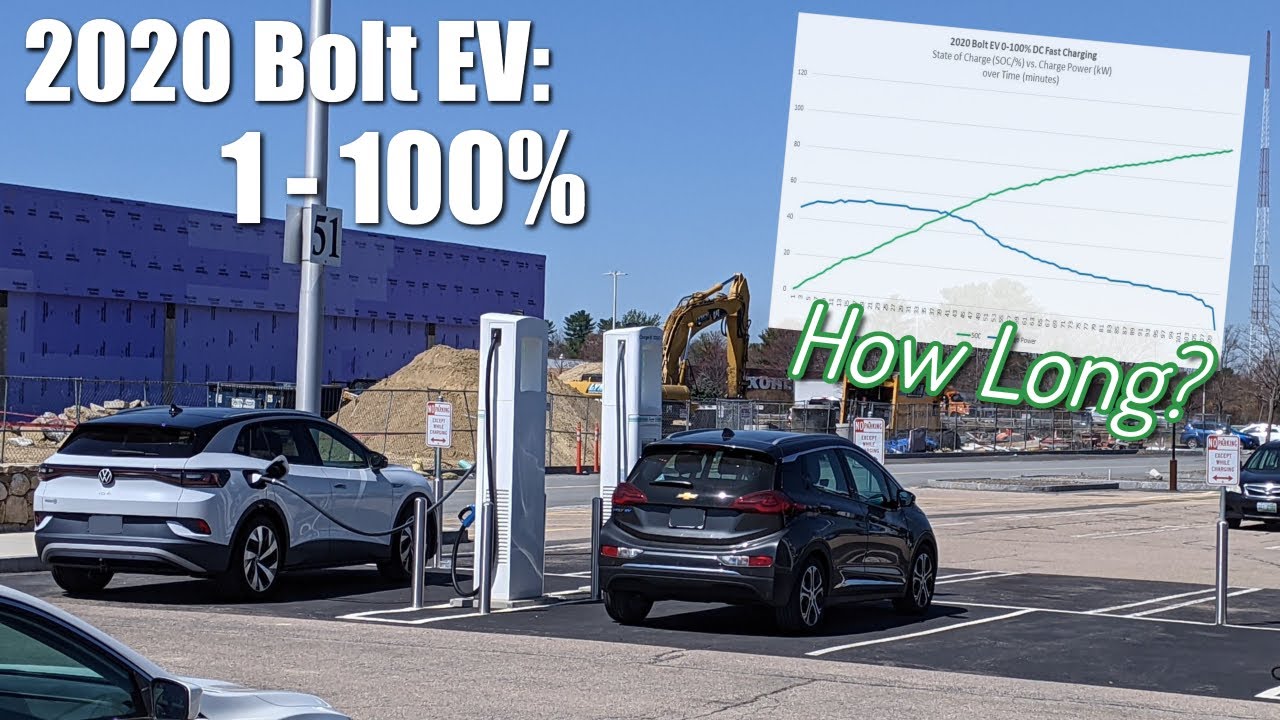
2020 Chevy Bolt EV: 1% to 100% DC Fast Charging Session - How Long + How Much?
This video details a full 1% to 100% DC fast charging session of a 2020 Chevrolet Bolt EV on an Electrify America station. The reviewer emphasizes that charging to 100% is generally not recommended and the "wrong question" to ask, but undertakes the extended session for data collection. Key takea...


Latest Additions
Showing 24 of 146 total titles. Page 4 of 7.

Ioniq 5 EV Summer Road Trip: 3.1k Miles to Minnesota's Voyageurs National Park
This video documents an extensive 3,100-mile road trip in a Hyundai IONIQ 5, traveling from Boston to Minnesota's Voyageurs National Park and bac... morek. The reviewer highlights a mix of charging experiences, from reliable EVgo stations to the often busy Electrify America network, and notes the scarcity of fast charging in remote areas like Voyageurs National Park, relying instead on Level 2 charging at accommodations. The IONIQ 5 is praised for its comfortable ride and efficiency, achieving 2.9 to 3.6 miles per kWh depending on speed and road type, which translates to a real-world range of 250-300 miles on a charge, exceeding its EPA estimate for the 2022 AWD model. While the car handled varied terrain, including a dirt trail, the reviewer points out the limitations of current EV infrastructure in certain regions, particularly the slow speeds of 50kW chargers when demand is high or the complete absence of DC fast charging in national parks. Despite these challenges, the overall verdict is positive, emphasizing the IONIQ 5's capability for long-distance travel. less

The Future of Electrify America: Public DCFC Pioneer or Dead Man Walking?
This livestream delves into the critical future of Electrify America, examining whether its final investment cycle (2024-2026) can revitalize the netw... moreork or if it's destined to be surpassed by competitors. The discussion highlights EA's early achievements in establishing cross-country corridors and concentrating chargers at sites, but also addresses persistent issues like reliability and congestion. A significant portion focuses on hardware choices, with concerns raised about the performance and safety of BTC Power and Signet units, particularly in hot climates and their potential impact on vehicle compatibility. The conversation also touches upon the complexities of NEVI funding, Build America Buy America compliance, and the challenges of site expansion amidst retail partnerships. Ultimately, the review suggests that while EA has made strides, its future hinges on addressing hardware reliability, expanding site capacity, and navigating evolving regulatory landscapes to ensure a robust and dependable charging experience. less

Future-Proofed Fast Charging? Ultium Charge 360 Livestream with News Coulomb + tNAC Channel Hosts
This livestream delves into the future of DC fast charging in North America, with a particular focus on GM's Ultium Charge 360 program, often in ... morepartnership with EVgo and located at Pilot and Flying J truck plazas. The discussion highlights the strategic importance of these charging locations for road-tripping, contrasting them with Tesla's Supercharger network by emphasizing the availability of amenities. A key point of contention is the rollout speed and the potential for future-proofing charging infrastructure, with concerns raised about the current NAVI funding guidelines and the slow pace of implementation. While the Ultium Charge 360 program aims to provide a robust charging solution, the participants express a need for more thoughtful planning regarding charger density, power sharing, and user experience, especially for larger vehicles and trailers. The conversation also touches upon the Cadillac Lyriq's charging characteristics and the evolving landscape of charging hardware and network ownership. less

Electrify America Price Changes: What You Need to Know! EV Livestream with Eric/News Coulomb
This livestream discusses the significant pricing and fee structure changes implemented by Electrify America starting August 17th, 2023. The hosts del... moreve into the increase in membership fees from $4 to $7 per month, the return of idle fees (40 cents per minute after a 10-minute grace period), and the shift to site-specific variable pricing. While acknowledging the potential for sticker shock, the discussion highlights that these changes, particularly the reintroduction of idle fees, are seen by many as necessary to penalize drivers who overstay their welcome, thereby improving charger availability. The hosts express concerns about the transparency of the new site-specific pricing, emphasizing the need for drivers to check the charger screen upon arrival rather than relying solely on the app. They also touch upon the complexities of charging costs for larger, less efficient EVs and the potential impact on free charging plans. The conversation also explores charger reservations, with a general consensus that they are an unnecessary complication unless tied to hotel accommodations with dedicated staff managing them. less

North American Charging Shakeup! What Can OEMs Do for DC Fast Charging in the USA and Canada?
This video discusses the significant joint venture by seven major automakers (BMW, GM, Honda, Hyundai, Kia, Mercedes-Benz, and Stellantis) to establis... moreh a new DC fast-charging network in North America, aiming for over 30,000 chargers with both CCS1 and NACS connectors by summer 2024. The hosts explore the potential implications, including hardware partners, the network's appeal for 800V architectures, and its role as a hedge against reliance on Tesla's Supercharger network. Key discussion points revolve around the network's potential to address pain points like the lack of canopies and amenities at existing stations, and the critical importance of charger activation times and reliable build-out. While the initiative is seen as a positive step towards expanding charging infrastructure, concerns remain about execution, location prioritization, and the pace of deployment compared to Tesla's rapid expansion. less

NACS or Bust? Live Stream with News Coulomb on Tesla's Connector Gambit, CCS & EV Charging Reliability
This live stream delves into the complexities surrounding the adoption of the North American Charging Standard (NACS) and its implications for EV char... moreging infrastructure. The hosts, Eric Way and Steve, move beyond the initial hype, highlighting the distinction between automakers negotiating access to Tesla's Supercharger network and the development of a new, unified CCS standard incorporating Tesla's plug. They critically examine the practical realities of using 'Magic Docks,' citing a 40% success rate and issues with reliability, cable length, and user interface, drawing parallels to existing complaints about public charging networks. A key takeaway is that while NACS aims for consolidation, the transition period will heavily rely on adapters. The discussion also touches upon the unreliability of payment readers on some networks (primarily Electrify America), the potential for user error to skew reliability data, and the need for greater transparency and standardized metrics from charging providers. Ultimately, the hosts suggest that increased competition and a focus on user experience will drive improvements across all networks. less

Hyundai Ioniq 5 AWD Limited USA Owner Review - First Year, Four Seasons Impressions
After a year and 20,000 miles, this owner review of the 2022 Hyundai IONIQ 5 AWD Limited highlights its strengths as a family road trip vehicle. The s... morepacious, quiet, and comfortable cabin, coupled with impressive 15-20 minute charging times (even better than expected due to an excellent charging curve), makes it a top contender for long-distance travel. The V2L function is noted as a useful novelty for camping and powering devices. However, the review points out significant drawbacks, primarily its efficiency, which is described as 'thirsty' with typical highway efficiency around 2.5-3 miles per kWh. Minor gripes include occasional interior squeaks, a dated navigation system UI, and overly sensitive driver safety features. The Highway Drive Assist 2 (HDA2) is praised by one reviewer but found ponderous by the other for lane changes. Despite the efficiency concerns, the fast charging and overall comfort largely offset these issues for road-tripping purposes. less

Assessing the GM-Tesla NACS Announcement: Chevy, Cadillac, GMC Electric Vehicles to Get Tesla Port
General Motors has officially announced its adoption of Tesla's North American Charging Standard (NACS), mirroring Ford's earlier decision. ... moreStarting in 2024, GM vehicles will receive adapters for Supercharger access, with native NACS ports integrated into vehicles from 2025 onwards. This move signifies a major shift away from the CCS standard for GM's Ultium-based EVs, including anticipated models like the Equinox EV and Silverado EV. The announcement also confirms that 2025 NACS-equipped GM vehicles will retain CCS backward compatibility via an adapter. While GM has existing partnerships with charging networks like EVgo, this strategic pivot suggests a strong commitment to the NACS ecosystem. The video highlights the potential implications for charging network congestion and the eventual redundancy of solutions like Tesla's Magic Dock, while also raising questions about bidirectional charging capabilities. less

Winter EV Charging in Sub-Zero Conditions: Electrify America, EVgo, and ChargePoint Tested
This video provides a comprehensive real-world test of public EV charging infrastructure in sub-zero Fahrenheit conditions, focusing on Electrify Amer... moreica, EVgo, and ChargePoint in Massachusetts. The reviewer highlights that while all tested charging stations (SK Signet, BTC Power, CPE250) generally worked, cold temperatures significantly impact charging speeds, particularly when the vehicle's battery is not preconditioned. The Ioniq 5's battery conditioning system is shown to draw considerable power (up to 8 kW), but it struggles to maintain optimal battery temperatures in extreme cold, leading to slower charging rates. Electrify America's SK Signet stations (both 3rd and 4th gen) and ChargePoint's CPE250 units proved reliable, with the latter being consistently dependable. EVgo experienced issues with its AutoCharge feature not working, though direct charging via the app was successful. The reviewer concludes that while the hardware is robust in cold, managing battery temperature is the key challenge for maximizing charging speeds in winter, and continuous battery conditioning is crucial. less

2022 Ioniq 5 AWD Battery Preconditioning Update Installation and Test
This video details the installation and testing of the battery preconditioning update for early 2022 Hyundai IONIQ 5 AWD models. The reviewer highligh... morets that this feature, previously absent in vehicles manufactured before approximately June 2022, significantly improves DC fast charging speeds in cold weather (below 60°F / 15.5°C). The update, applied via a service bulletin (T9QEV), replaces the ineffective 'Winter Mode' with the crucial 'Battery Conditioning Mode'. Testing showed a marked improvement, with charging rates jumping from a sluggish 40-60 kW on a cold pack to over 150 kW with the conditioned pack, even at a lower state of charge. The reviewer also successfully tested the new EVgo location with Autocharge+ functionality. While a workaround was needed due to the new charger not being in the native navigation, the core benefit of the preconditioning update for winter road trips is clearly demonstrated, making it a highly valuable addition for owners. less

40 Amp Evse Review - Topdon Pulseq Home Charger
The Topdon PulseQ 40 Amp home EVSE presents a robust hardware solution for EV charging, offering solid build quality and a user-friendly installation ... moreprocess with ample mounting hardware. The reviewer highlights its substantial feel, thick cables, and UL certification as key strengths. Performance-wise, it successfully delivers 40 amps, shaving approximately 30 minutes off charging times compared to a 32-amp Tesla Mobile Connector for a partial charge, with potential for significant time savings on larger battery capacities. The ability to adjust amperage from 40 down to 6 amps is noted as a valuable feature, especially for those whose home electrical setup might not support the full 40 amps initially. However, the reviewer expresses disappointment with the accompanying mobile app, describing its interface as clunky and lacking modern user experience, with some features not fully functional out of the box. While the hardware is praised, the software side is identified as an area needing significant improvement, though the potential for future updates is acknowledged. The standard 16.5-foot cable length is also mentioned as a potential limitation for some users, though an extended version is available. less

1,300-Mile Weekend EV Road Trip + Ioniq 5 Cold Weather Fast Charging Performance
This video details a 1,300-mile weekend road trip from Boston to Ohio and back in a Hyundai IONIQ 5, focusing on cold weather fast charging performanc... moree and Electrify America's reliability. The reviewer found Electrify America to be largely reliable, with most stations working well, though congestion was noted at popular locations like Albany. A software glitch where a session remained active in the app after charging was a minor inconvenience. The trip highlighted the impact of cold weather on the IONIQ 5's charging speed, particularly for earlier 2022 models lacking battery preconditioning. Without preconditioning, the battery cools significantly during longer drives, leading to slower charging speeds (around 10-15 minutes to ramp up power) compared to optimal summer conditions. The reviewer suggests that upcoming software updates and the inclusion of preconditioning in newer models will be crucial for maintaining charging performance in colder climates. Despite the cold weather challenges and occasional congestion, the trip demonstrated that long-distance EV travel is feasible even in winter, with the route offering ample charging options. less

Thanksgiving 2022 Electric Car Road Trip Report + EV Route Planning Tips
This Thanksgiving road trip report details a 1268-mile journey from Boston to Southwest Pennsylvania and back in a 2022 Hyundai IONIQ 5 AWD. The revie... morewer highlights the benefits of destination charging and flexible route planning, particularly during a busy travel period. While the trip encountered some busy charging stations, especially with Electrify America, the overall experience was deemed successful. The reviewer notes that ambient temperatures in the 40-50°F range only slightly impacted charging times, and they achieved a peak charging rate of 241kW in State College, PA, debunking concerns about cold weather performance. A key takeaway is the importance of utilizing multiple charging networks and apps like PlugShare and the Electrify America app to identify available and less congested stations. The report also touches on the potential need for higher state-of-charge charging to avoid problematic stations and the ongoing infrastructure challenges, suggesting that current networks may not suffice as EV adoption grows. The reviewer concludes that while the infrastructure has limitations, it is capable of supporting long-distance travel with smart planning. less

Electrify America's 350kW Site Upgrades With Balanced DC Fast Charging
This video provides a follow-up assessment of Electrify America's upgraded 350kW charging site in Chicopee, Massachusetts, approximately one mont... moreh after its initial activation. The reviewer, Steve, reports a largely positive experience, successfully initiating a charge on all four tested stations on the first attempt, a significant improvement over previous issues. He highlights the improved hardware, better cable management, and the general reliability of the new equipment. However, the video also touches on the new 'balanced DC fast charging' feature, which shares power between stations, potentially limiting peak rates if multiple vehicles are charging simultaneously. While the reviewer experienced good speeds when charging alone, he notes that the system might reduce power when another vehicle connects. The reviewer also observed that the Hyundai IONIQ 5's battery preconditioning feature, which could improve charging speeds, was not yet active for US users, leading to slightly lower initial charge rates. Despite these nuances and some reported difficulties for other users, the overall verdict is that the upgraded stations are functional and provide a charge, though potential users should be aware of power-sharing limitations and the need for vehicle-specific charging behaviors. less

Kia EV6 vs. Hyundai Ioniq 5: Which Egmp EV Should You Buy? Side-by-Side Owner Comparison
This video offers a detailed side-by-side comparison between the Kia EV6 Wind Edition and the Hyundai IONIQ 5 AWD Limited, both based on the eGMP plat... moreform. The reviewer highlights key differences stemming from their distinct design philosophies. The EV6 is praised for its driver-oriented cockpit, sportier stance, and slightly better range, appealing to those prioritizing driving dynamics and a more aggressive aesthetic. Conversely, the IONIQ 5 is favored for its retro design, more spacious and customizable interior, particularly for families with children, due to its sliding console and ample headroom. While both vehicles offer impressive performance and fast charging, the choice ultimately hinges on personal preference for exterior styling and interior focus – whether it's a driver-centric experience or a more family-friendly, versatile cabin. The comparison effectively illustrates how the same platform can yield distinct user experiences. less
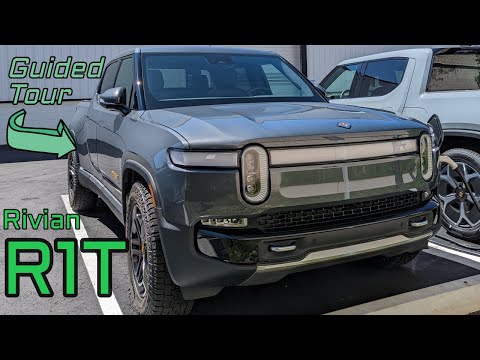
Rivian R1T: First Drive Impressions + Guided Electric Truck Walkthrough
The Rivian R1T 'Launch Edition' presents a compelling package for those seeking an electric truck, blending impressive performance with prac... moretical features. The reviewer highlights the gut-wrenching acceleration, capable of 0-60 mph in around three seconds, even in a vehicle weighing over 7,000 pounds. The drive modes, including 'All Purpose' for daily use and 'Sport' for enhanced responsiveness and lower ride height, are well-explained. Practicality is emphasized through features like the Gear Tunnel, a versatile bed with an automatic tonneau cover, and ample storage, including a frunk. The reviewer notes the R1T's towing capacity of up to 11,000 pounds and payload of over 1,700 pounds. Downsides are minimal, with the reviewer mentioning a potentially tight and stiff ride quality and occasional connectivity issues with the map, though these could be software-related or location-dependent. The bed size is considered small for a traditional work truck, suggesting alternatives like the F-150 Lightning or Silverado EV for such use cases. Overall, the R1T is deemed a practical and compelling vehicle, especially if it fits the buyer's price range and needs. less

Hyundai Ioniq 5 - 1,000km Challenge USA | Long Distance EV Day Trip
This video documents a 1,000 km (621.4 mile) challenge driving a 2022 Hyundai Ioniq 5 from Massachusetts to Cleveland, Ohio. The reviewer focuses on t... morehe real-world travel time, charging speeds, and overall trip experience compared to a gasoline vehicle. The Ioniq 5 demonstrated strong performance, completing the distance in just over 10 hours, including charging stops. Charging sessions were generally efficient, with most stops taking around 15-20 minutes to reach 80% or provide sufficient range. The reviewer noted that battery temperatures rose significantly in the midday sun, occasionally impacting charging speeds and requiring a stall change at one Electrify America location. Despite minor charging hiccups and the need for strategic charger selection, the Ioniq 5 is praised as a capable and comfortable road-tripper, with ample space and the ability to cover long distances efficiently. The reviewer suggests that while this speed-focused trip is doable, a more relaxed pace with family would naturally extend the journey. less

Hyundai Ioniq 5: 4,000 Mile US Road Trip Report + Takeaways
This video provides a comprehensive 4,000-mile road trip report on the 2022 Hyundai IONIQ 5, detailing experiences across nine states. The reviewer hi... moreghlights the vehicle's consistent fast-charging performance, with 21 DC fast charging sessions primarily on Electrify America, noting that most sessions were completed within 15-25 minutes, often before the driver finished getting supplies. Reliability was generally solid, with only a few inconvenient charging stops due to errors or congestion, though the reviewer points out the growing strain on public charging networks. Efficiency averaged a respectable 3 miles per kilowatt-hour, translating to approximately 232 miles per charge, with slower speeds on non-highway roads improving this figure. A key takeaway is the IONIQ 5's practicality as a "fast food car" due to its charging speed, and its highly customizable interior, which proved useful for accommodating camping gear. The reviewer also touches on the "Hyundai heat cliff" phenomenon affecting charging speeds above 80% but found it manageable by moving on to the next charger. Overall, the IONIQ 5 is presented as a capable road trip companion, with charging infrastructure and reliability being the main external factors to consider. less
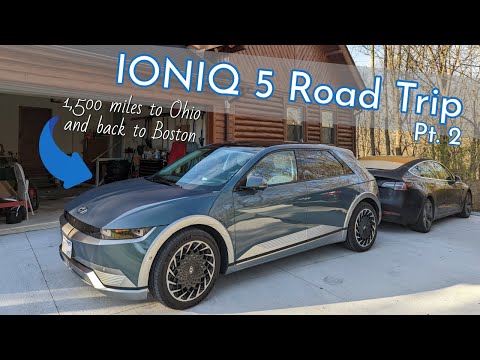
Ioniq 5 Road Trip Pt. 2: Midwest to Northeast Usa in Spring
This video documents the return leg of an EV road trip from the Midwest to the Northeast in a Hyundai IONIQ 5. The reviewer notes that efficiency did ... morenot significantly improve on the return journey, averaging around 2.7 miles per kWh, which is considered not great. However, the charging experience was largely positive, with "blistering charge times" highlighted, often achieving an 80% charge in approximately 20-25 minutes. The reviewer tested various charging networks, including Electrify America and EVolve NY (Shell Recharge), noting that while some chargers didn't immediately start, the overall charging speed was impressive. A key takeaway is that despite moderate efficiency, the rapid charging capabilities of the IONIQ 5 make it a viable option for long-distance travel, with the reviewer suggesting a strategy of driving for about three hours before a 20-25 minute charging stop. The video also touches on the benefits of Level 2 AC charging for overnight stays, which is better for battery health. less

Hyundai Ioniq 5 - Charge Speed + Efficiency on First EV Road Trip: Spring 2022 Part 1
This video documents the initial leg of an EV road trip in the 2022 Hyundai IONIQ 5 Limited AWD, focusing on charging speed and efficiency from Boston... more to Erie, PA. The reviewer highlights the car's impressive 800V architecture, noting peak charging speeds exceeding 235 kW when connected to a 350 kW station, significantly faster than the 150 kW station which maxed out at 147 kW. Despite encountering headwinds and adverse weather conditions, leading to an efficiency of around 2.5-2.8 miles per kWh at highway speeds (75 mph), the reviewer expresses optimism about the faster charging offsetting lower efficiency. A notable issue arose in Erie, PA, where Electrify America chargers were reported as non-functional, forcing a reliance on slower charging options. The reviewer concludes that while the 800V charging is a game-changer, the reliability of charging infrastructure remains a critical factor for long-distance EV travel. less

Our Next EV: Livestream Reveal + Q&A
The EVChannels team reveals their new family EV, the Hyundai Ioniq 5, after a livestream Q&A. They transition from a Chevrolet Bolt EV due to grow... moreing family needs and a desire for more space and faster charging. The Ioniq 5, specifically the Limited AWD trim, was chosen for its spacious, retro-futuristic design, panoramic roof, and modular interior. While acknowledging the Kia EV6 as a close contender, the Ioniq 5's roomier cabin and comfort-focused ride tipped the scales for family use. The reviewer highlights the Ioniq 5's significantly faster charging capabilities compared to the Bolt, which will be crucial for upcoming road trips. Initial impressions are positive, with the car turning heads and offering practical advantages over their previous vehicle, though a detailed comparison and range tests are promised in future videos. less

Volkswagen ID.4 vs Tesla Model Y: EV Road Trip Comparison
This video compares the Volkswagen ID.4 and Tesla Model Y for road trip capability, highlighting key differences experienced during winter journeys. T... morehe reviewer notes the ID.4 was tested in frigid January conditions (10-20°F), while the Model Y benefited from milder March weather (40-60°F), impacting real-world range and charging performance. While the ID.4 offers a more comfortable and insulated cabin with superior seats, its native navigation and software are criticized as dated and clunky, though Android Auto/Apple CarPlay functionality is praised. The Model Y excels with its superior, integrated navigation and driver-assist systems, providing a more seamless road trip planning experience. Despite the ID.4's potential for greater cabin comfort, the Model Y's established charging network reliability and faster charging speeds offer a significant advantage for longer journeys. The reviewer suggests that while the ID.4 provides savings and a pleasant interior, the Model Y's ecosystem and performance make it the more suitable choice for extensive road tripping, especially considering the price difference. less

EV Myths: Electric Car Heaters in Winter: Dead in an Hour?
This video debunks the myth that electric car heaters are a "death trap" in winter, especially during prolonged stationary events. The revie... morewer conducted a seven-hour test on a 2020 Chevrolet Bolt EV during a snow day, simulating being stuck in traffic. Despite initial high energy draw to heat the cabin, the consumption quickly stabilized to a manageable 2-3 kilowatts, with heated seats and steering wheel adding minimal drain. After six hours, starting with 69% charge, the Bolt had only depleted 20% of its battery, maintaining a comfortable 75°F. The reviewer concludes that even older EVs with resistive heaters possess ample energy to keep occupants safe and warm for extended periods, far exceeding the "dead in an hour" claims. While acknowledging extreme, multi-day scenarios might require additional planning, the test demonstrates EVs are more than capable of handling typical winter idling situations, outperforming many assumptions. less

Electrify America Hits 700 Sites + USA DC Fast Charging Assessment for 2021 and Beyond
This video provides a comprehensive year-end assessment of the US DC fast charging landscape in 2021, highlighting key developments and future challen... moreges. Electrify America is praised for its significant network expansion, reaching 700 sites with plans for over 1800 by 2025, and is noted for its growing prevalence on major routes, though gaps remain in less populated states. EVgo, while boasting more locations, is critiqued for a higher proportion of lower-power (50kW) chargers and a more limited geographic reach compared to Electrify America, despite plans to expand and partner with GM. The National Electric Highway Coalition is introduced as a new initiative by utilities aiming to establish charging along major corridors by 2023, though its coverage and timeline are still uncertain. The potential impact of Tesla and Rivian opening their proprietary networks to other EVs is discussed as a significant future shift, with Tesla's Supercharger network already piloting this in Europe. State-level initiatives are recognized for filling crucial gaps in underserved regions. Key challenges identified include the need for greater interoperability, roaming agreements, and the slow rollout of Plug & Charge technology. The review concludes that while progress has been made in 2021, particularly in making travel easier, the network is not yet future-proofed, and significant work remains to address coverage disparities and improve user experience. less