Plug and Play EV is a dedicated channel for electric vehicle enthusiasts, offering insights into the transition to all-electric transportation. Led by Steve, the channel features regular content on EVs, including detailed looks at driving experiences with vehicles like the 2022 Hyundai IONIQ 5 Limited and 2017 Chevy Bolt EV, as well as broader family vehicle discussions.
The channel also delves into the crucial development of charging infrastructure, providing updates and analysis. Viewers can expect coverage of EV technology, real-world charging sessions, myth-busting regarding electric car performance, and explorations of emerging EV models and their features. Plug and Play EV serves as a comprehensive resource for anyone interested in the evolving world of electric mobility.
The channel also delves into the crucial development of charging infrastructure, providing updates and analysis. Viewers can expect coverage of EV technology, real-world charging sessions, myth-busting regarding electric car performance, and explorations of emerging EV models and their features. Plug and Play EV serves as a comprehensive resource for anyone interested in the evolving world of electric mobility.
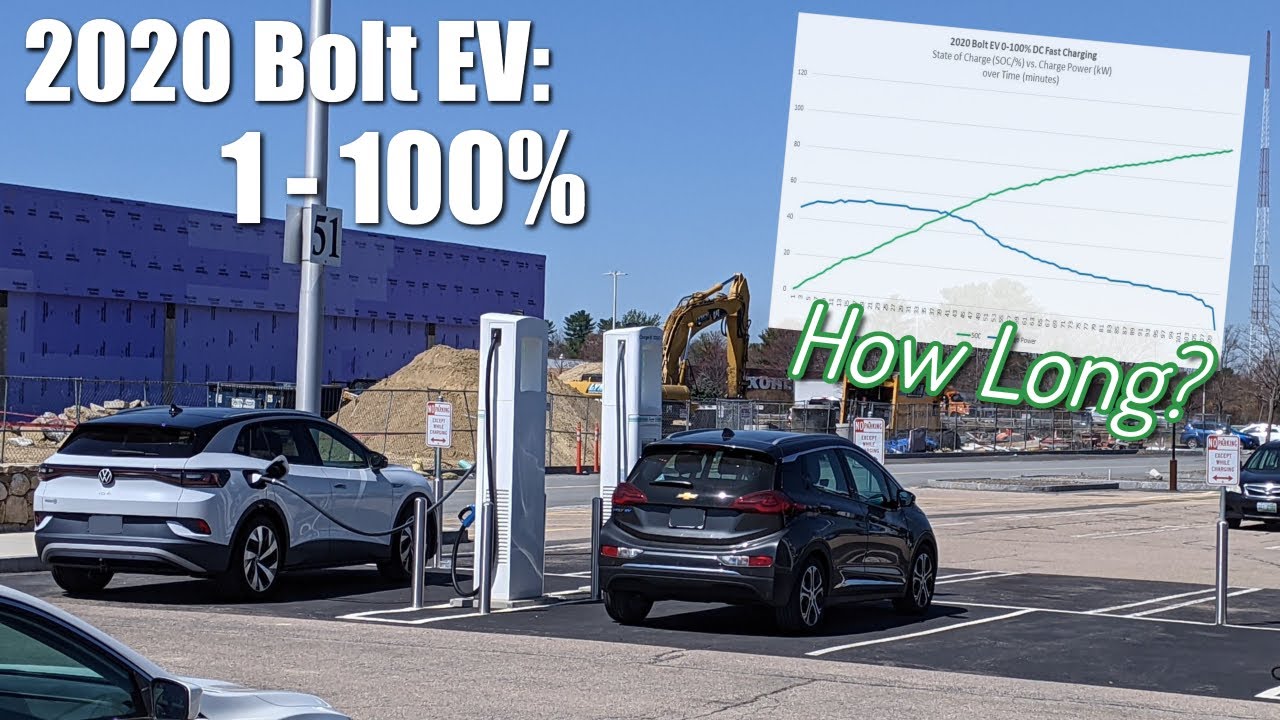
2020 Chevy Bolt EV: 1% to 100% DC Fast Charging Session - How Long + How Much?
This video details a full 1% to 100% DC fast charging session of a 2020 Chevrolet Bolt EV on an Electrify America station. The reviewer emphasizes that charging to 100% is generally not recommended and the "wrong question" to ask, but undertakes the extended session for data collection. Key takea...


Latest Additions
Showing 24 of 146 total titles. Page 1 of 7.

Coast-to-Coast EVs 50 - Fast Charging Top 50? Time to Unpack US/Canada DCFC
This episode of Coast-to-Coast EVs marks the 50th installment, celebrating a significant milestone in EV infrastructure discussions. The hosts, Eric, ... moreWalter, and Steve, delve into the evolving landscape of DC fast charging (DCFC) in North America as of December 2025. The core of the discussion revolves around a 'Top 50' list of DCFC operators, ranked by site count. A key takeaway is the emergence of new, well-funded entities poised to challenge the established leaders like ChargePoint, Electrify America, EVgo, and Tesla Superchargers. The hosts detail their methodology for compiling the list and categorize operators within the 11-25 range, providing valuable insights into the competitive dynamics and future direction of EV charging infrastructure. less

Nevi Survived But Do We Still Need It? Coast-to-Coast EVs 49 with Ap1/Jacob
This episode of Coast-to-Coast EVs delves into the evolving landscape of electric vehicle charging infrastructure, specifically questioning the contin... moreued relevance of the NEVI program amidst a surge in private sector investment. The discussion highlights the significant expansion of Tesla Superchargers, the growing presence of networks like Electrify America, Ionna, and Walmart Energy, and the ongoing transition to the NACS (North American Charging Standard) connector. While acknowledging the progress made by NEVI, particularly in underserved areas, the consensus leans towards the private sector now driving the majority of new deployments. The hosts and guest Jacob Espinosa emphasize the need for NEVI to remain flexible, especially in supporting charging infrastructure beyond major interstate corridors, while also noting that some states are not effectively utilizing the program. The conversation also touches upon the challenges of charging station reliability, cable management, and the persistent 'adapter hell' for non-Tesla EVs, underscoring the complexity of achieving a truly seamless charging experience. less

Rethink Fueling: Charging as an Experience or Post-Hoc EV Rationalization? | Coast-to-Coast EVs #48
This episode of Coast-to-Coast EVs delves into the evolving experience of EV charging, moving beyond mere functionality to explore its potential as a ... moredesirable part of the travel journey. The hosts discuss the 'holiday paradox,' where novel experiences like EV charging, even if brief, become more memorable than routine gas station stops. They highlight how charging infrastructure could be designed to enhance dwell time, drawing parallels with the hospitality industry, rather than solely focusing on speed and uptime. While acknowledging the ongoing 'power race' towards faster charging, the discussion emphasizes that for many consumers, the ideal charging experience balances sufficient speed with opportunities for rest, local engagement, and multitasking. The conversation also touches upon the recent dip in US EV sales, attributing it to a confluence of factors including expiring tax credits and broader economic concerns, while noting strong global EV adoption trends. Ultimately, the episode advocates for a more holistic approach to EV charging, integrating it seamlessly into the travel experience rather than viewing it as a necessary inconvenience. less

Affordable EVs, Extortionate DCFC, and Your EV Questions Answered | Coast-to-Coast EVs # 47
This episode of Coast-to-Coast EVs tackles the dual nature of GM's EV strategy, highlighting both the return of the affordable Chevrolet Bolt and... more the company's broader financial challenges. The hosts discuss the confusion surrounding the Bolt's "limited run" status, clarifying that GM intends to build to demand, with the launch edition being an LT trim and a more expensive RS version to follow. They also explore the potential for an even smaller, more affordable EV below the Bolt, possibly a successor to the Spark EV, to compete in the sub-$25,000 market. The discussion then shifts to GM's impressive presence at Electrify Expo NY, showcasing a wide range of EVs from Chevy to Cadillac, and how these higher-end models help fund the development of more accessible vehicles. The conversation also touches upon the critical issue of charging infrastructure, the challenges faced by drivers in multi-family dwellings, and the need for charging providers to be more visible and customer-focused at industry events. The episode underscores the importance of diverse EV offerings and robust charging solutions for widespread adoption. less

EV Fast Charging Eruption: Where Is It Happening and How Long Will It Last?
This episode of EV Channels dives deep into the burgeoning DC fast charging infrastructure, particularly focusing on the Great Lakes region and Wiscon... moresin. The hosts and guest Jay Williams of WisconsEV discuss the rapid expansion of charging networks like Electrify America, Quick Charge, and Tesla, highlighting the impact of NEVI funding in filling crucial gaps, especially in more remote areas. While acknowledging the significant growth, the discussion also touches upon disparities in charger availability and the ongoing need for V4 and newer technology. The conversation also briefly explores the trend towards more affordable EVs, with the Chevrolet Equinox EV and Tesla Model 3/Y being highlighted as key players in making EVs more accessible, though concerns about stripping features for cost reduction are noted. The overall sentiment is positive regarding the acceleration of charging infrastructure, with a focus on how it's enabling broader EV adoption beyond major metropolitan areas. less

Inevitable Transition or EV Fall Back? Coast-to-Coast EVs #45 w/ Chase Drum (Grid Connections)
This episode of Coast-to-Coast EVs delves into the shifting landscape of electric vehicle adoption, particularly focusing on the surprising backtrack ... moreby Stellantis on its all-electric Ram EV and Ram Charger, opting instead for an extended-range electric vehicle (EREV) model. The hosts and guest Chase Drum largely agree that this move, while perhaps disappointing for EV purists, is a pragmatic business decision given the lack of demonstrated consumer interest in a pure EV truck from Ram and the broader market's hesitation towards electric pickups. The discussion highlights the divergence in Stellantis's EV strategy between Europe and North America, with European brands like Citroën and Peugeot showing more vigor. The conversation also touches upon the end of US federal EV incentives, the pause in Canada's EV sales targets, and the growing importance of software integration in EVs, with GM's adoption of Android Automotive OS being a point of interest. Chase Drum shares a personal anecdote about his Tesla Model 3 being rear-ended, detailing a smooth repair process but also a disappointing experience with a Hyundai rental. The overall sentiment suggests a market that is still maturing, with hybrids and EREVs playing a crucial role in bridging the gap for consumers not yet ready for full electrification, especially in the truck segment. less

High Power Charging: Essential or Overblown? Walmart Update + Dwell Time | C-to-C EVs Returns!
Coast to Coast EVs returns with a comprehensive discussion on EV charging infrastructure, featuring insights from Landon West of The Arkansas eTravele... morer. The episode delves into the rapid advancements in high-power charging, with Mercedes-Benz planning 600kW charging via HYC 1000s and Tesla's 'Supercharger for Business' initiative. The hosts also provide a detailed update on the Walmart Energy DCFC project, highlighting the growing number of open and permitted locations, and the split between Alpronic and ABB hardware. A significant portion of the discussion revolves around the "dwell time" debate, questioning the necessity of Level 2 charging at retail locations like Walmart when DC fast charging is becoming increasingly prevalent and efficient. While acknowledging the potential use cases for plug-in hybrids and fleet employees, the consensus leans towards DC fast charging as the more practical solution for the evolving EV landscape and Walmart's streamlined retail model. The episode also touches on the competitive hardware market, with Alpronic and ABB emerging as key players. less

Ionna Reynoldsburg Rechargery Site Visit + DCFC Session | Quick Charge # 21
This video provides a comprehensive site visit and charging session review of the new IONNA Rechargery in Reynoldsburg, Ohio. The reviewer highlights ... morethe facility's impressive scale, featuring 12 stalls with both CCS and NACS connectors, a full canopy, and convenient pull-through design. The charging experience using a card reader is detailed, noting a 42 cents per kilowatt-hour rate and a $50 temporary hold. While charging speeds were slightly impacted by temperature, the session achieved a peak of 233 kW and added over 80% charge in approximately 30 minutes. A significant positive is the dedicated, well-branded lounge area with restrooms, Wi-Fi, and amenities, offering a comfortable space for EV drivers. The reviewer also briefly mentions an EV raffle opportunity. Minor drawbacks include one offline charger observed and the initial setup requiring a form submission for lounge access. Overall, the site is praised for its branding, amenities, and functionality, setting a high standard for future DCFC experiences. less

EV Armageddon?! Assessing the Post-BBB Electrification Landscape
This episode of Coast to Coast EVs discusses the significant impact of the recent 'Big Beautiful Bill' on the electric vehicle market, parti... morecularly the sunsetting of the $7,500 federal tax credit for new EVs and the $4,000 credit for used EVs on September 30th. The hosts express a consensus that this is not good news, though they debate its ultimate effect. Eric suggests automakers might have been baking the credit into prices, and that falling battery costs are already making EVs more competitive, potentially mitigating the impact. Walter views the credit's removal as a 'nothing burger' for EV adoption, referencing historical data from the Trump administration where EV sales grew without such credits, arguing that EVs are now a more significant market force. The discussion also touches on the potential for a temporary sales spike before the deadline, followed by a flatter adoption curve. Looking ahead, the hosts emphasize the critical role of affordability, with upcoming lower-cost models like the new Bolt EV, Tesla's cheaper offerings, and future models from Ford and GM expected to drive sales regardless of incentives. The conversation also highlights the growing threat of Chinese EV manufacturers, exemplified by BYD's competitive pricing and V2G offerings in Europe, suggesting a fundamental technological shift that cannot be easily stemmed. less
Inside Charging Reliability and Canadian EV Road Trips
This episode of CCEVs features the co-founders of Clockwork, a company focused on EV charger reliability. The founders recount their formative Trans-C... moreanada road trip in a Volkswagen ID.4, highlighting significant charging infrastructure challenges across Canada. Issues included unreliable chargers, missing signage, poor lighting, non-functional tap-to-pay, and the stress of having only one working charger on long stretches. They shared anecdotes of drivers facing critical charging failures, emphasizing the gap between reported data and real-world experiences. Clockwork's mission is to address this by providing software that detects, diagnoses, and resolves charger issues for operators, aiming to improve the driver experience by ensuring chargers are operational. The discussion also touched upon the varying reliability across Canadian provinces and the US, with a consensus that while the industry is improving, significant challenges remain, particularly in rural areas and with less established charging networks. less

Charging Safely for EV Travel Season
This episode of Coast-to-Coast EVs focuses on EV charging safety and essential amenities for travelers. The discussion highlights the evolution of cha... morerging infrastructure from early, unreliable options to the current, more robust network. Guests Joann Orange and Diane Wallace share personal experiences, emphasizing the importance of well-lit, safe charging locations, especially when traveling with family, children, or pets. Concerns range from urban safety in less reputable areas to the isolation and lack of amenities in rural locations. The conversation also touches upon the challenges of charging with larger vehicles or trailers, the reliability of different charging networks (Tesla Superchargers, Electrify America, EVgo, etc.), and the benefits of 24/7 facilities like Pilot Flying J. The overall sentiment is that while significant progress has been made, careful planning and utilizing resources like PlugShare and Chargeway remain crucial for a safe and seamless EV travel experience. less

EV Fast Charging Competition Hots Up: Testing New Vendors in Pennsylvania and NY
This video provides a comprehensive review of emerging DC fast charging vendors across Pennsylvania and New York, highlighting the growing competition... more in the EV charging landscape. The reviewer tests several new and expanding providers, including iONNA, Love's, Francis Energy, Tesla Superchargers (with Magic Dock), and Rivian's Adventure Network. Key aspects evaluated are charger placement, pricing, and power delivery. While new sites like Love's and Francis Energy, often NEVI-funded, offer competitive pricing (around 30 cents/kWh) and good amenities, others like Rivian's Adventure Network, despite offering quick charging and convenient locations, are criticized for high costs (around 64 cents/kWh). The iONNA station showed promise with good initial power and reasonable pricing (35 cents/kWh) but experienced an unexpected power drop mid-charge. The Tesla Supercharger with Magic Dock was noted for its accessibility to non-Teslas but was capped at a lower kW output. Overall, the reviewer is positive about the increased options and the rollout of NEVI sites, suggesting that EV road trips are becoming more feasible and less stressful, though cost remains a significant factor to consider. less

Electrifying the Desert Southwest w/ AP1 - Coast-to-Coast EVs 40
This episode of Coast-to-Coast TV features a comprehensive discussion on the state of DC fast charging in the Southwestern United States, with a speci... moreal focus on New Mexico. Guest Jacob Espinoza (AP1) provides an in-depth look at newly installed charging infrastructure, including Tesla Superchargers with Magic Docks, Electric Era chargers, and NEVI-funded Francis Energy sites. The hosts and guest explore the varying reliability and pricing strategies of different charging networks, noting the significant price increases from Francis Energy in some regions, while Tesla maintains competitive pricing. The conversation also touches upon the challenges of charger uptime, the potential impact of the dwindling Joint Office for Energy and Transportation, and the evolving landscape of charging hardware, with a particular interest in Alpitronic hyperchargers. The episode highlights the progress in New Mexico's charging network, especially along I-10 and I-25, while acknowledging areas that still require development. less

Enabling Smarter AC Charging to Accelerate EV Adoption
This episode of Coast-to-Coast EVs features David Streitfeld of Smappee, focusing on the critical role of smarter AC charging in accelerating EV adopt... moreion. The discussion highlights how Smappee's energy management solutions, originating from European expertise, offer a scalable and cost-effective approach to EV charging. Key advantages include leveraging existing capacity, integrating charging with solar and battery storage, and mitigating grid strain. The conversation contrasts the US market's current focus on DC fast charging and NEVI funding with Europe's more mature approach to AC charging and energy management. Smappee's products are praised for their robust build quality, modularity, and advanced features like cascade overload protection and solar integration, which significantly reduce upfront installation costs and ongoing expenses. The core message emphasizes that intelligent energy management, rather than just the charger itself, is crucial for making EV charging economically viable and sustainable, especially in light of potential grid capacity issues and shifting utility rates. less

Upgrading the EV Charging Experience with Mercedes-Benz HPC
This episode of Coast-to-Coast EVs features an insightful discussion with Andrew Cornelia, CEO of Mercedes-Benz High Power Charging. The conversation ... morecenters on the ambitious expansion of their North American charging network, aiming for 2,500 public charging stations by 2027 with over a billion dollars in funding. Cornelia emphasizes a dual focus on increasing charging availability and significantly elevating the charging experience for all EV drivers, regardless of brand. Key takeaways include strategic partnerships with retailers like Bucky's and Starbucks to enhance charging locations with amenities, the deployment of high-power 400 kW chargers, and a commitment to high uptime and first-time customer success. The network prioritizes reliability, safety, and convenience, aiming to turn charging stops into desirable destinations. Cornelia also touches on the future of charging speeds, the importance of matching charging technology to vehicle capabilities, and the brand's strategy to offer premium quality without a premium price, making the network accessible to all EV drivers. less

Autonomous Driving Long Distance EV Trips Coast-to-Coast EVs 37 w/ Darren Orange
This episode of Coast-to-Coast EVs delves into the practicalities of long-distance EV travel, focusing on the capabilities of autonomous driver-assist... more systems. Host Darren Orange shares his extensive experience driving a Tesla Model Y Performance from Chicago to Florida, highlighting its near-autonomous performance with Full Self-Driving (FSD). He notes the vehicle's efficiency improvements over his previous Model 3 and the convenience of the expanding Supercharger network, including a significant number of Version 4 chargers. Orange recounts a challenging overnight experience where the car's ability to update and self-park was crucial. The discussion also touches on the nuances of route planning, the challenges of road debris and inclement weather for ADAS, and the evolving EV sales landscape, with a particular focus on GM's growing market share and Cadillac's EV revolution. The consensus suggests that while FSD is advancing rapidly, human oversight remains critical in unpredictable scenarios. less

EV Ownership in the City: What to Buy/Where to Charge? With Rob Hoffman, Urban EV Pod
This episode of "EV Ownership in the City" features Rob Hoffman of the Urban EV Podcast discussing his experience with the Kia EV9 in New Yo... morerk City. Hoffman highlights the surprising viability of EV ownership in a dense urban environment, even with a larger, third-row vehicle like the EV9. He details his reliance on public charging, specifically Flowchargers, which he rates highly for reliability and seamless integration into his lifestyle, despite their slower overnight charging speeds. The primary challenge identified is "ICEing" (Internal Combustion Engine vehicles blocking chargers), though this is less prevalent in his specific Brooklyn neighborhood than in Manhattan. The discussion also touches upon the broader EV charging landscape, including the optimism surrounding private investment in charging infrastructure, the expansion of charging networks like Revel into major cities, and the ongoing challenges of charging accessibility in rural areas versus urban centers. Overall, the episode provides a nuanced look at urban EV ownership, debunking the myth that it's impractical for larger families or those without dedicated home charging. less

Plug and Charge + ISO 15118 Unpacked w/ Hubject's Nate Steele | Coast-to-Coast EVs 35
This episode of Coast-to-Coast EVs dives deep into the complexities of Plug&Charge and the ISO 15118 standard, featuring Nate Steele from Hubject.... more The discussion clarifies the distinction between Plug&Charge (based on ISO 15118 and digital certificates) and simpler, less secure methods like AutoCharge (relying on MAC IDs). Hubject is highlighted as the primary operator of a public and adopted Plug&Charge ecosystem. The video details the current state of Plug&Charge adoption in North America, noting that while the standard has been around for years, widespread implementation is accelerating, particularly with NEVI funding. Key takeaways include the improved customer experience offered by Plug&Charge, with lower failure rates and enhanced security compared to older methods. The conversation also touches upon the future of AC charging with Plug&Charge, fleet applications, and the ongoing challenge of 'account fatigue' which roaming solutions aim to address. While older EVs are unlikely to be retrofitted, the trend is towards broader adoption in new models and charging networks. less

From Hyundai Ioniq 5 to Polestar 2... What Happened?
The reviewer provides an update on their Hyundai IONIQ 5, which is currently out of commission due to an ICCU recall. The part is on backorder, leadin... moreg to an extended rental period in a Polestar 2. While the IONIQ 5 has been a reliable family vehicle for over 80,000 miles, the ICCU issue, estimated to affect 1-2% of models, has caused significant inconvenience. The reviewer praises the IONIQ 5's spaciousness and practicality for families. In contrast, the Polestar 2, a 2023 rear-wheel-drive base model rental, is appreciated for its driver-focused cockpit, responsive operating system with Google integration, and solid build quality. However, the reviewer finds the Polestar 2's interior more restrictive, particularly legroom and a darker cabin, making it less ideal for family use compared to the IONIQ 5. The reviewer notes the Polestar 2's slower charging due to its 400V system and misses the IONIQ 5's safety features like turn signal cameras. The video serves as an ad-hoc impression rather than a full review, highlighting the ongoing issues with the IONIQ 5 and offering initial thoughts on the Polestar 2 as a temporary replacement. less

Turning Against Tesla: Can Customers Separate Man From Machine?
This episode of C-to-C EVs delves into the increasingly polarized sentiment surrounding Tesla and its CEO, Elon Musk. The discussion highlights a grow... moreing divide, with some owners expressing displeasure through protests and vandalism, while others remain loyal. The hosts and guest Chase Drum explore the impact of this sentiment on Tesla's sales, particularly noting a dip in Europe but some support in North America. A key takeaway is the distinction between brand loyalty and the broader EV movement, with the consensus being that criticism is largely brand-specific to Tesla rather than anti-EV. The conversation also touches upon Tesla's Full Self-Driving (FSD) capabilities, with differing opinions on its current effectiveness and future potential, contrasting it with other automakers' approaches to autonomous driving. Ultimately, the episode questions whether the 'man' can truly be separated from the 'machine' in the context of Tesla's brand and future. less

Coast-to-Coast EVs #33 - Electrifying the Heartland
This episode of Coast-to-Coast EVs features Landon from the Arkansas eTraveler channel, discussing his transition from a gas-guzzling GMC Sierra Denal... morei to a Chevrolet Blazer EV RS. Landon highlights the significant cost savings, moving from approximately $300/month in gas to around $40-$50/month for electricity, and praises the driving experience, particularly the instant torque and acceleration for defensive driving. He emphasizes that the economic benefits, rather than just environmental concerns, are the key drivers for EV adoption in the heartland. The discussion also touches on the evolving EV infrastructure, noting that while major interstates in Arkansas are becoming more traversable, specific areas like Fayetteville lack DC fast chargers. The reliability of Electrify America stations, particularly older ABB units in Northwest Arkansas, is questioned, contrasting with more reliable Signet chargers elsewhere. The conversation underscores the growing importance of economic factors in convincing mainstream buyers about EVs, with potential future volatility in gas prices making the cost savings even more appealing. less
The Next Era of EV Charging
This episode of Coast-to-Coast EVs delves into the rapidly evolving landscape of EV charging infrastructure, featuring insights from Quincy Edmund Lee... more and Lang Reynolds of Electric Era Technologies. The discussion highlights the critical need for reliable and accessible charging, with Electric Era positioning itself as a solutions provider focused on seamless integration of hardware and software, including battery buffering technology. Key takeaways include the company's emphasis on speed in deployment, even in challenging permitting environments like California, and their innovative approach to payment processing that mirrors the ease of traditional gas stations. The conversation also touches upon the importance of site selection based on port deficiency and retail adjacency, and the broader implications of grid strain and the role of battery storage in future charging solutions, particularly for fleet operations. The episode underscores that true reliability extends beyond mere uptime to encompass successful charging sessions, a metric Electric Era actively monitors and aims to improve. less

What Defines an EV Charging Hub? Station Amenities + Ratings Unpacked
This episode of Coast-to-Coast EVs delves into the evolving definition of an EV charging 'hub,' moving beyond simple charger installations t... moreo encompass essential amenities and user experience. The hosts and viewers discuss the distinction between a charging hub and a standard station, emphasizing the need for dedicated EV infrastructure rather than retrofitted gas stations. Key amenities like restrooms, dedicated lounges, and canopies are highlighted as crucial for a positive experience, especially for longer stays or in adverse weather. The discussion also touches upon the strategic importance of location, differentiating between travel corridor sites and community-focused hubs. While acknowledging the marketing appeal of 'Giga Hubs,' the core sentiment is that a true hub offers a comprehensive, EV-centric experience, potentially including food services and comfortable waiting areas, moving towards a 'third space' concept for EV drivers. less

Tesla Model Y vs. Hyundai IONIQ 5: Electric Crossover Comparison (Pre-Refresh!)
This video provides a detailed comparison between the pre-refresh Tesla Model Y and the Hyundai IONIQ 5, focusing on interior features, storage, styli... moreng, and charging. The reviewer highlights Tesla's superior software interface, praising its responsiveness and app integration, though noting the absence of a driver's cluster as a drawback. Storage space in the Model Y is deemed significantly better, especially for larger items and luggage, making it a more practical choice for families or those with active lifestyles. The IONIQ 5, however, excels in charging speed due to its 800-volt architecture, offering a more consistent and faster charge curve, particularly at various states of charge, compared to the Model Y's peakier but shorter-lived charge rate. While the IONIQ 5 offers more traditional interior elements and potentially better passenger comfort for reclining, the Model Y's minimalist approach and integrated tech are seen as key strengths. Ultimately, the Model Y wins on storage and software, while the IONIQ 5 takes the lead in charging performance. less