
Auto Expert John Cadogan positions itself as a vital resource for navigating the complexities of the automotive world, particularly within the highly competitive Australian market. The channel delves into the everyday realities of car ownership, addressing common frustrations and offering insights into the decision-making processes behind purchasing and maintaining vehicles. It aims to demystify the automotive landscape for consumers, providing expert guidance on a range of topics.
With a focus on practical advice and in-depth analysis, Auto Expert John Cadogan covers essential aspects of vehicle ownership, from the nuances of upgrading older cars to the critical factors influencing tyre performance and safety. The channel also engages with contemporary issues such as electric vehicle (EV) technology, exploring both the potential and the challenges associated with their widespread adoption and integration into existing infrastructure.
With a focus on practical advice and in-depth analysis, Auto Expert John Cadogan covers essential aspects of vehicle ownership, from the nuances of upgrading older cars to the critical factors influencing tyre performance and safety. The channel also engages with contemporary issues such as electric vehicle (EV) technology, exploring both the potential and the challenges associated with their widespread adoption and integration into existing infrastructure.

When Should I Upgrade My Old Car? | Auto Expert John Cadogan
John Cadogan tackles the perennial question of when to upgrade a vehicle, offering a pragmatic perspective that challenges the industry's push for constant turnover. He argues that keeping a car longer significantly reduces depreciation and environmental impact, directly refuting the "greenwashin...



Latest Additions
Showing 24 of 285 total titles. Page 7 of 12.

MG4 Excite 51 EV: My First Drive in Australia
John Cadogan provides an in-depth first drive of the MG4 Excite 51, deeming it the closest thing to an ideal mainstream EV for the Australian market. ... moreHe praises its dynamic driving capabilities, excellent weight distribution, and responsive handling, noting it significantly exceeded his expectations. The car's affordability, especially when considering government incentives and novated leases, is highlighted as a major draw, making it a compelling alternative to conventional internal combustion engine vehicles. Cadogan also commends its practical size, comparable to a Corolla, and its understated exterior design. However, he criticizes the interior's over-reliance on digital interfaces, particularly the flat-top and bottom steering wheel which he finds uncomfortable and obstructive. The placement of USB ports and the cavernous, underutilized center console space are also noted as ergonomic shortcomings. A significant point of contention is the car's automatic power-down feature, which activates upon locking, a departure from traditional car operation that he found initially baffling. Despite these criticisms, Cadogan concludes that the MG4 Excite 51 is a strong contender for those seeking an affordable, practical EV for daily use, provided they have access to charging and don't frequently undertake long-distance regional travel due to the lack of a spare tire. less

BYD Dolphin: A Cheap EV But Also Terrible
John Cadogan delivers a scathing review of the BYD Dolphin, labeling it Australia's cheapest and worst EV. He criticizes its performance, citing ... morea 0-100 km/h time of 12.3 seconds, which he deems "manifestly inadequate" and "downright terrifying" for overtaking. Cadogan also highlights significant concerns regarding BYD's compliance and safety record in Australia, referencing issues with the ATO 3's child restraint provisions and reports of fires with the BYD Han in China. He further questions BYD's commitment to corrosion prevention, contrasting their claims with visible rust on vehicles. The review also scrutinizes BYD's sales and servicing network, particularly the use of 'MyCar' (formerly Kmart Tyre & Auto) for servicing, which has a poor customer reputation. Cadogan strongly recommends the MG4 Excite 51 as a superior alternative, offering better performance, warranty, charging, and dynamics for a slightly higher price, suggesting the Dolphin's low price is a cynical move to highlight the MG4's value. less

MG4 Excite 51: Australia's New Cheapest EV, Is Under $140/wk
The MG4 Excite 51 is positioned as Australia's most affordable EV, with ownership potentially costing under $140 per week via novated lease. The ... morereviewer highlights its "ground up EV platform" and "50/50 weight distribution" as key strengths, suggesting strong potential for dynamic engagement. The base 51 kWh battery offers a claimed 350 km WLTP range, estimated at a real-world 250 km, which the reviewer deems sufficient for most daily driving needs, even considering factors like heating and higher speeds. Charging is noted as taking approximately one hour at a 50kW DC fast charger or overnight via 6.6kW AC home charging. While the Excite 51 is praised for its accessibility and value, the reviewer cautions against towing due to significant range reduction. The reviewer also critiques the marketing's emphasis on cost-of-living pressures, arguing that new car purchases are discretionary and that the MG4's true appeal lies in its affordability as an EV option, not as a solution for those struggling with basic expenses. The car's performance is also discussed, with the base model being slightly faster to 100 km/h than the mid-spec due to its lighter weight, despite lower power output. less

Avoid The Number-One Mistake New Car Buyers Make, Up Front
This video strongly advises new car buyers to avoid the common pitfall of purchasing based purely on 'lust' or emotional attraction, using t... morehe Ford Puma as a primary example. The reviewer, John Cadogan, argues that while initial attraction is natural, it often blinds buyers to critical objective factors. He criticizes the Ford Puma extensively, not on its driving dynamics, which he concedes are likely adequate for most, but on deeper issues. These include Ford's "reprehensible record on customer support and reliability," its manufacturing origins in Romania (linked to historical corruption and emigration), and its poor commercial performance and resale value compared to competitors like the Mazda CX-3. Cadogan also delves into Ford's controversial history, citing a BBC report on alleged collaboration with a military dictatorship in Argentina, leading to accusations of crimes against humanity. The core message is to prioritize objective factors like brand culture, reliability, customer support, and resale value over superficial appeal to avoid long-term disappointment and financial loss. less

Portable Power: Bluetti AC60 & B80 Portable Power Station Review - First Weather-Resistant Units!
This review focuses on the Bluetti AC60 and B80 portable power stations, highlighting their key features and contrasting them with the Bluetti AC180. ... moreThe standout feature for the AC60 and B80 is their IP65 rating, offering robust protection against dust and water jets, making them ideal for outdoor and rugged environments like camping or off-grid living. The AC60 boasts a 600W inverter with simultaneous output capabilities across various ports (AC, USB-A, USB-C, 12V DC, inductive charging), while the B80 serves as an expansion battery to increase total storage. The reviewer notes the AC180 offers significantly more inverter power (1800W) and native battery capacity, but the AC60/B80 combination matches the AC180's battery capacity while retaining the crucial environmental protection and adding modularity. The AC60/B80 system is praised for its portability (two 9kg units) and the ability to take the AC60 unit separately for mobile use. Both units feature built-in power bricks, new displays, app control, and LiFePO4 batteries with long cycle life. The reviewer recommends Bluetti products based on past reliability and offers a discount code for the AC60, emphasizing the importance of choosing the right unit based on power needs. less

Your Heavy Tow Test Comments and Feedback
John Cadogan's latest video delves into viewer feedback regarding a previous Subaru Outback heavy tow test. The discussion highlights concerns ab... moreout journalistic integrity in the digital age, emphasizing the need for critical assessment of online content. Cadogan strongly advises against purchasing demonstrator vehicles, citing their potential for abuse during press fleet duties. He also defends the value of investigative journalism, drawing parallels to the Ben Roberts Smith trial. A significant portion addresses technical aspects of towing, particularly concerning trailer loading and tow ball download measurements, with Cadogan advocating for proper equipment and adherence to safety standards. He debunks a viewer's physics interpretation regarding tow ball leverage, explaining the mechanics of load distribution. The review also touches upon the challenges car manufacturers face in managing brand perception through media loans and influencer collaborations. Overall, the video serves as a cautionary tale on vehicle usage, media consumption, and the importance of safety in towing. less

Car Industry Launches Revolutionary New Self-Roasting Lobby Group
This video offers a scathing, satirical critique of the Federal Chamber of Automotive Industries (FCAI) and its newly appointed board. The host, John ... moreCadogan, uses biting humor and sarcasm to dissect the appointments, highlighting perceived conflicts of interest and the industry's historical anti-consumer practices. He particularly targets the "chairperson" title and the individuals appointed, linking them to brands with questionable consumer track records like Toyota and Nissan. The review emphasizes the FCAI's role in lobbying for industry interests, often at the expense of consumers, and mocks their communication style and perceived lack of genuine progress towards ethical practices. While entertaining, the video's core message is a deep distrust of the automotive lobby's motives and effectiveness. less

Electric Vehicle Deployment Is Being Badly Botched - Everywhere
John Cadogan delivers a scathing critique of the current state of electric vehicle (EV) adoption, particularly in Australia. He argues that government... mores and policymakers are botching the transition by focusing on ambitious targets without addressing critical infrastructure, supply chain, and regulatory issues. Key concerns highlighted include the inadequacy of charging infrastructure, the scarcity of raw materials for battery production, and the significant upfront carbon emissions associated with manufacturing EV batteries. Cadogan is particularly critical of the lack of repairability and recyclability of EV batteries, citing the Tesla Model Y's structural battery pack as an example of a design that leads to premature write-offs by insurers after minor accidents. This, he contends, negates much of the environmental benefit of EVs, especially in countries with carbon-intensive electricity grids like Australia. While acknowledging the personal benefits of EV ownership, such as home charging and zero tailpipe emissions in cities, Cadogan concludes that the broader logistical and regulatory framework is severely lacking, making widespread EV adoption a flawed and potentially counterproductive endeavor in its current form. less

Bluetti AC180 Portable Power Review for 4x4, Camping and Off-Grid Work
John Cadogan reviews the Bluetti AC180 portable power station, highlighting its suitability for off-grid adventures, camping, and 4x4 excursions. He p... moreraises its integrated design, eliminating the need for separate charging bricks, and its user-friendly interface accessible via a smartphone app. The AC180 boasts a 1.8kW continuous output (surging to 2.7kW) and 1152Wh capacity, powered by durable LiFePO4 cells with a 35,000-cycle rating and a 5-year warranty. Cadogan emphasizes its portability, weighing 28.1kg, making it significantly lighter and more manageable than previous models like the AC200P. A key advantage is its silent operation, contrasting sharply with noisy generators, preserving the tranquility of remote locations. The unit performed exceptionally well in a severe test, powering a mag drill for 38 holes with 66% battery remaining, even while charging a phone. The reviewer also notes its potential for expansion with future battery modules and its utility as an uninterruptible power supply. The AC180 is presented as a versatile, user-friendly, and robust power solution for various applications. less

Budget Black Hole: The $7.4M Fuel Efficiency Standard Should Have Been Free
John Cadogan critically analyzes the Australian government's recent announcement of a $7.4 million investment over four years to develop fuel eff... moreiciency standards for light vehicles. Cadogan argues this is a colossal waste of taxpayer money, as developed nations like the US have had similar regulations (CAFE standards) in place for decades. He highlights that Australia is essentially reinventing the wheel, citing the US's 1978 implementation and continuous tightening of standards, which have significantly improved average fuel economy. The review points out that Australia's lack of such standards has made it a dumping ground for less efficient vehicles, while countries with regulations incentivize manufacturers to send more fuel-efficient and electric vehicles. Cadogan suggests a simple 'copy and paste' approach from existing US regulations, estimating it could be done for a fraction of the cost and much faster, criticizing the government's inefficiency and lack of foresight. less

Reacting to Your Comments and Criticism
This episode of Auto Expert features John Cadogan addressing viewer comments and criticisms. Cadogan defends his stance on bull bars, explaining their... more physics-based danger to human occupants in collisions, contrasting it with his own experiences. He also discusses the limitations of current battery technology, stating that while it's improving, the pace is not as rapid as some might believe, and the idea of 2000-mile EV ranges is unrealistic for conventional cars. Cadogan highlights that many of the benefits of EVs, such as sufficient range for daily use and weekend charging, are already achievable with current models like the Ioniq 5. He debunks the notion of EVs being zero-emission, emphasizing the significant environmental impact of their manufacturing process and the embodied energy in materials. The reviewer also touches on the unique Australian problem of older, polluting trucks dominating city roads and expresses skepticism about the practicality of electric trucks for long-haul transport, favoring hydrogen as a future alternative. Overall, the video provides a detailed, albeit opinionated, look at various automotive topics, with a strong emphasis on debunking common misconceptions. less

I Screwed Up About EVs - Big Time
John Cadogan issues a significant correction regarding his previous analysis of EV emissions, admitting a critical calculation error where he inverted... more the numerator and denominator. This mistake led him to underestimate the CO2 emissions advantage of the Hyundai Ioniq 5 Epic over a Ford Ranger Wildtrak V6 diesel. While the Ioniq 5 is indeed more CO2 efficient per kilometer (122g vs 222g), Cadogan's corrected calculation reveals the EV's advantage is substantial, not marginal as previously stated. He emphasizes that despite this correction, the core argument that EVs are not a zero-emissions solution and cannot single-handedly solve climate change remains valid. The video highlights that the embodied carbon in EV batteries and the CO2 intensity of the electricity grid are crucial factors often overlooked. Cadogan argues that investing in home solar and battery systems offers a more impactful CO2 reduction strategy than solely focusing on personal transportation, especially given Australia's current grid mix. He criticizes the prevailing narrative that solely demonizes internal combustion engines and promotes EVs without acknowledging these complexities, suggesting vested interests are driving this simplified discourse. less

EV Versus Diesel Ute: What's Really Greener? | Auto Expert John Cadogan
This video critically examines the environmental impact of electric vehicles (EVs) versus traditional diesel utes, challenging the common perception t... morehat EVs are inherently greener. The presenter, John Cadogan, argues that the manufacturing process for EVs, particularly the batteries and steel used in their construction, carries a significant upfront carbon dioxide debt. He contrasts this with the CO2 emissions of a Ford Ranger Wildtrak V6 diesel ute, suggesting that in Australia's current energy grid context, the two are comparable, with the diesel potentially being greener over the initial years due to the EV's manufacturing footprint. Cadogan criticizes the marketing and lobbying efforts that promote EVs as a simple solution to climate change, advocating instead for a fact-based approach that considers the entire lifecycle and the realities of energy production. He concludes that smaller, conventional cars or hybrids might be genuinely greener options, and that the Ranger Wildtrak, despite its emissions, is a more commercially viable and potentially less environmentally damaging choice than a large EV in the Australian context, especially when considering the grid's carbon intensity. less

Reacting to Your Comments & Criticism
This episode of AutoExpert features John Cadogan addressing viewer comments and criticisms. The discussion spans various topics, including the value o... moref university degrees, the importance of hydrocarbons, and a critique of the term 'miracle' for fortunate events. A significant portion is dedicated to the utility and design of tactical flashlights, particularly Olight's Warrior 3s and Warrior Mini 2. Cadogan emphasizes their effectiveness as deterrents rather than weapons, cautioning against relying on features like strobe mode under duress. He also provides a detailed explanation of the versatility and affordability of 1-2-3 blocks for various workshop applications, advocating for their inclusion in any toolkit. The review highlights Cadogan's direct, no-nonsense communication style and his commitment to providing practical advice. less
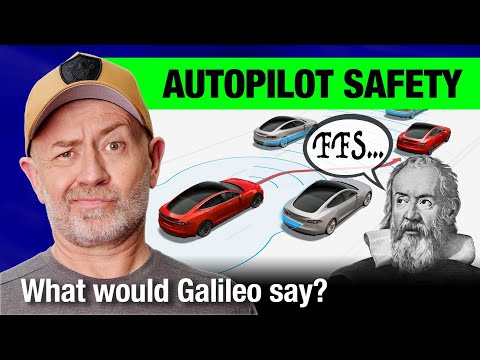
How Safe Is Tesla's Autopilot?
This video critically examines the safety claims surrounding Tesla's Autopilot system, particularly in light of a recent incident involving a ped... moreestrian. The reviewer, John Cadogan, argues that the term 'Autopilot' is misleading and that Tesla's claims of enhanced safety are not yet substantiated by credible, independent data. He cites a lack of rigorous, controlled studies and points to reports from institutions like the Virginia Transportation Research Council and the Insurance Institute for Highway Safety, which suggest that while driver assistance systems have improved safety, definitive proof for Tesla's Autopilot is lacking. Cadogan contrasts the marketing hype with the scientific need for empirical evidence, drawing parallels to Galileo's historical struggle for factual accuracy against established authority. The core message is that consumers should be wary of unsubstantiated claims and that objective data, not marketing, should guide perceptions of safety. The reviewer emphasizes the importance of factual accuracy and independent verification in the automotive industry. less

Another Nissan Customer Support Fail
John Cadogan delivers a scathing critique of Nissan Australia's customer support, using a reader's experience with a 2015 Nissan Qashqai as ... morea prime example. The Qashqai, despite being under eight years old and having only 78,000 kilometers, developed worn drive shafts (CV joints). Nissan denied a goodwill claim, classifying the issue as 'wear and tear,' a stance Cadogan vehemently refutes. He argues that CV joints, as part of the powertrain, should not fail at this mileage, especially given Nissan's own warranty period. Cadogan criticizes Nissan's reliance on outdated 'goodwill' claims instead of adhering to Australian Consumer Law's 'acceptable quality' guarantee. He also highlights Nissan's significant sales decline in Australia, suggesting a cost-cutting strategy that compromises customer care and warranty support. The expert advises consumers to explicitly cite consumer law when seeking remedies, rather than relying on dealers or vague goodwill gestures, and recommends seeking professional legal advice for complex issues. less

Tesla's Autopilot Is Still Worthless
This video critically examines Tesla's Autopilot system, using a real-world court case in Australia as a focal point. The presenter argues that t... morehe term 'Autopilot' is misleading and borderline fraudulent marketing, emphasizing that drivers remain fully accountable for their actions, even when the system is engaged. The review highlights a serious incident where a Tesla Model 3 allegedly struck and severely injured a pedestrian while Autopilot was in use. The presenter stresses that such driver-assistance systems are not true autopilots and can lead to over-reliance, potentially causing drivers to become less vigilant. The core message is that drivers must remain in control and acknowledge their ultimate responsibility for safety, regardless of the technology employed. The video concludes that until full, fail-safe autonomy is achieved, these systems are a liability that can make driving more tedious and increase the risk of accidents. less

Reacting to Your Comments and Criticism (Season 2 Episode 3, April 2023) | Auto Expert John Cadogan
This episode of Auto Expert features John Cadogan addressing viewer comments and criticisms. The primary focus shifts to debunking common misconceptio... morens, particularly regarding the efficacy of snorkels for improving engine performance, temperature, or dust filtration, with Cadogan asserting they are only beneficial for water crossings. He also tackles the science behind EV battery fires, explaining why water is the most effective extinguishing agent due to its high specific heat capacity, countering claims that smothering agents are superior. Additionally, the reviewer touches on phone charging safety, the physics of tire pressure, and the often-satirical nature of his own vehicle critiques, specifically addressing the perception of the Toyota Land Cruiser Prado as a "soft" or "chick" car, clarifying it's intended as lighthearted Australian banter rather than genuine insult. The episode highlights the importance of scientific literacy in understanding automotive and technological issues. less

Fun With Batteries: How (Not To) Burn Your House Down This Weekend
John Cadogan delivers a comprehensive public service announcement on the safe handling and charging of lithium-ion batteries, particularly focusing on... more power tool batteries and common household electronics. While the video's title suggests a focus on potential house fires, the content delves into the science behind battery technology, its proliferation, and practical safety measures. Cadogan emphasizes the importance of purchasing from reputable manufacturers, using supplied chargers, avoiding charging on combustible surfaces, and being mindful of environmental factors like direct sunlight. He highlights the Australian Standards compliance tick as a key indicator of quality and safety. The review strongly advises against using damaged or unbranded batteries, likening them to a significant fire hazard. Ultimately, the video serves as a crucial reminder to exercise caution and diligence when dealing with the ubiquitous energy stored in modern batteries to prevent potentially catastrophic incidents. less

The Inconvenient Truth About Biofuel It's Just Greenwashing
John Cadogan critically dissects the recent announcement of a research association for next-generation automobile fuels, involving Mazda, Toyota, Suzu... moreki, Daihatsu, and Subaru, sponsored by Eneos. He labels the initiative a blatant greenwashing exercise, arguing that carbon-neutral biofuel is an unworkable and thermodynamically impossible prospect. Cadogan highlights that the participating companies, heavily influenced by Toyota's ownership stakes, are merely creating a facade of environmental responsibility. He dismisses the association's stated research areas—efficient ethanol production, CO2 capture, system operation, and crop cultivation—as redundant, pointing out that these fields have been extensively researched for decades. The core argument is that the entire endeavor lacks novelty and practical application, serving only to allow these manufacturers to appear green without substantive action, particularly in contrast to the established research in agriculture and fuel production. less

Anti-Car Green Politician Joins Volkswagen Supervisory Board
This report by AutoExpert's John Cadogan critically examines Volkswagen's appointment of Julia Willie Hamburg, a Green politician, to its su... morepervisory board. Cadogan highlights the apparent contradiction of appointing a self-proclaimed 'car hater' who prefers cycling and gardening to driving. He questions her qualifications, noting her incomplete university studies and her role as Education Minister despite not finishing her own education. The review delves into the ownership structure of Volkswagen, explaining that the German state of Lower Saxony, where Hamburg is deputy premier, holds a significant stake and thus board seats. Cadogan expresses skepticism about the appointment, citing potential conflicts of interest and lack of professional competence, which has led to legal challenges. He also touches on gender dynamics on the board, noting the younger average age of female members. Ultimately, the report frames the appointment as a curious, potentially problematic decision by Volkswagen. less

Subaru Hybrid: Top 6 Reasons Why You Shouldn't Buy One
John Cadogan delivers a scathing critique of Subaru's hybrid system, labeling it a 'joke' and fundamentally 'underdone.' His ... moreprimary argument centers on the minimal fuel savings (a mere 0.7L/100km compared to the petrol-only model), translating to negligible financial benefits over the vehicle's lifespan. Cadogan highlights the undersized electric motor (12.3kW) and minuscule battery (0.568kWh), which severely limit EV-only operation and regenerative braking capacity. He points out significant compromises, including the removal of the spare wheel, a smaller fuel tank reducing overall range, and a less powerful combustion engine compared to the non-hybrid variant. The lack of an Atkinson cycle engine further compounds the perceived inefficiency. Cadogan concludes that the Subaru hybrid fails to deliver on the core promises of a hybrid vehicle – saving fuel, saving money, or significantly reducing emissions – making it an irrational purchase for consumers seeking genuine hybrid benefits. less

True Lies About Green Cars
John Cadogan delivers a scathing critique of the FCAI's (Federal Chamber of the Automotive Industries) report on electric vehicles in Australia. ... moreHe argues the report is riddled with inaccuracies, scientific illiteracy, and definitional confusion, particularly regarding EVs, hybrids, and plug-in hybrids. Cadogan highlights that without Tesla, EV sales in Australia are virtually non-existent, with Tesla models dominating the market. He criticizes government inaction and the promotion of outdated hybrid technology, specifically from Toyota, while also pointing out the severe lack of hydrogen infrastructure. A key takeaway is Cadogan's strong advocacy for plug-in hybrids as a practical solution for many Australians, offering EV benefits with reduced range anxiety, yet lamenting their poor market penetration due to a failure in communication by manufacturers and government. He concludes that the FCAI's report is fundamentally flawed and serves primarily to benefit established players like Toyota. less

7 Reasons Why the Victorian EV & PHEV Tax on Driving Distance is Insane
John Cadogan vehemently criticizes the Victorian government's Zero and Low Emissions Vehicle (ZLEV) Road User Charge, labeling it the 'worst... more new vehicle tax in the world.' He presents seven key arguments against the tax, emphasizing that it actively disincentivizes EV and plug-in hybrid adoption, contrary to global trends of incentivization. Cadogan argues that the premise of EVs avoiding fuel excise is flawed, as fuel excise revenue is not significantly impacted by current EV uptake and is projected to increase. He highlights that EV owners already incur higher upfront taxes (GST and stamp duty) and that the total tax burden for EV owners only breaks even with combustion engine equivalents after 24 years. Furthermore, he points out the environmental and national security benefits of EVs, which are undermined by this tax. The implementation of the charge is also criticized as cumbersome and overly burdensome for owners. Cadogan concludes that this tax is a 'world-class plonker' move by the Victorian government, damaging the state's image and hindering progress towards cleaner transportation. less