
Engineering Explained delves into the intricate world of automotive engineering, breaking down complex mechanical concepts into easily digestible explanations. Led by Jason Fenske, a mechanical engineer with a profound passion for vehicles, this channel serves as a comprehensive resource for car enthusiasts seeking to understand the inner workings of their favorite machines. From the fundamental principles of how cars operate to detailed analyses of specific models and technologies, the content aims to educate and satisfy the curiosity of a dedicated audience.
The channel's focus on automotive technology is evident in its exploration of diverse topics, including electric vehicles, performance cars, and engine development. By demystifying the engineering behind modern transportation, Engineering Explained provides valuable insights for anyone interested in the evolution and mechanics of automobiles, making it a go-to destination for automotive knowledge.
The channel's focus on automotive technology is evident in its exploration of diverse topics, including electric vehicles, performance cars, and engine development. By demystifying the engineering behind modern transportation, Engineering Explained provides valuable insights for anyone interested in the evolution and mechanics of automobiles, making it a go-to destination for automotive knowledge.

How Miserable Is A Tesla Road Trip?
The "Engineering Explained" channel embarks on an extensive 2,000-mile road trip in a Tesla Model 3 Performance to assess the practicality of electric vehicle long-distance travel. The reviewer highlights that the journey took 38 hours, 11 hours longer than Google Maps' estimate, with approximate...


Latest Additions
Showing 24 of 61 total titles. Page 2 of 3.

Why Are 2026 Formula 1 Engines Going To Lose So Much Power?
The 2026 Formula 1 engine regulations signal a significant shift, primarily driven by a move from mass flow to energy flow limits for fuel. This chang... moree will drastically reduce the combustion engine's power output, from approximately 830 horsepower to 560 horsepower. Concurrently, the electric motor's power will surge from 120 kW to 350 kW, nearly tripling its contribution. Despite the combustion engine's reduction, the overall power output is expected to remain around 1,000 horsepower. Key changes include the elimination of the MGU-H, which is anticipated to reintroduce turbo lag, though its impact may be mitigated by the powerful electric motor. The MGU-K's regenerative capacity will also increase significantly. A notable constraint is the fixed battery capacity, which, combined with the more powerful electric motor, could lead to energy depletion on long straights. The video also delves into new fuel regulations, mandating sustainable fuels with higher ethanol content (E20) and stricter octane limits, alongside new intake air temperature and pressure regulations that appear to create an extremely lean air-fuel ratio, the purpose of which remains unclear to the reviewer. less
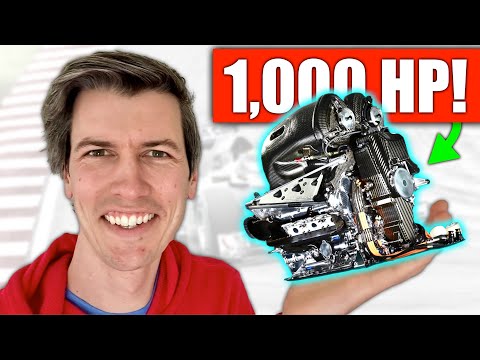
How Tiny Formula 1 Engines Make 1000 HP!
This video provides an in-depth explanation of how Formula 1's 1.6L V6 power units achieve an astonishing 1,000 horsepower. The presenter meticul... moreously breaks down the complex interplay between the internal combustion engine, turbocharging, and the two electric motor-generator units (MGU-K and MGU-H). Key to achieving such high power output from a small displacement are extreme efficiency, a fuel flow limit of 100 kg/hr, and the strategic use of electric assist. The video highlights how technologies like pre-chamber ignition and high compression ratios (up to 18:1) enable leaner air-fuel mixtures and greater energy extraction, pushing thermal efficiency beyond 50%. While the exact boost pressure remains speculative, the analysis suggests it's surprisingly low due to the engine's efficiency and high RPM operation. The explanation is clear, well-researched, and effectively demystifies the advanced engineering behind F1 engines. less

The Most Efficient Car Ever Created? Mercedes EQXX
The Mercedes EQXX is presented as a groundbreaking vehicle, pushing the boundaries of electric car efficiency. The video highlights Mercedes' amb... moreitious goal of achieving 1,000 kilometers on a 100 kWh battery, targeting an exceptional 10 kWh/100km consumption rate. The reviewer meticulously breaks down the key factors contributing to this efficiency: aerodynamics, weight, rolling resistance, and powertrain. Notably, the EQXX boasts a drag coefficient of 0.17, a frontal area of 2.12 m², and a significantly lighter chassis compared to production EVs. The innovative passive cooling of its battery is discussed, along with its implications for longevity versus charge cycles. The powertrain efficiency of 95% is lauded as near theoretical limits. Ultimately, Mercedes successfully achieved and even surpassed its range and efficiency targets in real-world tests, reaching 8.3 kWh/100km and over 1200 km on a single charge. The video concludes that while further improvements are possible, the theoretical efficiency cap for such vehicles is around 8 kWh/100km, indicating significant but not limitless potential for future EVs. less

Does The Tesla Semi Make Any Sense? Part 2!
This video delves into the practical viability of the Tesla Semi, moving beyond initial marketing claims to analyze its real-world performance and spe... morecifications. The reviewer meticulously examines battery capacity, estimating it around 850 kWh, and scrutinizes Tesla's 500-mile range claim, suggesting it was achieved at speeds significantly below 60 mph, with actual highway range at a full load likely closer to 350 miles at 70 mph. The analysis also addresses the battery's substantial weight (around 10,000 lbs) and its impact on cargo capacity, concluding that while the Semi has a slight deficit compared to diesel trucks, its maximum load capacity still falls within the typical range for Class 8 vehicles. Crucially, the video highlights that a significant majority of Class 8 truck usage (around 60-90%) does not approach maximum weight or distance limitations, suggesting ample use cases for the Semi. However, the reviewer expresses skepticism regarding Tesla's original marketing promises on delivery timelines, motor count, charging costs, and base price, emphasizing that substantial subsidies are currently key to making the Semi financially sound for fleet operators like PepsiCo. The core takeaway is that while the underlying engineering appears sound for many applications, the financial and infrastructural aspects, alongside Tesla's historical marketing discrepancies, warrant careful consideration. less

These Tiny Motors Make Big Power Why Supercars Choose Axial Flux
The Engineering Explained video delves into the innovative technology powering the 2023 McLaren Artura, with a particular focus on its novel axial flu... morex electric motor. The reviewer highlights the motor's significant advantages in power and torque density compared to traditional radial flux motors, attributing this to a larger rotor radius, a shorter magnetic flux path, and more efficient winding placement. These benefits allow for a compact, lightweight motor (34 lbs producing 94 hp and 166 lb-ft torque) that contributes to the Artura's overall packaging efficiency and reduced wheelbase. The video also explores the new 120-degree twin-turbo V6 engine, emphasizing its lower center of gravity and optimized intake manifold placement. Key takeaways include the Artura's impressive combined output of 671 hp, its ability to drive up to 11 miles on electric power alone, and the introduction of an electronic limited-slip differential and an 8-speed dual-clutch transmission. While the axial flux motor's high inertia limits its RPM, its packaging and power density are deemed ideal for the Artura's hybrid supercar application, offering a compelling blend of electric torque and V6 power. less

BMW's Hydrogen V12 Engine Is A Hilarious Engineering Stunt
This video delves into the ambitious BMW Hydrogen 7, a dual-fuel V12 sedan based on the 760i, capable of running on either liquid hydrogen or gasoline... more. While BMW touted it as progress without compromise, the reality presented is a significant performance deficit when running on hydrogen, with power dropping from 438 hp to 260 hp due to the use of port injection instead of direct injection. The storage of liquid hydrogen at -253°C presents considerable challenges, including boil-off that necessitates venting, limiting the car's ability to be parked in enclosed spaces and resulting in a usable hydrogen range of only 125 miles. Despite these drawbacks, the reviewer highlights BMW's extensive safety testing, including extreme fire exposure, and commends the engineering effort and risk-taking involved in developing such a novel, albeit ultimately impractical, vehicle. The video concludes by noting BMW's shift towards gaseous hydrogen in fuel cells and electric vehicles. less

Are Autonomous Cars Closer Than You Think?
This video provides an in-depth look at Mobileye's autonomous driving technology, experienced firsthand on Jerusalem's streets. The reviewer... more highlights Mobileye's three-pronged approach: robust hardware with dual sensing systems (vision-only and lidar/radar) for redundancy, comprehensive 'Road Experience Management' (REM) crowdsourced mapping, and a sophisticated 'driving policy' focused on intentions rather than brute-force predictions. A key takeaway is the potential for autonomous vehicles to 'break the rules' when necessary for safety, such as crossing a double yellow line to avoid an accident, a capability that hinges on evolving regulations. The reviewer praises the system's efficiency and human-like driving behavior, particularly in complex scenarios like unprotected left turns, while acknowledging the critical role of regulatory frameworks in determining the real-world experience of AVs. The technology is presented as a significant step towards practical autonomy, emphasizing safety through redundancy and intelligent decision-making. less

Does The Tesla Semi Make Any Sense?
This video meticulously dissects the Tesla Semi, moving beyond marketing claims to a data-driven analysis of its viability. The presenter addresses si... morex key questions, from battery capacity and range to operational costs and emissions. While Tesla's claims of 500 miles of range are deemed theoretically possible under ideal conditions (1,000 kWh battery, 0.36 drag coefficient, 60 mph, 95% efficiency), the analysis reveals a more realistic range of 250 miles under more challenging, yet plausible, conditions (including inclines, higher speeds, headwinds, and lower efficiency). The video also calculates the Semi's weight at approximately 20,000 lbs and its power output around 1,000 horsepower, confirming Tesla's performance claims. Charging rates of up to 1,400 kW are considered feasible. Crucially, the operational cost analysis strongly favors the electric Semi over diesel, provided industrial electricity prices (around $0.09/kWh) are maintained. However, the analysis highlights that significantly higher retail electricity prices could negate this advantage. Emissions analysis shows the Semi, even with the average US electricity mix, cuts CO2 emissions by half compared to diesel, with potential for much greater reductions if renewable energy sources are prioritized. Overall, the video concludes that from a theoretical standpoint, the Tesla Semi makes mathematical sense, though practical implementation and cost realities, particularly electricity pricing, remain critical factors. less

Tesla Battery Damage? I Ran Over A Metal Bucket
In this comprehensive review of his four-year-old Tesla Model 3 Performance, the host details a frightening incident where he ran over a metal bucket,... more causing minor damage to the underbody and a rear suspension cover. The repair cost for the suspension cover was surprisingly low at $11.55 from a Tesla Service Center. The video also covers other service items including wheel/tire inspection, control arm lubrication, wire harness check, spoiler re-installation, air filter replacement, and steering column rattle mitigation. While the spoiler issue was a recurring frustration, the air filter service was reasonably priced. The host praises the Model 3 Performance as a genuine sports sedan, highlighting its exceptional acceleration, handling, and overall driving fun, noting it remains competitive even after four years. However, he expresses frustration with the rain-sensing wipers, the infotainment system's wasted screen space, glitchy cameras, and Tesla's consistently over-promised and under-delivered range. The host also advises against pre-paying for Full Self-Driving due to its unfulfilled promises. less

I Hate That I Love The Hummer EV
The 2022 GMC Hummer EV presents a stark dichotomy: a marvel of engineering with extreme off-road and on-road capabilities, yet a significant question ... moremark regarding environmental responsibility. The reviewer highlights its impressive 1,000 horsepower, 1,200 lb-ft of torque, and a 0-60 mph time of around 3.6 seconds, significantly outperforming its claimed 3-second figure. Off-road prowess is lauded, with features like 10 degrees of rear-wheel steering, adjustable ride height up to 16 inches, and specialized drive modes (Terrain and Off-Road) making it exceptionally capable. The reviewer praises the nuanced control over regenerative braking, offering multiple layers of adjustment. However, the Hummer EV's immense 9,000+ pound weight and 205 kWh battery are criticized as a "colossal waste of resources," with lifetime emissions potentially higher than many gasoline-powered trucks, including the Ford F-150 Hybrid and Ford Maverick. Charging is also identified as a drawback, with a full charge taking considerably longer than competitors, especially on 150 kW chargers. Despite these environmental concerns, the reviewer admits to liking the vehicle, acknowledging it as a technical achievement and a testbed for GM's future EV technology. less

Does Tesla Have Crap Brakes? Model S Plaid
This video delves into the intriguing question of whether the Tesla Model S Plaid's brakes are adequate, particularly in comparison to its accele... moreration capabilities. The reviewer meticulously analyzes braking distances, comparing the Plaid to the Porsche Taycan Turbo S and noting that while road-going braking distances are nearly identical and acceptable (104 feet from 60-0 mph), the Plaid's brakes are significantly smaller than the Taycan's and are considered under-braked for track use. The core of the discussion revolves around why the Plaid accelerates faster than it decelerates. The explanation hinges on the vehicle being traction-limited in both scenarios, with EVs having quicker response times for torque management than ABS systems in traditional cars. Additionally, the reviewer posits that to ensure stability and prevent oversteer, especially with the rearward weight bias during braking, the car's braking system may intentionally dial back performance slightly, sacrificing a few feet in stopping distance for enhanced safety and predictability. The conclusion is that while the brakes are sufficient for road use, they are not optimized for track performance, and the acceleration-braking anomaly is a result of sophisticated traction control and stability management systems. less

What's The Best Electric Car? Tesla Dominates In The Ultimate Comparison
This video critically examines the real-world road trip performance of 11 electric vehicles, using a 1,000-mile test by Car and Driver as its basis. W... morehile acknowledging the Ford Mustang Mach-E's designation as EV of the Year, the reviewer argues that the three-year-old Tesla Model 3 Performance still holds a significant advantage in convenience and overall travel time. The analysis highlights Tesla's dominance in charging speed, average highway range, and, most crucially, user experience, particularly its integrated navigation system. Other vehicles, like the Porsche Taycan and Mustang Mach-E, show promise but are hampered by charging issues or slower charging rates above 80%. The Nissan Leaf is singled out as particularly unsuitable for road trips due to severe charging limitations. The reviewer concludes that Tesla's cohesive ecosystem, from vehicle to charger, provides a seamless and superior road trip experience compared to the fragmented and often problematic charging infrastructure faced by other EVs, despite criticisms of Tesla's marketing and product launch timelines. less

After 10 Years On YouTube, It's Time For Some Changes!
This video marks the 10-year anniversary of the Engineering Explained YouTube channel, reflecting on its journey from a college project to a major pla... moretform with over 3 million subscribers. The creator, Jason Fenske, expresses gratitude for the opportunities the channel has provided, including the chance to drive various exciting vehicles and meet interesting people. He highlights his personal car collection, notably praising the 2018 Tesla Model 3 Performance as his "best daily" and a "phenomenal" vehicle. The video also touches upon the evolution of YouTube's algorithm, the challenges of consistent content creation, and the creator's plans to adjust his posting schedule for better work-life balance. Fenske emphasizes the importance of community and learning from viewer feedback, underscoring the genuine connection he feels with his audience. less
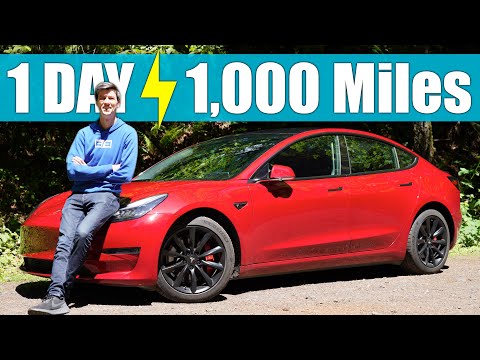
Can An Electric Car Travel 1,000 Miles In A Day?
This video investigates the feasibility of driving 1,000 miles in a single day in an electric vehicle, specifically a Tesla Model 3 Performance. While... more the reviewer ultimately fell short of the 1,000-mile goal, reaching 973 miles, the conclusion is that it is indeed possible. The reviewer highlights that the experience, while long (16.5 hours total, with 14+ hours of driving), was surprisingly manageable due to the forced charging stops, which allowed for breaks and stretching. Key takeaways include the comparable cost to a gasoline car for long distances, the efficiency of Tesla's Supercharger network, and the car's impressive navigation accuracy. Positives mentioned are the secure front trunk, robust camera system (Sentry Mode and dashcam), and responsive infotainment. However, drawbacks include finicky automatic wipers, limited rear visibility, and a real-world highway range that falls short of Tesla's advertised figures (250 miles vs. 310 miles). Despite these points, the reviewer finds the Model 3 impressive and believes EVs are becoming increasingly viable for road trips. less
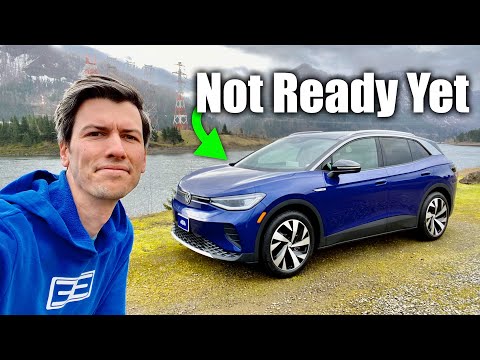
The Volkswagen ID.4 Is A Disappointing Electric Car (For Now)
The Volkswagen ID.4, positioned as an electric car for the masses, shows significant potential but falls short in its current iteration, primarily due... more to its charging and navigation system integration. While the vehicle offers a smooth, quiet ride with decent real-world charging speeds comparable to a Tesla Model 3, and boasts a surprisingly good turning radius, its user experience is hampered by a cumbersome charging initiation process on the Electrify America network. Unlike competitors such as the Ford Mustang Mach-E, the ID.4 requires a multi-step app-based process to start charging, and its navigation system fails to intelligently select faster Electrify America chargers, instead defaulting to slow Level 2 options. The reviewer also notes the absence of one-pedal driving, a lack of a front trunk, and a considerable weight disadvantage compared to rivals like the Tesla Model Y, which impacts driving dynamics. While future software updates are expected to address these issues, the current ID.4 is deemed not quite ready for prime time, especially for those relying on public charging for road trips. less

If Gas Cars Are Banned, Can The Grid Handle Electric Cars?
This video tackles the critical question of whether the existing power grid can handle a widespread adoption of electric vehicles, particularly in a s... morecenario where gasoline cars are banned. The analysis breaks down the issue into two main components: overall power production and local residential consumption. The presenter calculates that a complete switch to EVs in the US would require approximately a 30% increase in total energy production. While significant, this is presented as a manageable challenge, especially when compared to historical energy production growth rates and the projected timeline for EV adoption. The video emphasizes that the primary hurdle isn't the total energy capacity, but rather the localized strain on the grid due to simultaneous charging. The core solution proposed is shifting charging times to off-peak hours through incentives, rather than solely relying on expensive infrastructure upgrades. The example of Norway, with its high EV adoption rate and relatively stable per capita energy consumption, is highlighted as a real-world case study. Ultimately, the video concludes that the grid's capacity is not a fundamental barrier to EV adoption, but rather a predictable engineering challenge with viable solutions, and that other factors like purchase price and charging accessibility for apartment dwellers are more pressing concerns. less

How Miserable Is A Winter Tesla Road Trip? -18°C & Broken Superchargers
This video details a 2,500-mile winter road trip in a 2018 Tesla Model 3 Performance, comparing it directly to a summer trip. The reviewer found that ... morecold temperatures (-18°C / 0°F) increased energy consumption by approximately 19% (338 Wh/mile vs. 285 Wh/mile in summer), resulting in about a 20% reduction in range (212 miles vs. 250 miles on a full charge). Despite the increased energy use, the reviewer highlights that the overall trip duration remained similar due to a revised charging strategy: taking more frequent, shorter stops (25 minutes average vs. 40 minutes) allowed for charging at lower battery percentages, which is faster. This strategy, combined with the ability to drive at higher speeds (80 mph vs. 75 mph), compensated for the reduced range. The reviewer also encountered a broken Supercharger, emphasizing the importance of availability and redundancy. Overall, the experience was surprisingly relaxed, debunking fears of miserable winter EV road trips, though the reviewer notes that a Tesla is not primarily purchased for cost savings over gasoline vehicles. less

Ford Mustang Mach-E vs Tesla Model 3, Model Y - Tesla's Still King
This video provides a comprehensive comparison between the Ford Mustang Mach-E and Tesla's Model 3 and Model Y, ultimately concluding that Tesla ... moreremains the dominant force in the EV market. The reviewer highlights the Mach-E's appealing styling, wireless Apple CarPlay, a useful front display, and competitive pricing, especially with tax credits. However, significant drawbacks are noted, including disappointing ground clearance (5.7 inches), narrower tires than expected for its weight, and less overall efficiency and range compared to the Teslas. While the Mach-E is praised for its playful driving dynamics and practical interior features like a drainable frunk, the Teslas excel in aerodynamics, efficiency, and, in the case of the Model Y, towing capability. The Model 3 is singled out for its superior performance per dollar and driving dynamics. The reviewer acknowledges that while Teslas lead in many metrics, the Mach-E offers a compelling alternative for those not solely focused on the Tesla brand, potentially attracting new buyers to the EV space. less

2021 Ford Mustang Mach-E Review - 10 Best Features Of Ford's EV
The 2021 Ford Mustang Mach-E Premium All-Wheel Drive with Extended Battery is reviewed, highlighting ten key features. The reviewer praises its sleek ... moreexterior design, functional aerodynamic elements, and the return of the classic Ford exterior keypad. The unique door handles are noted as an improvement over Tesla's Model 3, though the rear door mechanism is deemed less intuitive and potentially a pinch point. Cold weather capability is a strong suit, with extensive testing and the ability to charge at low temperatures, plus pre-conditioning for cabin and battery. The frunk is functional as a cooler with a drain, though not fully sealed. The reviewer appreciates the 19-inch wheels with high-profile tires for aerodynamic benefits, but questions their durability given the vehicle's weight and torque, noting easy tire spin. The mobile app offers convenient remote control and tire pressure monitoring, though interior temperature control is less precise. The large touchscreen with wireless Apple CarPlay is a significant upgrade. The artificial propulsion sound is a polarizing feature, but its on/off switch is lauded for user choice, though the sound itself is criticized for mimicking a combustion engine. The lack of a spare tire is a disappointment, but a flexible cargo cover and a subtle Mustang Easter egg are noted positives. The heated steering wheel is highlighted as a premium luxury feature. Overall, the Mach-E is presented as a capable and feature-rich electric crossover with some unique Ford touches. less
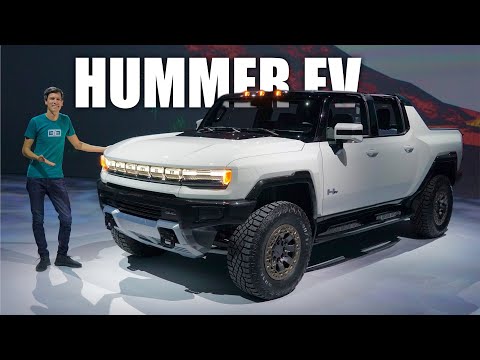
Hummer EV First Look! All The Details Of Gmc's All-Electric Supertruck
The 2022 GMC Hummer EV is presented as an "electric supertruck" with an "unnecessary amount of information" detailed in this first... more look. The reviewer highlights its impressive 1,000 horsepower and 0-60 time of around 3 seconds, achieved via the "Watts to Freedom" mode. Key features like "Crab Mode" (4-wheel steering), "Extract Mode" for increased ground clearance (up to 15.9 inches), and a removable roof are showcased. The "Edition 1" trim is noted as the first available, featuring a lunar theme. The reviewer also delves into the technical aspects of the three-motor e4WD system, the 200+ kWh Ultium battery, and the impressive charging capabilities, including 350 kW charging for adding 100 miles of range in about 10 minutes. While the vehicle's immense size and weight are acknowledged, the estimated 350+ miles of range are considered a significant achievement. The reviewer calculates the motor torque to be around 1,000 lb-ft, clarifying the difference between wheel torque and motor torque. less

How Does Brake-By-Wire Work? Plus: Audi E-Tron Sportback Review!
The video provides an in-depth explanation of brake-by-wire technology, using the 2020 Audi e-tron Sportback as a primary example. The reviewer clarif... moreies that while the system uses electronic control, a failsafe hydraulic system remains, ensuring safety even in the event of electronic failure. The reviewer highlights the benefits of brake-by-wire, including seamless blending of regenerative braking and mechanical brakes, consistent pedal feel, and enhanced electronic control for safety systems. Regarding the Audi e-tron Sportback itself, the reviewer notes its comfortable ride quality, quiet cabin, and immediate electric torque, making it a pleasant luxury EV. However, the reviewer expresses disappointment with the range relative to the battery size and vehicle weight, suggesting that while 220 miles is sufficient for many daily use cases, it's not class-leading. The reviewer also points out that the Sportback variant's primary advantage over the standard e-tron is subjective styling, as the standard model offers more cargo space and better range. Ultimately, the e-tron Sportback is presented as a comfortable, normal-feeling EV that caters to everyday drivers rather than performance enthusiasts. less

Tesla's Secrets To Dominating EV Range
This video meticulously dissects the significant range disparity between the Porsche Taycan Turbo and the Tesla Model S Long Range Plus, debunking com... moremon misconceptions. The reviewer highlights that Tesla's advantage isn't due to cheating or favorable EPA treatment, but a combination of factors. Key contributors to the Tesla's 201-mile lead include a larger usable battery capacity, more efficient regenerative braking and powertrain, and crucially, lower road load (aerodynamic drag and rolling resistance) at higher speeds. While EPA testing methodology and voluntary range reductions by manufacturers play a role, their impact is less significant than the aforementioned factors. The analysis emphasizes that the EPA range figures, particularly for highway driving, may not accurately reflect real-world performance, as demonstrated by a Car and Driver comparison where highway ranges were much closer. The reviewer praises the depth of the analysis, particularly the breakdown of road load equations, and encourages viewers to read the referenced Car and Driver article for further details. less
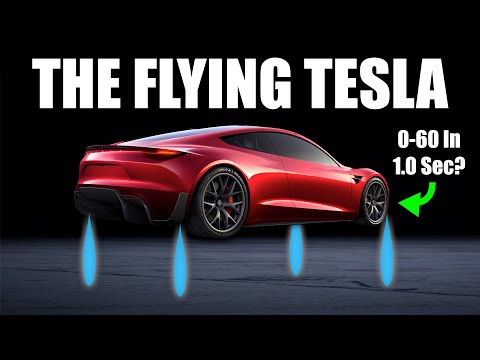
How the Tesla Roadster Rockets Work - 0-60 In One Second?!
This video provides a detailed engineering breakdown of the Tesla Roadster's proposed SpaceX thruster package, aiming to explain its potential pe... morerformance capabilities. The analysis focuses on calculating the vehicle's mass based on its stated 0-60 mph time and wheel torque, estimating it at approximately 2000 kg, though acknowledging it will likely be heavier. The core of the video delves into the mechanics of cold gas thrusters, explaining how compressed air is stored and expelled. While the exact thrust is unknown, the reviewer estimates a minimum of 20,000 Newtons is required for hovering, leading to a projected 0-60 mph time of 1.1 seconds by combining tire grip and thruster force. The review highlights the potential for dramatic improvements in acceleration and braking distances, but expresses skepticism about the thrusters' utility for sustained cornering due to limited air supply. The reviewer concludes that the thrusters are likely intended as a short-duration 'party trick' for extreme acceleration and braking, rather than for everyday driving or extended performance. less

Living With A Tesla Model 3 For A Year - The Best Daily Driver
After a year of ownership, the reviewer concludes the Tesla Model 3 Performance is an exceptional daily driver, echoing Christian von Koenigsegg'... mores praise. The car's standout features include its exhilarating acceleration (0-60 in 3.2 seconds), immediate throttle response, and the seamless experience of one-pedal driving, which has been significantly improved via software updates. The reviewer also highlights the benefits of EV ownership, such as low maintenance, the convenience of home charging, and immediate cabin climate control. However, the Model 3 Performance is not without its flaws. The stock 20-inch wheels are prone to damage from potholes, leading to costly replacements. Rear visibility is deemed poor, and the rear passengers experience a significantly degraded audio experience compared to the front. Exterior quality issues, like a broken tow hook cover and a detaching carbon fiber spoiler, are also noted. The lack of a heated steering wheel and an overly sensitive braking warning system are minor but present annoyances. Despite these drawbacks, the reviewer maintains that Tesla's battery and motor technology places them far ahead of the competition, making the Model 3 a technically beautiful and highly enjoyable car to drive daily. less