Transport Evolved is a premier distributor dedicated to exploring the dynamic world of transportation. The channel focuses on cleaner, greener, safer, and smarter mobility solutions, offering in-depth analysis and insights from a team of experienced hosts. Their content spans a wide range of electric vehicles and automotive innovations, providing a balanced and independent perspective on the future of transport.
With a commitment to covering diverse brands from Tesla and Toyota to Faraday Future and Ford, Transport Evolved delves into the technologies and trends shaping the industry. Their programming is geared towards enthusiasts and informed consumers alike, aiming to demystify complex topics and highlight the evolving landscape of personal and public transportation.
With a commitment to covering diverse brands from Tesla and Toyota to Faraday Future and Ford, Transport Evolved delves into the technologies and trends shaping the industry. Their programming is geared towards enthusiasts and informed consumers alike, aiming to demystify complex topics and highlight the evolving landscape of personal and public transportation.

Nissan Leaf Battery Replacement Just Went Open Source!?
This video highlights a significant development in the Nissan LEAF's aftermarket support: the open-sourcing of battery replacement and upgrade technology by Dala of Dala's EV Repair. Historically, LEAF battery replacements were costly, either through Nissan dealerships or specialized repair shops...


Latest Additions
Showing 24 of 1136 total titles. Page 32 of 48.

Time to Spec an Aptera! - Patreon Special
This Patreon special episode delves into the process of configuring an Aptera, with host Nikki Gordon-Bloomfield detailing her personal choices and ra... moretionale. The presenter expresses a nuanced view on Aptera, acknowledging its unique design and aerodynamic efficiency, while also admitting a 50/50 confidence in its production viability. Key specifications discussed include the 600-mile range battery option, chosen for its balance between capability and cost, and the all-wheel-drive system, which adds a rear motor for enhanced performance. The solar panels are highlighted as a desirable, albeit potentially gimmicky, feature for supplemental charging. Gordon-Bloomfield also touches upon the vehicle's potential as a motorcycle replacement due to personal health concerns and its suitability for long-distance, self-sufficient travel, contrasting it with the practicality of the Ford F-150 Lightning for hauling needs. Despite reservations about Aptera's production timeline, the $100 deposit is deemed a low-risk commitment. less

Update: Bolt EV Fire: GM Announces Full Battery Module Replacement - Here's What You Need To Know!
This video provides a critical update on the Chevrolet Bolt EV battery fire saga, detailing GM's shift from partial module replacement to a full ... morebattery module replacement for affected 2017-2019 models. The presenter highlights GM's confirmation of this new campaign, while noting the significant vagueness surrounding timelines for both the replacement process and the duration owners will be without their vehicles. A key point of contention is GM's decision to disassemble and replace modules rather than swap entire battery packs, a process deemed more time-consuming and potentially damaging to GM's reputation, despite potential environmental benefits. The review also touches upon the new warranty and upgraded 66 kWh battery modules for those receiving the full replacement. For owners pursuing buybacks, GM continues to handle these on a case-by-case basis, with the presenter sharing personal frustrations with the buyback process. The video concludes by emphasizing the inconvenience for owners who must park and charge outdoors with limited battery capacity until their vehicle is serviced. less

Is Chademo Dead? And Should You Try To Avoid Chademo Cars?
This video thoroughly examines the decline of the CHAdeMO charging standard, contrasting it with the ascendance of CCS. The presenter highlights CHAde... moreMO's historical significance, particularly its early adoption by vehicles like the Nissan LEAF and Mitsubishi i-MiEV, and its unique Vehicle-to-Home (V2H) capability. However, the review points out that CHAdeMO's limitations and the industry's shift towards CCS, driven by major automakers and charging networks like Electrify America, have rendered it largely obsolete outside of Japan. The video advises potential buyers to be cautious, especially for long-distance travel in regions favoring CCS, due to reliability issues and a lack of charging infrastructure redundancy. While CHAdeMO still holds a strong position in Japan and is being integrated into new standards for China, its future in North America and Europe appears bleak. less

Ten Episode 350: Tricking Semi-Autonomous Cars, Nikola Gets $2 Million, Tesla Recycles Everything!
This episode of TEN covers a wide array of EV news, from the latest in semi-autonomous driving technology to significant financial and environmental u... morepdates from major players. A key takeaway is the concerning revelation that most semi-autonomous systems can be easily tricked, with Cadillac's Supercruise and systems from BMW and Mercedes-Benz proving the most robust. Nikola receives a $2 million grant despite its founder's indictment, raising questions about the DOE's decision-making process. On a more positive note, Tesla's latest impact report claims 100% battery material recyclability, potentially reducing mining needs by 92%. The show also touches on production delays for the Tesla Model 3 Standard Range Plus due to chip shortages, and Ford's similar issues with the Mustang Mach-E. Used EVs, including the Tesla Model 3 and Chevy Bolt, are identified as the fastest-selling used cars in the US for July. The episode concludes with updates on various manufacturers like Polestar, Audi, Renault, Rivian, Fisker, Cadillac, Volkswagen, Panasonic, SKI, Gogoro, Xpeng, Nissan, MINI, Mercedes-Benz, LG Energy Solutions, and Nio, highlighting new models, partnerships, and financial performance. less

How Do We Decide What Stories Are Legitimate, And Which Ones Aren't? Plus Your Questions!
This live stream from Transport Evolved delves into the crucial process of how the team vets news stories and press releases to determine their legiti... moremacy. Presenters Nikki Gordon-Bloomfield and Winter Tashlin explain their criteria for distinguishing between credible information and "fishy" claims, using the frequently discussed but unconfirmed Tesla Model 2 as a prime example. They emphasize the importance of official sources, physical prototypes, and avoiding speculation, contrasting their approach with channels that report on renders as fact. The discussion also touches upon the influence of politics on EV development, the challenges of production ramp-ups for startups like Lucid and Aptera, and the complexities of journalistic responsibility when reporting on potential issues within the EV industry, such as the Nikola Motors situation. The presenters highlight their commitment to providing context and perspective rather than just breaking news, even when facing criticism for their reporting choices. less

The IPCC Just Issued Its Most Urgent Warning Yet - Here's How EVs (And You) Can Help
This video addresses the urgent warnings from the IPCC regarding climate change and outlines actionable steps individuals can take to mitigate its eff... moreects, with a particular focus on electric vehicles (EVs) and broader lifestyle changes. The presenter emphasizes that while it's too late to completely avoid climate change impacts, significant mitigation is still possible. Key recommendations include transitioning to EVs, especially when charged with renewable energy, and crucially, holding onto vehicles for longer periods rather than frequent upgrades. Beyond EVs, the video advocates for better trip planning, utilizing public transport, walking, or cycling for short distances, reducing meat consumption, opting for locally sourced and seasonal produce, minimizing energy use at home, and engaging in community-based renewable energy projects. The overall message is one of empowerment, urging viewers to lead by example and take personal responsibility to reduce their carbon footprint. less

Does the Bipartisan Infrastructure Bill Matter?
This video delves into the U.S. Bipartisan Infrastructure Bill, examining its contents and potential impact on the transition to electric vehicles. Wh... moreile acknowledging the bill's passage in the Senate, the presenter highlights the ongoing reconciliation process with the House and the bill's limited scope compared to initial ambitions. Key allocations include funding for roads, bridges, public transportation, and rail, with a notable $2.5 billion for charging and fueling infrastructure. However, the review points out the exclusion of Tesla's proprietary network from federal funding unless it opens up or adopts CCS, and criticizes the bill's composition for potentially overlooking the needs of historically disinvested communities due to a lack of diverse representation in negotiations. The presenter concludes that while the bill is a significant step towards modernizing infrastructure and supporting EVs, its ultimate success in fostering a sustainable future hinges on genuine engagement with all impacted stakeholders and the potential passage of a more comprehensive second bill. less

TEN 349 -- White House Plans, Diess Disses Ionity, Facebook Pro-Oil Ads
This episode of Transport Evolved News covers a wide array of EV-related developments. Key highlights include the US White House's ambitious targ... moreet for 50% zero-emission vehicle sales by 2030, notably excluding Tesla due to its anti-union stance. New Zealand's 'feebate' scheme is shown to be highly effective, driving a significant spike in EV registrations. The show also touches on Ford's mixed sales results, where EV models are outperforming ICE counterparts, and Hyundai's new subscription service in the UK. A significant point of criticism is leveled at the Ionity charging network by Volkswagen's CEO, Herbert Diess, despite VW's co-founding role in the network. Other news includes Piedmont Lithium delaying shipments to Tesla, Volvo donating an XC40 Recharge for first responder training, and Hyundai's IONIQ 5 aiming to challenge Tesla's charging dominance. The episode concludes with updates on various startups, government incentives in Russia and India, and a concerning report on pro-fossil fuel misinformation campaigns on Facebook. less

Arcimoto FUV & Friends - Here's What Happened!
Transport Evolved attended Arcimoto's 'FUV and Friends' event at Portland International Raceway, offering a firsthand look at the compa... moreny's latest developments. Initially skeptical, the reviewer was won over by Arcimoto's unique approach and the distinct driving experience of both the FUV and the Roadster. The FUV is described as a compromise vehicle, balancing utility and fun, with a steep but manageable learning curve. While the Roadster offers a more playful, motorcycle-like experience, it's perceived more as a platform for future development than a complete product. Key criticisms include the FUV's restrictive seatbelts and the Roadster's foot brake position and length, though both are acknowledged as fun and unconventional vehicles. The event also previewed potential future applications like a first responder variant, a pickup utility version, and a remotely controllable vehicle. less

President Biden Announces New Electric Car Targets - But Guess Who Wasn't There?
President Biden has set an ambitious target for the US to achieve 50% zero-emission vehicle sales by 2030. While this executive order represents a pro... moregressive step, the video critically examines its shortcomings. The definition of 'zero-emission' includes plug-in hybrids, and the overall target is deemed inadequate to significantly combat climate change, as it still allows for substantial sales of internal combustion engine vehicles. A major point of contention is the conspicuous absence of Tesla from the announcement event, which the reviewer suggests was a political move to appease unions, despite Tesla's pivotal role in the EV market. The review highlights that the focus on appeasing specific political factions and unions compromises the effectiveness and inclusivity of the initiative, leaving many key industry players overlooked. less

UK Government Climate Spokesperson Says Electric Cars Aren't For Her - We Prove Otherwise
This video critiques statements made by UK Government Climate Spokesperson Allegra Stratton regarding her personal reservations about electric vehicle... mores (EVs). The presenter, Nikki Gordon-Bloomfield, argues that Stratton's claims are based on outdated and disproven tropes, highlighting a concerning lack of accurate information in a position of power. The video aims to debunk common misconceptions about EV practicality, particularly concerning range anxiety and travel with children, by presenting real-world examples and data. It emphasizes that while Stratton expressed personal preferences, her statements risk undermining public confidence and the government's own climate targets. The core message is that EVs are increasingly practical for a wide range of users, and governmental figures should be better informed. less

Just Why Are Electric Car Batteries So Hard To Produce (And Diagnose)?
This video delves into the complexities of electric vehicle battery production and fault diagnosis, explaining why advancements, while promising, face... more significant hurdles in commercialization. The presenter highlights the vast difference between laboratory breakthroughs and scalable, reliable production, emphasizing the extensive testing, engineering, and manufacturing challenges involved. Issues with battery fires in vehicles like the Chevrolet Bolt EV and Hyundai Kona EV are used as examples of how difficult it is to pinpoint microscopic manufacturing defects. The review suggests that consumers may need to choose between cutting-edge, potentially less proven battery technology for lower cost and longer range, or opting for older, more established battery systems. While acknowledging the statistical safety of EVs over ICE vehicles, the video underscores the demanding nature of battery development and the need for robust customer care to match technological advancements. less
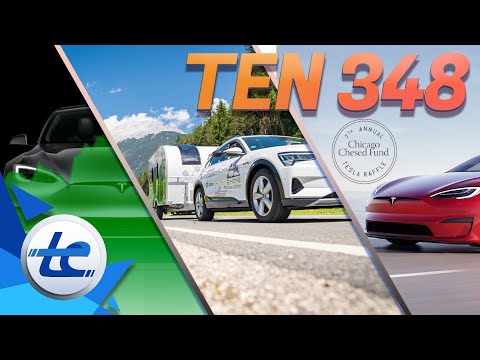
Ten 348
This episode of Transport Evolved News covers a range of EV industry updates. Key highlights include Tesla's strong Q2 2021 earnings, with record... more deliveries and profits despite chip shortages. The show also features the innovative Dethleffs e-home caravan, which set a new range record by towing an e-tron Sportback 386 km. Concerns are raised about The Boring Company providing drivers with scripts to praise Elon Musk. Electrify America's decision to phase out CHAdeMO support from 2022 is noted as bad news for Nissan Leaf and Mitsubishi i-MiEV owners. Tesla's rumored retail strategy shift towards delivery centers and remote test drive management is discussed as a cost-saving measure. The episode also touches on government funding for EV infrastructure, CATL's new sodium-ion battery, and various other manufacturer updates and concept reveals. less

How You'll Be Able To Charge A Non-Tesla With Tesla's Supercharger Network!
Transport Evolved's video provides a comprehensive overview of Tesla's decision to open its Supercharger network to non-Tesla EVs. The prese... morenter, Nikki Gordon-Bloomfield, clearly explains the technical differences between Tesla's proprietary connectors and the CCS standard, particularly highlighting the need for adapters in North America. The review details the expected user experience for non-Tesla owners, emphasizing the reliance on the Tesla app for authentication and payment, and notes the potential for higher charging costs for slower-charging vehicles. While acknowledging the move could significantly improve EV road trip accessibility, the video also raises concerns about potential congestion at Supercharger sites and the pricing strategy, which might alienate existing Tesla owners. The presenter concludes that this is a positive development for the EV charging landscape, fostering competition and accessibility, and explains Tesla's past unsuccessful attempts to collaborate with other automakers on charging infrastructure. less

TE 347 - Second Bolt Recall, Tesla FSD Here, Robotic Charging
This episode of Transport Evolved News covers a wide array of developments in the EV sector. Key highlights include General Motors' second recall... more for the Bolt EV due to unresolved battery fire issues, and Tesla's launch of its Full Self-Driving (FSD) subscription service, albeit with a hardware upgrade requirement for older vehicles. The show also touches upon the rumored start of Tesla Semi production, Rivian's plans for a second US factory, and significant investments in battery technology by Porsche and Mercedes-Benz. Positive trends noted are the increasing profitability of EVs over ICE vehicles in Europe and a UK fleet specialist seeing more EV orders than ICE. A notable drawback mentioned is the ongoing microchip shortage impacting models like the Wuling Hong Guang Mini EV. The episode concludes with a look at innovative solutions like robotic charging assistants for accessibility and the ongoing debate around EV battery supply. less

Breaking: Chevy, LG Admit Manufacturing Defect In Bolt EV - Here's What That Means
This video provides a critical update on the ongoing battery defect issues affecting 2017-2019 Chevrolet Bolt EVs. The hosts detail GM's latest r... moreecall, which involves replacing faulty battery modules due to two rare manufacturing defects. While GM is commended for improved communication, the core problem of identifying and rectifying these defects remains a significant concern. The video highlights the limitations imposed on owners, such as restricted charging to 90% and avoiding deep discharges, effectively reducing the usable range to around 110 miles. This is seen as a major step backward, akin to older, less capable EVs. The discussion also touches upon the financial implications for owners, the potential for buybacks, and the broader cultural context in South Korea influencing LG Energy's response. Ultimately, the review expresses frustration with GM's handling of the crisis, emphasizing that while the Bolt EV technology itself is sound, the manufacturing defect has severely damaged owner trust and the vehicle's reputation. less

How to Break Gasoline Superusers' Pickup, SUV Gas Habit
This video from Transport Evolved tackles the critical issue of 'gasoline superusers' – the 10% of drivers responsible for a third of all ga... moresoline consumption, primarily those driving large SUVs and pickup trucks. The presenter, Nikki Gordon-Bloomfield, argues that converting this group to EVs or hybrids would have a far greater impact on carbon emissions than converting existing hybrid owners. The core of the argument is that these superusers, often driven by perceived needs for power, utility, and safety, are prime targets for electrification. However, the video acknowledges significant hurdles: the current lack of ubiquitous and fast charging infrastructure comparable to gas stations, the need for automakers to prioritize and market electric trucks and SUVs effectively (addressing both utility and image concerns), and the problematic tax loopholes that incentivize the purchase of heavy, inefficient vehicles. The proposed solutions are multi-pronged, involving 'sticks' like increased taxes and registration surcharges on polluting vehicles, and 'carrots' such as improved charging infrastructure and financial incentives. The video also touches on the importance of right-to-repair legislation to empower owners. Ultimately, the verdict is that while challenging, breaking the gasoline habit of superusers is essential for climate goals, requiring a concerted effort from policymakers, automakers, and consumers. less
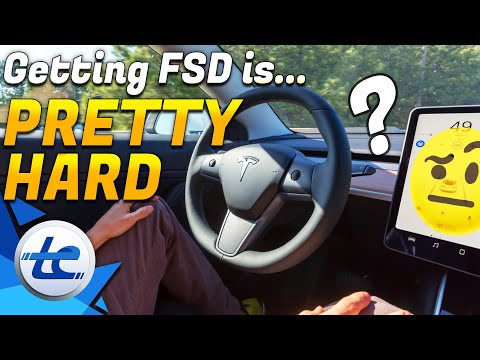
Getting FSD In Your Tesla Might Be Hard?
This video delves into the complexities surrounding Tesla's Full Self-Driving (FSD) subscription service and the hardware requirements for its ac... moretivation. The presenter highlights the confusion and frustration experienced by owners, particularly those with older vehicles (specifically those with Hardware 2.5) who did not initially purchase FSD. While Tesla promised hardware capable of FSD in cars from 2016 onwards, some owners are now being asked to pay an additional $1500 for a hardware upgrade if they didn't spec FSD at purchase or bought their car used. The reviewer argues that Tesla, lacking a dedicated press department, has created a 'quagmire' of mixed messaging. The editorial stance is that Tesla is in the wrong for penalizing these customers, suggesting the company should absorb the cost of the upgrade to maintain its reputation and encourage wider adoption of its technology, especially given the long wait many have endured for FSD features. less

Is It Time To Get A Buyback On Our Bolt EVs?
The presenter discusses the ongoing battery fire concerns with Chevrolet Bolt EVs, specifically focusing on their two 2017 models. After receiving a t... moreemporary firmware update and then a permanent software update, two Bolt EVs caught fire, leading GM to advise owners not to park indoors or charge overnight. This advice, coupled with the fear of potential fires, has prompted the presenter and their partner to explore buyback or MSRP swap options with GM. While acknowledging the Bolt's strengths as a city car and its affordability, the persistent battery issue and GM's cautious advice have eroded confidence. The presenter details the buyback process, mentions that their partner received a favorable offer, and discusses the potential financial and practical implications of either a buyback or an MSRP swap for a newer Bolt model or EV. The video also touches on the broader context of EV battery issues, comparing them to Hyundai's recall and briefly mentioning Tesla's own fire incidents. less

Ten 346 - Bolt EV Caution, Tesla FSD V9, Rivian R1T Delay
This episode of TEN covers a wide array of EV news, with a significant focus on the ongoing issues with the Chevrolet Bolt EV. General Motors has issu... moreed a severe warning to owners of 2017-2019 Bolt EVs, advising them to park outside and avoid overnight charging due to persistent battery fire concerns, even after a software update. The show highlights the potential for a mass buyback or fleet-wide battery replacement, drawing parallels to the Hyundai Kona EV situation. Other key stories include Tesla's FSD v9 beta release, which shows promising capabilities in various driving scenarios, and Rivian's further delay in R1T and R1S deliveries to September, attributed to the semiconductor shortage. The Lightyear One's impressive 710 km range on 60 kWh is also noted, alongside updates on charging infrastructure expansion from EVGo and Electrify America, and regulatory news like the EU's proposed 2035 ICE ban and Biden's right-to-repair executive order. The review suggests a critical juncture for GM regarding the Bolt EV's safety and a continued push for advanced driver-assistance systems and charging infrastructure. less

Charging Station Idle Fees Are Essential - Get Used To It
The video addresses the contentious issue of charging station idle fees, arguing for their necessity in managing high demand and ensuring charger avai... morelability. The presenter, Nikki Gordon-Bloomfield, explains the rationale behind these fees, highlighting how they discourage drivers from occupying charging spots longer than necessary after charging is complete. She discusses a lawsuit filed by a Tesla owner against the company over these fees, asserting that they contradict the 'free Supercharging for life' promise. Gordon-Bloomfield contends that the lawsuit is unlikely to succeed, emphasizing that idle fees are a practical solution to a growing problem of charger congestion, akin to parking fees. The review stresses the importance of EV etiquette, advocating for users to move their vehicles promptly after charging and to avoid charging beyond 70-80% unless absolutely necessary, as charging speeds significantly decrease beyond this point. The presenter concludes that idle fees are essential for the sustainable growth of the EV charging infrastructure and user experience. less

Livestream: Chevrolet Urges Caution Over Bolt EV Fires - We Answer Your Questions
This livestream addresses the critical and ongoing battery fire issue affecting certain Chevrolet Bolt EV models (2017-2019). The presenter highlights... more a concerning incident where a 2019 Bolt EV, despite having received the official GM software update intended to prevent fires, still caught fire. This event, along with others, has prompted GM to issue new, severe guidance for owners, including parking vehicles outdoors immediately after charging and not charging overnight. The video delves into the potential causes, suggesting a manufacturing defect in battery cells produced by LG Energy in South Korea as the most likely culprit, drawing parallels with similar issues in the Hyundai Kona Electric. While acknowledging GM's poor handling of the situation, the presenter emphasizes LG Energy's significant role in the battery pack engineering. The core recommendation for owners is to exercise extreme caution, potentially limiting charging to 70% and avoiding low states of charge, while GM faces pressure to consider battery pack replacements or buybacks. less

Stellantis Goes All-In On Electric -- And That Includes An Electric Dodge Muscle Car!
Stellantis has laid out an ambitious electrification strategy, committing $35.5 billion by 2025, aiming for 70% European and 40% US sales to be electr... moreified by mid-decade. The company's EV Day presentation highlighted a unified approach across its diverse brands, including Dodge, Jeep, and Ram, which are set to embrace electric powertrains. Key to this strategy are four new modular platforms (STLA Small, Medium, Large, and Frame) and five new battery gigafactories. While European brands like Opel and Fiat are already progressing, the commitment to electrifying traditionally performance-oriented American brands like Dodge with an all-electric muscle car by 2024 is a significant development. However, the presentation also revealed nuances, such as electrification definitions including mild and hybrid variants for Jeep, and a disclaimer that European plans may not apply to Latin America due to regulatory and cost factors. Stellantis is also exploring dual battery chemistries and aims for solid-state batteries by 2026, alongside a focus on battery recycling. less

Another 2019 Chevrolet Bolt EV Catches Fire - What Now?
This Transport Evolved video addresses a critical safety concern: a 2019 Chevrolet Bolt EV catching fire despite having received GM's final softw... moreare update intended to prevent such incidents. The presenter, Nikki Gordon-Bloomfield, expresses significant concern, highlighting that this fire occurred even after GM's supposed fix. While acknowledging the rarity of Bolt EV fires statistically, the video emphasizes the severity of this particular incident, especially given the owner's political standing and the car's recent update. The review points to potential issues with individual cell balancing and quality control in affected battery packs, particularly those manufactured in the US facility during the 2019 model year. The presenter strongly advocates for GM to reopen its buyback program and implement a comprehensive battery replacement initiative, drawing parallels to Hyundai's successful recall strategy. For current owners, especially of 2019 models, the advice is to charge only to 80%, utilize the 'hilltop reserve' mode, park outside, and avoid the bottom 20% of the battery's charge range. less