
Autoline Network is a premier distributor dedicated to delivering comprehensive automotive news and insights to enthusiasts and industry professionals alike. Specializing in global automotive developments, the network provides in-depth coverage of everything from cutting-edge EV and AV technology to ICE advancements, car sales trends, and financial earnings reports. Viewers can expect expert analysis and reviews of the latest vehicles, ensuring a well-rounded understanding of the automotive landscape.
The channel distinguishes itself through exclusive content, featuring top auto executive interviews and detailed breakdowns of automotive innovations. With a focus on clarity and expert opinion, Autoline Network serves as an essential resource for anyone seeking to stay informed about the dynamic world of automobiles, from technological breakthroughs to market performance.
The channel distinguishes itself through exclusive content, featuring top auto executive interviews and detailed breakdowns of automotive innovations. With a focus on clarity and expert opinion, Autoline Network serves as an essential resource for anyone seeking to stay informed about the dynamic world of automobiles, from technological breakthroughs to market performance.

World's First Cybertruck Teardown - Steer-by-Wire, 48V, Battery & Gigacastings
This video provides an in-depth look at the initial stages of Caresoft's teardown of the Tesla Cybertruck, focusing on key technological advancements. The review highlights the innovative steer-by-wire system, noting its separation from traditional mechanical linkages and the implementation of re...


Latest Additions
Showing 24 of 868 total titles. Page 5 of 37.

A Look Inside the Brains of the Cybertruck's Battery - Caresoft Teardown
This Caresoft teardown delves deep into the Tesla Cybertruck's battery pack and power electronics, revealing significant advancements over previo... moreus Tesla models like the Model Y. The analysis highlights Tesla's focus on design for manufacturing and assembly, evident in the simplified cell connections, snap-fit components, and the transition to planar transformers and solid-state capacitors in the power converter module. These changes contribute to reduced cost, mass, and assembly time. The video also touches upon the battery's cooling system, noting its efficiency challenges due to the "jelly roll" cell design, and discusses the Cybertruck's unique "waiting mode" for water submersion, including a correction on its activation time. While the complexity and sophistication of the battery pack are praised, the teardown also points out areas for potential process improvement, such as incomplete foam filling in certain sections. An "Easter egg" in the form of a Superman symbol on a circuit board is also noted. less

EVs, AVs & Digital Services: Separating Hype From Fact
This episode of Autoline After Hours features a panel discussion on the current state and future of Electric Vehicles (EVs), Autonomous Vehicles (AVs)... more, and digital services in the automotive industry. Mike Ramsey of Gartner explains the 'hype cycle' concept, positioning EVs as nearing the 'plateau of productivity' globally, despite some market pullbacks. He highlights China's significant EV adoption (50% of new sales) as a key indicator of this transition. Conversely, AVs are firmly in the 'trough of disillusionment,' with significant business challenges and a projected 5-10 year timeline to widespread adoption, though engineering capabilities continue to advance. The discussion also touches on the complexities of AV business models, particularly robo-taxis, contrasting them with more promising applications in trucking and specialized logistics. Tariffs on Chinese EVs are debated, with concerns raised about protectionism potentially hindering US technological development and manufacturing competitiveness, while also acknowledging the need for domestic industry to adapt and innovate. Finally, the panel explores the slow materialization of software and digital services revenue for automakers, citing pricing challenges, technical complexities in global fleet management, and the need for a shift in business models. less

Autoextremist Brand Meter: Live!
This episode of Autoextremist Brand Meter delves into the current positioning and long-term prospects of several major automotive brands, with a parti... morecular focus on Chevrolet, Cadillac, Ford, and Stellantis brands. The panel critiques Chevrolet's struggle to define its identity beyond trucks and SUVs, despite its iconic past. Cadillac faces challenges in creating desirability and executing its EV strategy, with the Lyric's rollout being a notable misstep. Ford is criticized for its inability to scale production of key models like the Maverick and for persistent quality issues, though the new CMO from Toyota offers a glimmer of hope. Stellantis brands like Dodge are questioned for their pivot to EV muscle cars with synthetic sound, potentially alienating core buyers, while Chrysler is deemed a ghost brand with little relevance. Ram is seen as a strong performer in the truck market, but a gap exists in smaller segments. Hyundai and Kia are praised for their design-led transformation and successful product execution, particularly in the EV space with models like the EV9, and are now perceived as mainstream competitors. Genesis is recognized for its impressive product execution and value proposition, rivaling established German luxury brands, though it must guard against arrogance. The German trio (Mercedes, BMW, Audi) are seen as having diminished prestige due to ubiquity and past marketing missteps, with Genesis often offering a better value proposition. Subaru's success is attributed to its strong brand loyalty, driven by reliable vehicles and highly effective, pet-focused marketing. Jeep is criticized for pricing greed and arrogance, losing ground to the Bronco. Lincoln is struggling to regain market relevance despite new products and past celebrity endorsements. Buick's new direction, particularly the affordable Invista, signals a renewed focus on the US market with an emphasis on design. less

The Evolution of Tesla's Body Structure - Caresoft Teardown
This video provides an in-depth look at the evolution of Tesla's body-in-white structures, focusing on the increasing use of large castings. Care... moresoft's president, Terry Woychowski, details how Tesla moved from traditional stamped and welded parts to integrated castings, significantly reducing part count and manufacturing complexity. The Model Y's transition to rear and then front castings is highlighted, with a substantial reduction in parts. The Cybertruck takes this a step further with even larger and more complex castings, showcasing advancements in structural design and modular assembly. The review emphasizes Tesla's design philosophy of cost reduction through engineering and integration, rather than simply cutting content. While the video praises Tesla's innovation, it also points out areas where design choices, like the bolted-on front motor mounts on the Cybertruck, suggest late-stage changes or compromises. The use of mixed materials and clever engineering, such as the integrated battery top as the vehicle floor, are also key takeaways. The video concludes by noting the potential for future advancements, particularly in preparation for Tesla's 'unboxed' manufacturing process. less

Mazda Wants Zero Fatalities By 2040
Mazda has set an ambitious goal of achieving zero traffic fatalities by 2040, a target that requires a multi-faceted approach encompassing both crash ... moreavoidance and crashworthiness. Jennifer Morrison, Mazda's Lead Safety Advocate, detailed the company's strategy, which includes enhancing existing technologies like automatic emergency braking (AEB) and pedestrian AEB, making them more effective at higher speeds and reducing false positives through advanced AI and sensor technology. The discussion also touched upon the potential of automatic emergency steering, which is being integrated into safety rating systems. A significant portion of the conversation focused on mitigating driver distraction, with Mazda's user interface design, particularly the use of a rotary dial instead of touchscreens for primary controls, being highlighted as a way to keep drivers' eyes on the road. The interview also explored the stalled progress of vehicle-to-vehicle (V2V) communication technology, contrasting it with the industry's current focus on in-vehicle sensor-based systems. On the crashworthiness front, Mazda's consistent achievement of top safety awards from the IIHS was attributed to robust structural integrity, advanced airbag systems, and effective lighting. The overall message emphasizes a holistic 'safe systems approach' involving vehicles, roads, and drivers. less
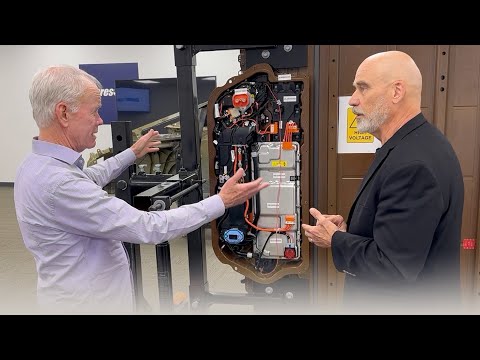
Inside Tesla's Cybertruck Battery Pack - Caresoft Teardown
This Caresoft teardown provides an in-depth look at the Tesla Cybertruck's battery pack, focusing on its "penthouse" control module. Th... moree review highlights Tesla's innovative use of aluminum for charging conduits and the sophisticated battery management system that handles various charging inputs and voltage configurations (400V/800V). Key features discussed include liquid cooling, extensive fusing for protection, and unique water intrusion mitigation systems like self-swelling drains within the penthouse. The video also touches upon the structural integration of the battery pack into the Cybertruck's chassis, serving as a floor and providing significant crash protection, especially in side-impact scenarios. The potential for a range extender and inductive charging is noted as future-proofing. While the video details the engineering, it also points out a significant drawback: the lengthy 30-minute preparation time for "Wade Mode," which allows only 15-20 minutes of operation, a point corrected in the video description to 10 minutes prep for 30 minutes of use. The use of injected foam for cell separation and thermal management is also examined. less

Meet the Mobility Expert Who Quit His Job and Traveled the World
This episode of Autoline After Hours features a compelling discussion with Trevor Pawl, former Chief Mobility Officer for the State of Michigan, who s... morehares insights gained from a year-long global journey with his family. Pawl reflects on the fundamental aspects of mobility, contrasting the Western focus on efficiency with the value-based approaches seen in other cultures. He highlights the critical need for affordable financing models for EVs globally and critiques the often 'thoughtless' implementation of mobility solutions. The panel also delves into the current state of the EV market, noting the slower-than-expected consumer adoption, the challenges of scaling autonomous technology, and the complexities of charging infrastructure. A significant portion of the discussion addresses Tesla's recent executive turnover and its potential impact on future product development and strategy, alongside the broader industry trend of automakers recalibrating their EV targets due to market realities and consumer hesitancy. The conversation underscores that while the transition to EVs is inevitable, it is a complex, long-term process requiring significant education, infrastructure development, and a more nuanced understanding of consumer needs. less
How Did the UAW Do It and What Is Next
This "Autoline After Hours" episode delves into the UAW's successful unionization of the Volkswagen plant in Chattanooga, Tennessee, hi... moreghlighting the strategic shifts that led to this historic victory. The panel, featuring labor and automotive experts, dissects how the UAW learned from past mistakes, particularly by adjusting their organizing tactics to better suit worker preferences and by Volkswagen's commitment to neutrality. A key takeaway is the UAW's improved ability to translate authorization card signatures into actual votes, a testament to their revamped, more worker-centric approach under current leadership. The discussion also touches upon the broader implications for other transplant automakers like Mercedes, Toyota, and Honda, exploring the potential for similar unionization efforts and the ongoing tension between labor costs, corporate profitability, and the transition to electric vehicles. The episode underscores the evolving landscape of labor relations in the automotive industry, influenced by economic pressures, political sentiment, and the UAW's renewed focus on tangible economic benefits for workers. less

Hyundai Started Work on Electric N Car Before We Knew We Wanted It - Autoline Exclusives
Autoline Exclusives sits down with Joonwoo Park, VP of Hyundai's N brand, to delve into the development of the IONIQ 5 N. Park reveals that work ... morebegan over three years ago, driven by a desire to make EVs fun and address the endurance limitations of existing high-powered EVs on race tracks. Key innovations include a significantly enhanced cooling system with separate radiators for low and high temperatures, optimized regenerative braking (up to 320 kW) that also aids in cooling, and a customized fourth-generation battery pack. The interview highlights the challenges of creating an "emotional performance" experience in EVs, particularly balancing virtual shifting and sound. Park emphasizes that technologies developed for the N division, such as the integrated drive axle and advanced cooling, are trickling down to regular Hyundai models, enhancing their performance and efficiency. The discussion also touches on the new IONIQ 5 N Cup racing series, designed to make motorsport accessible and showcase the capabilities of production-level EVs. less

Why So Many Automakers Struggle To Write Software
This episode of Autoline After Hours delves into the significant challenges automakers face in developing software-defined vehicles (SDVs). Scott Tobi... moren of Envorso highlights that while Tesla pioneered the concept in 2012, the traditional industry has struggled due to the inherent complexity, legacy systems, and a different product development mindset. The discussion emphasizes that transitioning to SDVs is crucial for survival, requiring a decoupling of software from hardware, software defining the customer experience, and enabling over-the-air updates. The panel also touches on the potential for new revenue streams, the importance of simplified hardware architectures (zonal computing), and leveraging data for design and predictive maintenance. While startups have an advantage starting from scratch, legacy automakers face hurdles with talent, tools, and organizational structure. The conversation also briefly explores Tesla's recent workforce reductions and the broader EV market slowdown, suggesting a need for more affordable and desirable EV options. less

Tesla's Extraordinary Design Evolution - Caresoft Cybertruck Teardown
This Caresoft teardown delves into Tesla's engineering innovations, focusing on the Cybertruck's unique design choices. The review highlight... mores significant advancements in steer-by-wire technology, contrasting it with traditional systems and emphasizing its potential for enhanced driver customization and autonomous driving capabilities. The evolution of auxiliary batteries from 12V lead-acid to 48V systems is showcased, underscoring Tesla's relentless pursuit of weight reduction and efficiency. The analysis of the cross-car beam reveals a shift from complex, multi-piece structures to elegant, hydroformed aluminum and co-injected plastic designs, demonstrating how EVs can shed legacy requirements. The use of aluminum for charging cables is praised for its cost and weight benefits over copper. Finally, the air suspension system, particularly its integration with the battery pack for pressurization, is presented as a clever, multi-functional design choice, reflecting Tesla's philosophy of synergistic part integration. While some Cybertruck features are deemed revolutionary, others appear to be driven by a desire for 'coolness' rather than pure necessity, with the market ultimately deciding their success. less
What Is Happening With That $25,000 Tesla?
This episode of Autoline After Hours delves into the shifting landscape of the EV market, with a particular focus on Tesla's rumored cancellation... more of its $25,000 vehicle. The panel largely agrees that canceling a more affordable EV is a misstep for Tesla, especially given the success of competitors like BYD. While Elon Musk's claims about a robo-taxi launch in August are met with skepticism due to past unfulfilled promises, the discussion highlights the immense profit potential in autonomous ride-sharing. The Cybertruck's reception is debated, with some seeing it as a brand-building, albeit niche, product, while others point to its high price and practical limitations for commercial use. The panel also touches on the urgent need for styling refreshes for Tesla's existing lineup, particularly in the face of strong competition from China. The conversation then broadens to Ford's struggles with the F-150 Lightning, attributing its issues to adapting an ICE platform rather than optimizing for electric, and the general overestimation of EV demand by legacy automakers. The potential of smaller, more affordable EVs is explored, with the Buick Envista cited as a successful example of a desirable small car, though its applicability to the EV market remains a question. Finally, the discussion touches on GM's EV strategy, the challenges facing its Cruise autonomous vehicle division, and the significant capital investments required to compete in the evolving EV space. less

How to Sell EVs to People Who Hate Them
This video features political consultant Mike Murphy discussing the politicization of EVs and strategies to sell them to a skeptical audience, particu... morelarly Republicans. Murphy argues that focusing on environmental benefits alienates a significant portion of the market. Instead, he advocates for highlighting vehicle attributes like cost savings on fuel, performance (acceleration, quiet ride), and reduced maintenance. Polling data suggests that personal experience, such as driving a friend's EV or test-driving one, is more effective than traditional advertising. The discussion also touches on the challenges of charging infrastructure, especially in multi-family dwellings, and the polarizing effect of Elon Musk's public persona. Murphy's core message is to shift the sales pitch from environmentalism to tangible benefits that resonate across the political spectrum, suggesting that focusing on job creation from EV manufacturing in swing states could also be a viable strategy. less

Cybersecurity Is A Bigger Problem Than You Realize
This episode of Autoline After Hours delves into the critical and often overlooked issue of cybersecurity in the automotive industry. Jason Masker fro... morem Upstream Security highlights the escalating threat landscape, noting that the increasing connectivity of vehicles creates a larger attack surface. The discussion reveals that while the number of attacks might not be the primary concern, the potential impact of a single successful breach is staggering, with 50% of attacks now capable of affecting thousands or millions of vehicles. Motivations for these attacks range from simple curiosity and car enthusiasts seeking performance gains to sophisticated fraud and even national security threats, including state-sponsored actors. The conversation also touches upon the growing sophistication of attackers, amplified by generative AI, and the countermeasures being developed, such as AI-driven security platforms like Upstream's 'Ocean'. The panel also briefly discusses the dire financial situation of Fisker, questioning their ability to manage basic business operations and deliver vehicles, and contrasts this with Nissan's 'Arc' project aimed at cost reduction and expanded EV offerings, as well as the aggressive expansion and cost-efficiency of Chinese automakers like BYD. less
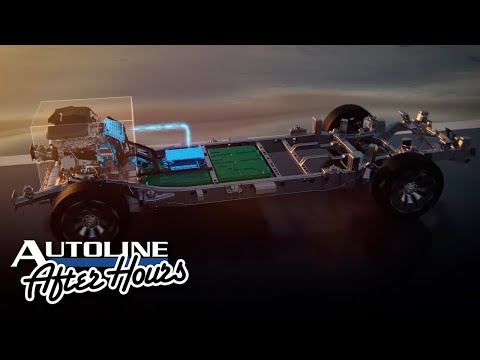
Piston Engine Gear Head Talks Bev, Phev & Fcev - Aah 687
This "Auto Line After Hours" episode features Micky Bly, Stellantis' Head of Global Propulsion Systems, in a comprehensive discussion a... morebout the company's diverse powertrain strategies. Bly, a self-proclaimed "hardcore powertrain guy" with deep roots in internal combustion engines, articulates Stellantis' commitment to both ICE and electrified powertrains. The conversation highlights the impressive advancements in ICE efficiency and power, exemplified by the new Hurricane inline-six engine, which surpasses the Hemi in performance while offering improved fuel economy. Bly also details Stellantis' flexible approach to electrification, emphasizing the innovative Ram Charger with its range-extender system as a solution for truck buyers hesitant about pure EVs. The discussion touches upon the future of fuel cells for commercial vehicles and the ongoing evolution of battery technology, including cost trends and material sourcing. Overall, the episode provides a detailed look into Stellantis' pragmatic and multi-faceted strategy for navigating the complex transition to future mobility. less

World's First Cybertruck Teardown - Steer-by-Wire, 48V, Battery & Gigacastings
This video provides an in-depth look at the initial stages of Caresoft's teardown of the Tesla Cybertruck, focusing on key technological advancem... moreents. The review highlights the innovative steer-by-wire system, noting its separation from traditional mechanical linkages and the implementation of redundant motors for safety. The 48-volt architecture is also a significant point of interest, with the discovery that not all systems utilize it, requiring step-down converters for legacy 12-volt components. The integration of large gigacastings for structural elements, including seat mounts, is praised for its efficiency, though potential corrosion is noted. The video also touches upon assembly challenges, such as seal puckering and incorrect hinge installation, suggesting areas for process refinement. The reviewer expresses enthusiasm for the four-wheel steering, particularly its benefit in maneuverability for a large truck, and the clever algorithms designed to prevent clipping adjacent vehicles. less

High Tech Shortcut to 48 Volts
This Autoline Network episode delves into the significance of 48-volt electrical systems in modern vehicles, highlighting Tesla's Cybertruck as a... more pioneer. The core advantage lies in reduced weight, cost, and improved efficiency due to smaller, lighter wiring. While legacy automakers face supply chain challenges in transitioning, Vicor's technology offers a "shortcut" by enabling the integration of 48-volt components without a complete overhaul. Vicor's compact, efficient converters facilitate a zonal architecture, allowing for localized 12-volt systems where needed, bridging the gap until full 48-volt adoption. The technology is presented as a "virtual battery," capable of delivering power faster than traditional batteries. Vicor is nearing volume production, with products expected in vehicles by late 2025, addressing key EV pain points like range anxiety and cost. less

Who Will Buy EVs. And Who Won't.
This episode of Autoline After Hours delves into the complex question of who will and won't buy electric vehicles, featuring insights from Escale... morent's K.C. Boyce. The discussion highlights six consumer segments, from 'Trailblazers' eager for new tech and environmental benefits, to 'Traditionalists' resistant to change. A key takeaway is the shift in consumer sentiment, with a slight dip in 'EV Intenders' for 2024, indicating a polarization where consumers are either committed to EVs or firmly against them. The panel emphasizes that while technology and environmental concerns are motivators, practicalities like charging infrastructure visibility, reliability, and cost parity remain significant barriers. The conversation also touches on the potential of plug-in hybrids and the unique challenges and opportunities in the electric pickup truck market, noting that many EV truck buyers are new to the segment. Ultimately, the experts agree that overcoming consumer uncertainty through education, improved infrastructure, and addressing economic factors like interest rates and vehicle cost will be crucial for broader EV adoption. less

The Affordability Crisis and How the Industry is Dealing With It
This "Autoline After Hours" episode tackles the critical issue of automotive affordability, featuring a panel of industry veterans. The disc... moreussion highlights that while EV prices average around $53,000, the gap with Internal Combustion Engine (ICE) vehicles is narrowing, though ICE vehicles are also becoming more expensive due to regulations. The panel explores the high cost of EV battery packs as a primary driver of their price. They debate the timeline for a cost crossover point, with some suggesting it's distant due to fluctuating commodity prices and the need for new battery chemistries. The conversation also delves into the challenges of reducing manufacturing costs, including the role of offshoring, energy costs, and the potential of generative AI in streamlining the supply chain and design processes. A key takeaway is that while cost reduction is essential, perceived value and consumer demand for features often complicate true affordability for the end-user. The episode touches on the rise of SUVs driven by regulations and consumer preference, and questions whether small, affordable cars can regain traction without a truly compelling offering. less

How to Save AM Radio in EVs--Cheaply
This video delves into the technical reasons behind electromagnetic interference (EMI) disrupting AM radio in electric vehicles (EVs). EMI expert Joan... morena McLellan explains that the rapid switching in EV motors and inverters creates radio frequency spectrum pollution. She argues that engineers often lack the fundamental physics understanding to mitigate this, leading to issues beyond just AM radio, potentially affecting emergency services and other radio communications. McLellan criticizes the common practice of using expensive shielding as a last resort, advocating instead for the cheaper and more effective use of resistors to dampen resonance and reduce EMI at the design stage. The core issue, she posits, stems from a flawed understanding of 'ground' in electrical engineering education, particularly at frequencies above 100 kHz. The video highlights that this problem is not exclusive to legacy automakers but is also present in EVs from companies like Tesla, and that mechanical engineers hold a key to solving these design challenges if educated properly. The expert stresses that without proper training and early integration of EMC principles, the problem will worsen as EVs adopt more advanced components like silicon carbide chips, potentially impacting even cell phone spectrum. less

EV Price War Forces Automakers to Rethink Everything
This panel discussion focuses on the automotive industry's response to the EV price war, emphasizing the imperative for cost reduction and innova... moretive design. Yanfeng's Jeff Stout highlights how automakers are seeking radical changes to interior design to lower costs and improve value, moving away from traditional, incremental improvements. He showcases a concept interior that drastically simplifies assembly and enhances user experience by integrating controls into a seat sled and utilizing a deployable display as a steering wheel. The discussion reveals a mixed reception from different regions, with German automakers showing strong interest while North American customers have been more tepid. Paul Watty of AutoPacific notes that consumers need to see the complete package, including affordability and range, to embrace such radical interior concepts. The conversation also touches upon the future of autonomous driving, shared mobility, and connectivity, with a particular focus on China's advancements in deployment and consumer acceptance of integrated electronic ecosystems. less
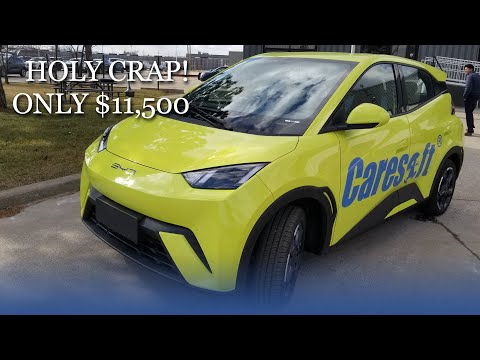
The EV Detroit Is Dying to Benchmark - BYD Seagull
The Autoline team explores the BYD Seagull, a vehicle generating significant industry buzz due to its remarkably low $11,500 price point. The review h... moreighlights BYD's extensive vertical integration as the key to its cost-effectiveness, with components like batteries, motors, and body panels manufactured in-house. While the Seagull isn't presented as a groundbreaking innovation, its design and execution are praised for efficiency and a lack of waste. Specific cost-saving measures noted include a single front windshield wiper, no rear wiper, and the absence of a frunk. Despite these measures, the interior is surprisingly well-appointed, featuring six airbags, cruise control, contrasting stitching, soft-touch materials, and even French seams on the armrests. The reviewer found the seats comfortable, the steering light and direct, and the ride quality surprisingly good over rough surfaces, especially considering the price. While acknowledging it's not a performance vehicle, the Seagull is deemed an excellent, affordable commuter car with an impressive claimed range of 252 miles. The overall verdict is that the Seagull represents a significant competitive threat to the established automotive industry. less

Car Critics Fire Away With Both Barrels
This panel discussion delves into the current state of the automotive industry, highlighting significant challenges faced by legacy automakers, partic... moreularly General Motors. The conversation begins with the unreliability of connected services, exemplified by AT&T's network outage, leading to a discussion on the need for redundancy in vehicle systems. The core of the review focuses on GM's struggles with its EV rollout, specifically software glitches and battery production issues, despite the engineering of the vehicles themselves being praised. The panelists question GM's pricing strategy, noting the high cost of EVs like the Blazer EV and Cadillac Lyriq, which contradicts Chevy's brand identity as an affordable manufacturer. The discussion also touches upon the broader industry trends, including the rise of Chinese automakers, the debate around ICE vs. EV, the role of plug-in hybrids, and the challenges of maintaining brand identity in a rapidly changing market. While acknowledging the potential of EVs, the panelists express skepticism about the pace of adoption and the profitability of current EV strategies for mainstream brands. less

He Invented The EV Skateboard. Now What's He Up To?
This episode of Autoline After Hours features a compelling discussion with Larry Burns, the visionary behind General Motors' AUTOnomy concept and... more its revolutionary skateboard chassis. Burns elaborates on the genesis of the skateboard platform, emphasizing its integrated approach to propulsion, suspension, braking, and steering, which laid the groundwork for future EV architectures. The conversation delves into the broader implications of this design, including scalability and packaging advantages. Beyond the skateboard, Burns shares insights on the evolution of automotive technology, touching upon the potential of autonomous driving, the challenges of vehicle cost inflation, and the changing landscape of personal mobility driven by digital advancements. He advocates for a future focused on cost-per-mile efficiency and design innovation, suggesting that the industry needs to adapt to evolving consumer needs and societal shifts, rather than solely focusing on incremental technological improvements. The discussion highlights the critical role of urban and community planning in shaping future transportation solutions and underscores the importance of accessible, affordable personal mobility. less