
Out of Spec BITS is a premier digital channel dedicated to the dynamic world of electric vehicles (EVs). This distributor delves into the latest advancements in EV technology, charging infrastructure, and the practical realities of EV ownership. Through insightful coverage and engaging discussions, Out of Spec BITS provides a comprehensive look at the evolving landscape of electric mobility.
The channel's content offers a deep dive into weekly EV news, ownership tips, and explorations of emerging trends. From examining the performance of cutting-edge EV components to analyzing the infrastructure that powers them, Out of Spec BITS serves as an essential resource for enthusiasts and those curious about the future of transportation.
The channel's content offers a deep dive into weekly EV news, ownership tips, and explorations of emerging trends. From examining the performance of cutting-edge EV components to analyzing the infrastructure that powers them, Out of Spec BITS serves as an essential resource for enthusiasts and those curious about the future of transportation.

1550nm Vehicle Lidar Fried My Phone But Will It Ruin The Autopilot Cameras On My Tesla!?
This video investigates the potential for the Volvo EX90's 1550nm LiDAR system to damage camera sensors, a concern amplified by online reports. The hosts successfully demonstrate that the LiDAR can indeed fry smartphone cameras, causing permanent damage, even from a distance. They meticulously te...


Latest Additions
Showing 24 of 580 total titles. Page 10 of 25.

Tesla Model 3 Is Such A Good Value I Had To Get One! Delivery, How It’s Been, & Future Plans
Jordan shares his experience taking delivery of his new Tesla Model 3 Long Range RWD, highlighting its value and the "Highland" update as ke... morey motivators for his purchase. He praises the ordering and delivery process as exceptionally smooth and easy, contrasting it with traditional dealership experiences. The reviewer finds the build quality to be surprisingly good, with uniform panel gaps and minimal rattles, even impressing his detailing-focused colleague. While acknowledging the controversial steering yoke and the lack of a premium sound system's subwoofer, Jordan emphasizes the car's overall competence, excellent software, and the value proposition of features like ambient lighting and heated/ventilated seats, especially for a "base model" Long Range RWD. He positions the Model 3 as a benchmark for EVs, particularly in terms of software and efficiency, and expresses excitement for future content including customization, road trips, and comparative testing. less
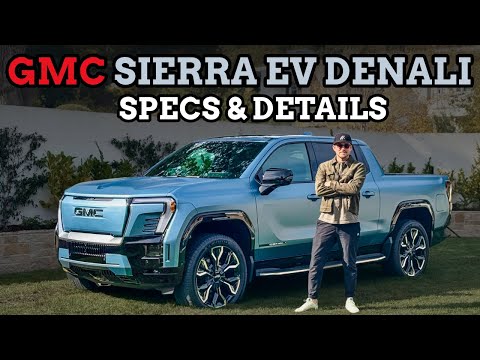
2025 GMC Sierra EV: First Drive Experience, Model Lineup, Launch Event, and Charging
The 2025 GMC Sierra EV Denali receives a mixed but largely positive review following its first drive event. The reviewer highlights significant improv... moreements over the 2024 Edition One, particularly in range, with the max range version estimated at 460 miles, surpassing the previous 440 miles. Charging performance is also noted as strong, holding over 200 kW and delivering approximately 140 kWh in 33 minutes. The Denali trim is praised for its premium interior, superior NVH levels, and nicer materials compared to the Silverado EV, making it a more luxurious experience. However, the large 24-inch wheels are criticized for compromising ride comfort, making it feel rougher than expected for a Denali. The reviewer also questions the necessity of the midgate, suggesting it compromises isolation without being frequently used. The introduction of more trims like Elevation and AT4 for the 2025 model year, along with more competitive pricing starting around $90,000 for the Extended Range model, is seen as a positive step for market competitiveness. less
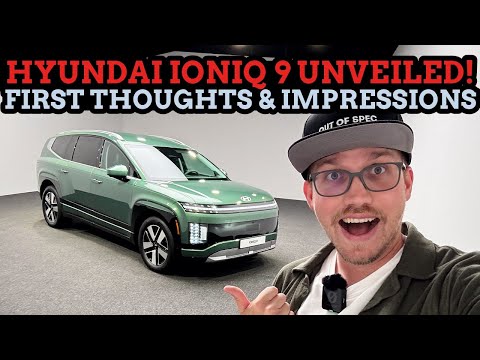
The New Hyundai Ioniq 9 Is Here & We Have All The Details!
The Hyundai IONIQ 9 represents a significant step up from its Kia EV9 counterpart, offering a more refined and powerful package. Reviewers highlight i... morets improved interior space, particularly in the third row, and a more engaging exterior design that stays true to the IONIQ family aesthetic. Performance is boosted, with the AWD version achieving 0-60 mph in under 5 seconds, and all trims target over 300 miles of range. Charging is also a strong point, with 10-80% in 24 minutes on a 610V system, and the adoption of the NACS port is a key update for the US market. While the software remains a point of criticism, the IONIQ 9's overall enhancements, including 100W USB-C ports and a premium Bose sound system, position it as a compelling, albeit potentially pricier, alternative to the EV9. less

Tesla Model 3 Beat Almost Every Electric Car In A Race Across The Country! I-90 Surge Team Recap
The Tesla Model 3 Long Range RWD team secured a remarkable second place in the I-90 Surge cross-country race, outperforming numerous more expensive an... mored ostensibly better-equipped EVs. Despite initial skepticism and a last-minute car assignment, the team's efficiency, strategic charging, and the Model 3's inherent capabilities proved to be the winning combination. While not a charging 'monster' compared to some competitors, the Model 3's exceptional energy efficiency, estimated at 15% better than the Lucid Air, allowed it to cover vast distances, including an impressive stretch across Washington state without a charge. The team highlighted the car's comfortable ride, improved handling, and the intuitive Tesla software as key advantages. Although the car's route planner exhibited some inaccuracies and the charging speeds were not class-leading, the Model 3's overall performance and value proposition were lauded, solidifying its position as a benchmark for road-tripping EVs. less

We Drove The Lucid Air GT Across America! Strategy, Charging, Running Out Of Juice, & More Stories
The Lucid Air Grand Touring was put to the ultimate test in this cross-country EV race, showcasing its impressive range capabilities but also highligh... moreting its challenges at higher speeds and with charging infrastructure. The team initially leveraged the car's substantial range, achieving over 300 miles on the first leg. However, the Lucid Air proved less efficient than expected when pushed at speeds above 70 mph, significantly impacting its range. The team's strategy, informed by Lucid engineers, involved targeting 0% state of charge arrivals to maximize charging performance, which worked for a time but ultimately led to running out of charge near Albany. Despite this, the Lucid Air's comfortable interior, particularly the frunk, was noted. The team faced charging inconsistencies, including non-functional 350kW chargers, forcing them to rely on slower options. While the car's navigation system's range predictions were often optimistic, the team learned to adjust. Ultimately, the Lucid Air finished eighth, with the team emphasizing that the car itself performed admirably under extreme conditions, and the issues stemmed from strategic gambles and infrastructure limitations rather than inherent flaws in the vehicle. less

Electric Lap of Australia with Kia EV9 and Solar Camper! Electrekking Family EV Roadtrip Hits 20,000km
Francie interviews Tim and Renee, who are undertaking an ambitious electric lap of Australia in their Kia EV9 towing a custom solar camper. The couple... more highlights their motivation to dispel myths about EV limitations, particularly in Australia's nascent EV market. They detail extensive modifications to their camper, including a streamlined rear 'boot' for improved aerodynamics (reducing range loss by 10-15%) and a significantly upgraded solar panel system (2.5kW total) and 10kWh battery bank for self-sufficient power. The EV9, an 'Earth' AWD model, is praised for its comfort, space, and towing capability, though the reviewer notes a desire for more ground clearance and some driver-assist features requiring manual deactivation on country roads. A recurring issue with the 12V starter battery was resolved with a replacement. Charging strategy relies heavily on powered caravan sites for overnight trickle charging, supplemented by fast chargers every ~200km on major routes, proving that long-distance EV travel with a camper is feasible and enjoyable without significant compromise. less

Rivian Finally Gets A Referral Program! Introducing Rivian Rewards
Rivian has finally launched its 'Rivian Rewards' referral program, a move long anticipated by owners and enthusiasts. The program allows exi... moresting owners to earn rewards by referring new buyers. Upon a referred buyer taking delivery of a vehicle purchased from the R1 shop (not a custom reservation), both the referrer and the referred receive 750 points, equivalent to $750 USD. These points can be redeemed for merchandise in the Rivian Gear Shop or applied towards the purchase of a new vehicle. Additionally, referrers receive six months of free charging at Rivian Adventure Network sites, with a lifetime cap of three years. A special incentive for the first 100 owners to achieve 25 referrals is an invitation to a 2025 Rivian Adventures weekend. Points expire after two years. The program is currently set to run until December 31, 2024, after which reward amounts may change. Notably, the program is not applicable in Ohio or Virginia, and existing orders cannot be retroactively modified. less

Fleet Electrification Is Inevitable - Commercial EVs Could Sell Themselves w/ CEO of Revolv
This episode of the Out-of-Spec Podcast features Scott Davidson, CEO of Revolv, discussing the inevitable shift towards fleet electrification. Davidso... moren emphasizes that the transition isn't about replacing all internal combustion engine vehicles but strategically integrating EVs where they offer economic and operational advantages. He highlights California as a key market due to its incentives and regulations, but stresses that the ultimate driver for widespread adoption is economic compellingness. The conversation delves into the challenges fleet managers face, the importance of a programmatic approach, and the need to involve drivers in the electrification process. Davidson likens fleet electrification to the early days of solar, predicting a similar trajectory driven by falling costs, improved technology, and increasing economic benefits, making it a matter of when, not if, for commercial fleets. less

These VinFast Owners Say They'd Buy It All Over Again!
This episode features a candid discussion with VinFast VF8 Plus owners Judy and Larry, who share their six-month ownership experience. Despite initial... more software glitches, which have since been largely resolved by an update, the couple expresses a willingness to lease another VF8 Plus. They highlight the attractive lease deal as a primary motivator, alongside the car's roominess, styling, and driving dynamics. While acknowledging minor annoyances like the sunroof shade closing with wipers and the persistent lag in the wireless phone charger, they report no major malfunctions. Long-distance charging experiences were generally positive, though they note the need for better infrastructure and planning, and a slight lag in charger disengagement. The owners emphasize that while the car's advertised range is optimistic, their real-world usable range is around 160-175 miles, a point they feel should be more accurately communicated. They recommend leasing the VF8 with caveats about its newness and the company's evolving reputation, viewing their experience as a form of beta testing. less

What Plug & Charge and Autocharge Mean for the Ideal EV Charging Experience
This episode of the Out-of-Spec Podcast features a deep dive into EV charging authentication methods, specifically Plug & Charge and AutoCharge, w... moreith guest Glen Stancil, CEO of Merge Electric Fleet Solutions. The discussion clarifies the technical differences between these two systems, highlighting AutoCharge's reliance on vehicle MAC addresses for identification and Plug & Charge's use of industry-standard security certificates for payment authorization. While both aim to simplify the charging experience by eliminating the need for apps or direct station interaction, Plug & Charge is presented as the more secure, albeit complex, option, leveraging established internet security protocols. AutoCharge is positioned as a more immediate, less complex, but potentially less secure stop-gap solution, particularly beneficial for fleet management due to its independence from automaker adoption. The episode explores the implications for various stakeholders, including drivers, fleet operators, charge point operators, and automakers, with a particular focus on the strategic shift towards a services model by automakers who see fueling as a significant revenue stream. Standardization efforts and the ongoing investment required for widespread adoption are also discussed, with the 15118 standard being central to Plug & Charge's implementation. less

Our VinFast Bricked Itself - Here's How I Fixed It!
This episode details a significant "bricking" event with the VinFast VF8, where the vehicle became undrivable due to multiple system faults.... more While the car eventually resolved its issues after being plugged into a Level 2 charger again, the experience highlights critical concerns for potential owners. The reviewer notes that VinFast's customer service was responsive and helpful, even offering "Flying Doctors" for remote repairs. However, a major drawback is the potential cost and logistical challenges associated with warranty repairs if the owner is outside their home state, as the warranty may not cover travel costs for technicians. The lack of over-the-air (OTA) updates in the US is also a significant disadvantage compared to competitors, requiring owners to visit service centers, which are not widely available. Despite the car's self-resolution, the underlying cause remains a mystery, and the need for a 12V battery recalibration at a service center indicates that the issue is not fully resolved. The reviewer expresses a general dissatisfaction with the car's performance and technology, suggesting that while VinFast's customer support is commendable, the vehicle itself still has a long way to go. less

ChargePoint Launches Omni Port Built-In Adapter On Future & Existing EV Charging Stations
ChargePoint introduces the Omni Port, an innovative solution designed to eliminate EV charging connector confusion by integrating both J1772/CCS1 and ... moreNACS (Tesla) connectors into a single unit. This feature will be available on new AC (CP6000) and DC (Express Plus) stations at no additional cost for the AC models, while DC models will incur a nominal fee. Retrofit kits will also be available for existing ChargePoint stations. The system intelligently deploys the correct connector via the ChargePoint app or station screen, aiming for a seamless user experience akin to Tesla's Magic Dock but with broader compatibility. While the initial version does not support CHAdeMO, ChargePoint emphasizes its commitment to supporting existing standards. The Omni Port is positioned as a future-proofing measure for site hosts, simplifying installation decisions amidst evolving connector standards. The technology is designed to perform comparably to single-connector setups, with robust safety features and dynamic thermal management. less

Polestar 3 EV SUV Rolls Off The Line At US Production Plant
The Polestar 3 is now being manufactured in the US at the Volvo plant in Ridgeville, South Carolina, a significant move that could help mitigate costs... more and tariffs for American consumers. The review highlights two main configurations: a Long Range Dual Motor with an EPA estimated range of 315 miles, 489 horsepower, and a 0-60 time of 4.8 seconds, starting around $73,000; and a Long Range Dual Motor with Performance Pack, offering 279 miles of range, 410 horsepower, and a 0-60 time of 4.5 seconds, starting around $79,000. Both models feature a 111 kWh battery and 400V architecture. The video emphasizes the availability of lidar as a key differentiator from Chinese-produced models, enhancing driver assistance and safety in various lighting conditions. The Launch Edition, starting around $78,000 but seen configured at $83,000, includes premium comfort, audio (Bowers & Wilkins), and driver assistance features as standard. Compared to the Volvo EX90, the Polestar 3 is positioned as a sportier, five-seater SUV with a higher top speed (130 mph vs. 111 mph) and more aerodynamic design, while the EX90 offers a more comfort-oriented, six or seven-seater experience with greater cargo space and towing capacity. The production in the US is seen as a positive trend for the EV market, leveraging incentives and market maturity. less

EV Sales Are Up Globally - Here's All The Facts
This episode of the Out of Spec Podcast provides a data-driven analysis of global EV sales, debunking the notion that sales are declining. Host Franci... moree presents compelling figures showing a global 20% increase in EV sales for the first half of 2024 compared to the previous year. While China leads with a significant 31% surge, North America and Europe show more modest, yet positive, growth of around 5% and 4% respectively. The podcast attributes slower growth in Western markets to factors like reduced government incentives and persistent hurdles such as higher prices and limited charging infrastructure. The episode highlights Tesla's continued dominance in the US market, with over 100,000 Model Ys sold in Q2 2024, alongside strong performances from other manufacturers like Ford, Hyundai, and Kia. It also delves into state-level registration data, with California, Florida, and Texas leading the pack. The discussion touches upon the impact of federal tax incentives for new and used EVs, detailing eligibility requirements and price caps. Finally, the International Energy Agency's data is presented, reinforcing the global upward trend and the concentration of sales in key markets. The episode concludes that while growth rates may vary regionally, the overall trajectory for EV sales remains positive. less
Who Is Responsible for EV Chargers After Installation According to EV Lawyer
This episode of the Out-of-Spec Podcast features EV infrastructure lawyer Jason Goldfarb discussing the critical, often overlooked, responsibilities s... moreurrounding EV charger installation and maintenance. Goldfarb emphasizes that contractual clarity is paramount, moving beyond the initial installation to define ongoing responsibilities for uptime and repairs. He highlights common pitfalls, such as vague contracts leading to disputes, and the importance of due diligence in selecting partners. A key takeaway is the need for clear clauses addressing response times, repair protocols, and consequences for non-compliance. The discussion also touches upon the complexities of revenue sharing, ADA compliance, and the critical role of reliable maintenance, illustrated by a cautionary tale of a rental car's additive issue. Goldfarb stresses that while standardization is evolving, robust contracts and thorough research into a partner's reputation are essential for a seamless charging experience and avoiding costly future problems. less

The States With Highest EV Ownership and Most Chargers Installed
This episode of the Out of Spec Podcast delves into the critical issue of EV infrastructure across the United States, comparing EV registrations with ... morethe number of available charging ports. Host Francie highlights that while EV adoption is steadily growing, with 3.3 million EVs on the road in late 2023, the charging infrastructure is not consistently keeping pace. The analysis reveals significant disparities between states, with California leading in both registrations and ports but still maintaining a ratio of 1:26. Conversely, states like North Dakota and West Virginia show much higher ratios of EVs to ports (1:4 and 1:6 respectively), indicating a more favorable charging environment for their smaller EV populations. The episode emphasizes the projected need for 28 million charging ports by 2030 to support an estimated 33 million EVs, underscoring the ongoing challenges of grid modernization, funding, and prioritization of charging infrastructure development. While the data provides a broad overview, the host acknowledges the need for deeper analysis into charging types (Level 1, 2, and DC fast charging) and their distribution. less

Supercharger Access Absolutely Changes The Game For Ford Mach-E Roadtrips!
This episode of the Out of Spec Podcast features Patrick and Liv of Mach-E Vlog discussing their extensive 17-day road trip in their Ford Mustang Mach... more-E GT. The primary focus is the transformative impact of Ford's access to the Tesla Supercharger network on their travel experience, contrasting it with the often unreliable CCS network. While the Supercharger access significantly reduced range anxiety and stress, the integration into Ford's navigation system is still lacking, requiring the use of third-party apps and manual preconditioning. A notable drawback is the reduced charging speed at Superchargers due to heat, and the adapters themselves can become excessively hot, posing a minor inconvenience. The hosts also highlight the importance of charging site accessibility and amenities, praising locations like Flying J for their convenience and inclusivity, while pointing out deficiencies at other sites. The updated BlueCruise 1.3 system is lauded for its improved performance and reduced disengagements, enhancing comfort on long drives. Overall, the Supercharger network access is a game-changer for Mach-E road trips, despite some integration and thermal challenges. less

Discover How Wildly Different EV Incentives and Penalties Are Across States
This episode of the Out-of-Spec Podcast delves into the complex and often disparate landscape of EV incentives and penalties across US states. Host Fr... moreancie highlights that while federal tax credits exist, many states impose significant additional registration fees and taxes on EV owners, ostensibly to recoup lost gas tax revenue. The review points out that these state-level fees can be substantial, with Texas leading in initial registration costs and several states charging over $200 annually. The episode critiques the lack of a standardized structure, leading to potential double or triple taxation for EV drivers. While acknowledging the need for infrastructure funding, the podcast argues that current policies disproportionately burden EV owners, questioning the fairness and affordability of EV adoption. Potential solutions, such as aligning EV fees with average gas tax contributions, are discussed, emphasizing the need for equitable policies. less

Tesla Uncorks Amperage On Certain V3+ Superchargers Enabling More Than 320kW Charging Power
The Out Of Spec Podcast discusses a significant development in Tesla's charging infrastructure: the "uncorking" of certain V3+ Supercha... morergers, enabling charging speeds exceeding 320kW. This phenomenon was observed on a Cybertruck at a V4 dispenser paired with a V3 cabinet. While previous Superchargers topped out around 250kW, this new configuration achieved nearly 900 amps, pushing power significantly higher. The hosts clarify that this is not a full V4 Supercharger rollout but a trial on specific "V3+" locations, likely leveraging the V4 dispenser's improved thermal management and immersion-cooled cable. Tesla engineer Wes confirmed this is an amperage limitation trial, not a bug. The discussion highlights the Cybertruck's unique split-pack charging architecture, which allows it to request high amperage in its lower voltage state. While exciting, the trial's limited availability and Tesla's lack of clear communication are noted. The podcast also touches on the potential for other Tesla vehicles to benefit and the ongoing challenges with charging infrastructure readiness, particularly concerning thermal limitations and the slow rollout of V4 technology. less

How The American EV Charging Landscape Is Changing In 2024
This episode of the Out of Spec Podcast features Chase Drum from GridConnections, offering a comprehensive look at the evolving EV charging landscape ... morein 2024. Drum, with over two decades of EV experience, breaks down the historical phases of DC fast charging, from early 50-100kW units to the current OEM-backed initiatives. He highlights the shift from EVs as products to platforms, necessitating integrated charging solutions. The discussion emphasizes that while Level 1 and Level 2 charging at home or work constitute the majority of charging needs and are relatively easy to implement, the focus remains on improving the reliability and speed of DC fast charging. Drum points out that the complexity of deploying DC fast chargers involves utilities, OEMs, regulators, and charge point operators, with supply chain issues for components like transformers being a significant bottleneck, exacerbated by demand from data centers and AI. He also touches on the unintended consequences of the NEVI program, where some operators may delay installations to await federal funding, potentially slowing down overall deployment. less
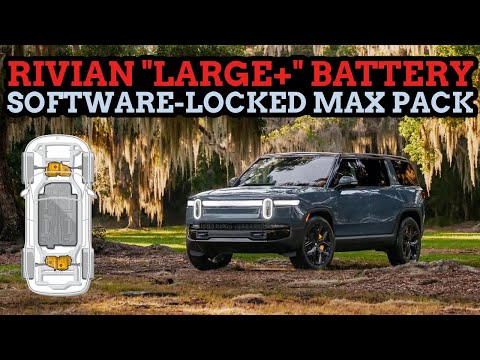
Rivian Releases Large+ Battery For Second Gen R1S As A Software Locked Max Pack
The Out of Spec Podcast discusses Rivian's new strategy of offering 'Large+' battery packs for the second-generation R1S. This involves... more software-locking the Max Pack battery to function as a Large Pack, effectively allowing Rivian to accelerate deliveries and meet customer demand. While the exact reasons for this approach remain speculative (potential production issues or oversupply of Max Packs), the key takeaway is that consumers receive a vehicle with the hardware of a Max Pack but the range and pricing of a Large Pack (approximately 330 miles). The podcast highlights the ambiguity surrounding future unlocking possibilities, with Rivian offering no confirmation. They also touch upon the potential for this strategy to simplify manufacturing by using a single battery pack design. The discussion emphasizes that consumers may not be explicitly aware they are receiving a software-limited Max Pack, adding a layer of complexity to the purchasing experience. Ultimately, this move is seen as a pragmatic way for Rivian to manage inventory and sales, though the long-term implications for customers and the brand's margins are still unfolding. less

If The EV Market Won't Collaborate Then We Can't Compete w/ Chairman of CharIN North America
This episode of the Out-of-Spec Podcast features Oleg Logvinov, Chairman of CharIN North America, discussing the critical need for collaboration and s... moretandardization in the burgeoning EV industry. Logvinov emphasizes that unlike traditional internal combustion engine vehicles, EVs are part of a complex ecosystem requiring cooperation among various stakeholders, from automakers to grid operators. He highlights CharIN's role as a platform for this collaboration, facilitating interoperability testing through events like 'Testival' and fostering the development of open standards. A key takeaway is the industry's transition from fragmented proprietary systems to a more unified approach, exemplified by the convergence towards the North American Charging Standard (NACS) and the ongoing efforts to ensure seamless 'plug and charge' functionality across different vendors. The discussion also touches upon the challenges of consumer education and the potential of vehicle-to-grid (V2G) technology, positioning CharIN as a vital facilitator for a cohesive and successful EV future. less

The Tesla Model X Is An Ideal Roadtripping EV SUV With 3 Rows
This episode features a compelling discussion with Ryan and Lacy about their experience in a Tesla Model X during the 'Race to Vegas' event.... more The Model X, highlighted as the first three-row electric SUV, proved to be a capable road trip vehicle, particularly noted for its spaciousness and the convenience of the Tesla Supercharger network. Ryan, an experienced EV road tripper, guided Lacy, a first-time long-distance EV traveler, through the nuances of route planning and charging. Key takeaways include the surprising complexity of charging curves, the generally seamless operation of Tesla's Supercharger network compared to CCS, and the Model X's comfort for long journeys. Despite minor criticisms like the lack of traditional turn signal stalks and the automatic door mechanics, both guests found the Model X to be a luxurious and effective choice for extended travel, reinforcing Tesla's strengths in EV road tripping. less
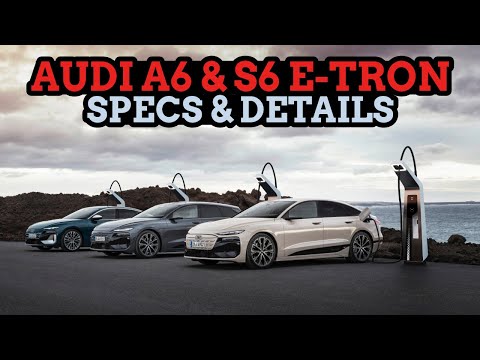
The New Audi A6 E-Tron Is Here & We Have All The Details
The Audi A6 E-Tron and S6 E-Tron, built on the new PPE platform, are presented as compelling electric alternatives to the BMW i5 and Mercedes EQE. Whi... morele the wagon (Avant) version won't reach the US, the Sportback is highlighted for its sleek design, efficient performance, and impressive fast-charging capabilities. The reviewers are particularly excited about the platform's potential for long-distance road trips, praising its advanced route planning, preconditioning, and overall driving dynamics, which are expected to surpass previous Audi RS6 models. However, concerns are raised about the limited 11kW onboard AC charging in Europe (9.6kW in the US), potential pricing that might overlap with Porsche Macan, and the exclusion of certain advanced lighting features in the US market. Despite these drawbacks and Audi's perceived confusion in EV strategy, the A6 E-Tron is seen as a high-quality, refined, and potentially excellent road-tripping vehicle for those who value build quality and a comfortable driving experience, though it's acknowledged that the Q6 E-Tron SUV might be a more popular choice. less