
Electric Vehicle Man is a dedicated channel with over a decade of experience in reviewing electric vehicles (EVs). Beyond cars, the channel delves into sustainable home technologies, offering insights into heat pumps, solar photovoltaic (PV) systems, and home battery storage solutions. This comprehensive approach positions Electric Vehicle Man as a key resource for those interested in the transition to electric mobility and eco-friendly living.
Leveraging extensive practical experience, the channel provides real-world perspectives on EV ownership and the integration of renewable energy into daily life. Viewers can expect in-depth analysis and practical advice, making complex topics accessible and informative for a broad audience seeking to understand and adopt greener technologies.
Leveraging extensive practical experience, the channel provides real-world perspectives on EV ownership and the integration of renewable energy into daily life. Viewers can expect in-depth analysis and practical advice, making complex topics accessible and informative for a broad audience seeking to understand and adopt greener technologies.

How To Drive An Electric Car Efficiently
This video offers practical advice for maximizing electric vehicle efficiency, drawing on the host's extensive EV experience. Key takeaways include the significant impact of driving style, emphasizing smoother acceleration and moderate highway speeds, which can yield an extra 50-60 miles of range...


Latest Additions
Showing 24 of 285 total titles. Page 11 of 12.

Audi E-Tron vs Jaguar I-Pace - There's A Clear Winner!
This video presents a head-to-head comparison between the Jaguar i-Pace and the Audi e-tron, ultimately declaring the i-Pace the clear winner across m... moreost categories. The reviewer highlights the i-Pace's superiority in fun, comfort (especially for the driver), build quality (despite minor niggles in the e-tron), range (235 miles vs. 210 miles real-world), styling, and value. While the e-tron is acknowledged as more practical due to its larger interior space, the i-Pace's lower starting price, superior warranty, and more engaging driving dynamics make it the preferred choice. The reviewer concludes that the e-tron is a competent but ultimately unremarkable electric SUV, while the i-Pace offers a more special and enjoyable ownership experience, making it the hands-down winner unless one is a dedicated Audi fanboy or prioritizes practicality above all else. less

Audi E-Tron SUV (Electric) - Good Car, Bad EV?
The Audi e-tron is presented as a luxury SUV that happens to be electric, but the review highlights significant shortcomings that detract from its pre... moremium positioning. While the interior boasts high-quality materials and impressive displays, the reviewer criticizes numerous "schoolboy errors" and design oversights. These include a flimsy and inconvenient bonnet release mechanism, a boot catch that feels cheap, and a lack of supportive seats. A major concern is the vehicle's inefficiency, with a real-world range of approximately 210 miles from its 95 kWh battery, which is deemed poor compared to competitors. Despite its comfortable ride and adequate performance, the e-tron lacks unique selling points and fails to justify its high price tag, making rivals like Tesla and Mercedes EQC more palatable due to their own strengths and fewer fundamental flaws. less

Which Electric Car Have We Just Ordered?
The EVM channel has decided against the Tesla Model 3 due to its prohibitive cost, opting instead for the Kia e-Niro. The reviewer highlights the e-Ni... morero's superior practicality, larger interior and boot space compared to its close relative, the Hyundai Kona, and a better warranty. Crucially, the e-Niro offers a real-world range of at least 250 miles on the motorway, with potential for over 300 miles around town, meeting the channel's primary requirement. While acknowledging the Model 3 is a superior car, the reviewer deems it not worth the significant price premium. The e-Niro is praised for its comprehensive features even in its single trim level and its lower price point compared to the Nissan Leaf e+. The reviewer anticipates a wait of around 10-11 months for delivery, with potential price fluctuations expected. less

Long Electric Car Journeys Don't Always Go Well. Even For Me!
This video chronicles a family's long-distance camping holiday undertaken in a 30 kWh Nissan Leaf, highlighting the realities and challenges of E... moreV travel. While the initial premise was to compare EV vs. ICE for such trips, the journey was fraught with unexpected issues, primarily with the public charging infrastructure. The reviewer experienced significant delays due to malfunctioning Polar chargers and an offline Electric Highway unit, leading to a near-failure to reach their destination. Despite these setbacks, the reviewer frames the experience as an adventure, noting that the cost savings from using the EV (estimated at £50-£70) effectively paid for a day out at Legoland. The core takeaway is that while short-range EVs *can* do long journeys, it requires meticulous planning, awareness of potential charging failures, and a willingness to adapt. The reviewer emphasizes that such issues are rare in their four years of EV ownership but underscores the importance of making charging stops part of the holiday experience if necessary. Ultimately, the video concludes that not all EV journeys are smooth, but the savings and unique experiences can still make them worthwhile, especially if the charging network performs as expected. less

Is A 250 Mile Electric Car All You Need In Range?
This video explores the practical necessity of ultra-long electric vehicle range in the UK, questioning whether the commonly desired 500-600 miles is ... moretruly needed for most drivers. The reviewer undertakes a 400+ mile journey, demonstrating that a real-world range of around 250 miles is sufficient, even when compared to a petrol car, as stops are required for breaks regardless of fuel type. The core argument is that focusing on charging speed and a realistic range (around 300 miles suggested as a sweet spot) is more efficient and cost-effective than paying a premium for excessive battery capacity that is rarely utilized. The reviewer highlights that for 99% of journeys, a 250-300 mile range is adequate, and the cost savings of not opting for larger batteries outweigh the perceived benefit of extreme range for infrequent long trips. The video concludes that charging speed is paramount, potentially making smaller batteries viable in the future, and that the EV experience is more about lifestyle integration than just raw range figures. less

The Truth About Electric Car Insurance
The video investigates the common assertion that electric car insurance is more expensive than for internal combustion engine vehicles. Through a dire... morect comparison of the Kia Niro petrol and electric variants, the reviewer found a roughly 10% price difference, attributing it to the EV's higher purchase price and greater horsepower. This difference, however, is deemed justifiable and not indicative of EVs being inherently more expensive to insure when comparing like-for-like vehicles. The reviewer also analyzes LV Insurance's new EV-specific policy, concluding it offers little tangible benefit over standard policies, with features like roadside recovery for running out of charge and coverage for charging equipment being either redundant due to existing breakdown cover or home insurance. The reviewer dismisses the LV policy as a marketing ploy, akin to 'Sheilas Wheels,' designed to upsell rather than offer unique value. The core message is to compare insurance quotes for comparable vehicles and avoid being swayed by specialized EV policies that may not offer true additional value. less

Which Cars Are Best To Convert To Electric?
This video presents a spirited, beer-fueled discussion among hosts debating which classic or existing cars would be ideal candidates for electric conv... moreersion. The core criteria revolve around cars where the original engine was not the primary appeal, was unreliable, or lacked character. Several iconic vehicles are discussed, including the DeLorean (praised for its cool factor and poor original engine), the Jaguar E-Type (debated due to its beauty versus engine heritage), and various hot hatches like the Golf GTI and 205 GTI (where the driving experience and engine engagement are key to their appeal, making electrification controversial). The hosts also explore the Volkswagen Campervan and classic Rolls-Royces as strong contenders due to their practicality and the fact that their engines are not the main draw. Conversely, cars like classic Defenders and MGs are deemed unsuitable for conversion due to their inherent character and original appeal. The discussion highlights the subjective nature of car modification, emphasizing that the 'soul' of a car, often tied to its engine, is a crucial factor in deciding whether electrification is a fitting tribute or sacrilege. less

Kia e-Niro Electric - Better Than A Kona & Annihilates The Leaf E+
The Kia e-Niro is presented as a compelling electric SUV, particularly when compared to its rivals like the Nissan Leaf e+ and Hyundai Kona Electric. ... moreThe reviewer highlights its spacious interior and boot, noting it's significantly more practical than the Kona and Leaf, capable of comfortably accommodating a family. The driving experience is described as refined and comfortable, suitable for long journeys, with a quiet cabin and a ride that doesn't induce fatigue. While the interior plastics are noted as a potential drawback, especially the fingerprint-prone gloss black trim, the reviewer acknowledges that the parts most frequently touched feel of good quality, especially considering the car's price point. The e-Niro's value proposition is strong, offering a good range and features for its price, making it a sensible alternative to more expensive options like the Tesla Model 3, especially for those on a tighter budget. The reviewer's verdict leans heavily in favor of the e-Niro, suggesting it's a 'no-brainer' choice over the Leaf e+ and a more practical, affordable option than the Model 3 for many buyers. less

Tesla Model 3 UK Prices! Am I Finally Ordering, Or Wanting Out?
The reviewer expresses significant disappointment with the UK pricing of the Tesla Model 3 Standard Range Plus, finding it considerably higher than an... moreticipated and exceeding their personal budget. While acknowledging the car's premium features and the appeal of the Supercharger network, the price, especially after factoring in the UK's luxury car tax, makes it financially unfeasible for the reviewer. They lament that the expected price point of around £30-£35k has ballooned to over £40k, a substantial increase from Elon Musk's previous statements. Consequently, the reviewer is leaning towards canceling their three-year-old reservation and exploring alternatives, despite acknowledging that few current options match the Model 3's overall package. The video highlights the financial strain and the difficult decision between desired features and affordability, ultimately concluding that the Model 3, at its current UK price, is not a justifiable purchase for them. less

Does My Wife Regret Getting An Electric Car?
This video explores the real-world experience of living with an electric car through the perspective of someone who is not an EV enthusiast. The revie... morewer's wife, who initially had no prior knowledge of EVs, shares her four-year ownership experience with a Nissan Leaf. While she acknowledges the cost savings and the environmental benefits, her primary concerns revolve around range anxiety and the inconvenience of public charging infrastructure. She admits to still preferring her petrol Mini for longer journeys due to the ease of refueling and the perceived hassle of using public chargers, despite the Leaf's suitability for daily commutes. The review highlights that while home charging is seamless, public charging, particularly with app-based systems, remains a significant barrier for non-enthusiasts. The overall sentiment is positive regarding the EV experiment, but the wife expresses hesitation in fully committing to an EV as a sole vehicle without a trial period, emphasizing the need for improved public charging and longer ranges for wider adoption. less

Best Electricity Tariff For An EV Driver
This video provides a compelling argument for EV owners to actively manage their electricity tariffs to achieve significant annual savings. The presen... moreter meticulously compares three providers: Green Energy UK, Bulb, and Octopus Energy, using a personal monthly electricity consumption of 787 kWh as a baseline. The core of the savings lies in leveraging time-of-day tariffs, specifically Octopus's 'Go' tariff, which offers a very low rate (5p/kWh) during a 4-hour off-peak window (00:30-04:30). By shifting the majority of EV charging to this off-peak period, the presenter demonstrates potential annual savings of up to £700 compared to a flat-rate tariff. While Bulb offers a competitive flat rate, Octopus's time-of-day tariff proves to be the most economical for dedicated EV charging. The presenter highlights the ease of setting charging schedules via car interfaces or apps and advocates for smart meters, despite acknowledging rollout issues. The video's primary takeaway is that proactive tariff comparison and smart charging can lead to substantial cost reductions for EV owners, urging viewers to conduct their own calculations. less
I Wouldn't Recommend Any Electric Car Available in 2019
The reviewer strongly advises against purchasing any new electric vehicle in 2019, citing the imminent release of significantly improved models in 202... more0. While acknowledging that current EVs aren't necessarily bad, the rapid technological advancements and upcoming releases make waiting a more prudent financial decision. The reviewer dismisses several popular models like the Kia e-Niro and Hyundai Kona due to sell-outs, criticizes the BMW i3 for its high price and the Renault Zoe for its aging design (though notes its affordability), and finds the Nissan Leaf e+ overpriced and technologically stagnant. The core recommendation is to either keep an existing internal combustion engine vehicle for another year or opt for a used EV as a temporary solution, emphasizing the strong resale value of used EVs. The reviewer highlights the need for early reservations for 2020 models to avoid disappointment. less

Electric Cars Strip Pleasure From Life According To The Sun
This video critically analyzes an article from The Sun that claims electric cars, specifically the Renault Zoe, strip pleasure from life. The reviewer... more disputes the article's premise, arguing that the author's negative experience was largely due to a lack of understanding of EV operation and significant issues with the charging infrastructure, rather than inherent flaws in the car itself. The reviewer highlights that the author's comparison of the Zoe to a Tesla is unfair due to the vast price difference. Key criticisms of the article include its focus on exaggerated infrastructure problems, the author's apparent lack of basic EV knowledge (e.g., regarding heating impact on range, radio power source), and a potential misunderstanding of charging etiquette leading to a charger being unplugged. While acknowledging the validity of complaints about unreliable charging infrastructure, the reviewer concludes the article fails as a car review, offering little insight into the Zoe itself and instead focusing on the author's personal struggles and misinterpretations. less

600 Mile Electric Car Journey In a 100 Mile Nissan Leaf (And Snow)
This video documents an ambitious 600-mile journey undertaken in a 30 kWh Nissan Leaf, a vehicle with a stated range of 90-100 miles, during adverse w... moreeather conditions including snow. The reviewer explicitly states the purpose is not to advocate for short-range EVs on long trips, acknowledging their inferiority to ICE vehicles and longer-range EVs for such use. The primary motivation for the trip was cost savings on picking up parts and materials. Despite the challenging circumstances, the reviewer found the journey manageable, albeit significantly longer than it would be in a conventional car or a modern EV. Key takeaways include the importance of planning charging stops, the effectiveness of the Polar network chargers, and the reviewer's personal preference for taking breaks every 1-1.5 hours. The reviewer concludes that a real-world motorway range of 350-400 miles is the 'sweet spot' for EVs in the UK, making long journeys only slightly longer than with petrol cars. The journey was completed successfully, though with a few close calls on battery levels. less

Best Electric Cars For 10k to 15k (Used)
This video explores the UK used electric vehicle market for budgets between £10,000 and £15,000. The reviewer highlights several compelling options, e... moremphasizing the surprising lack of depreciation on many EVs due to high demand and low supply. Key vehicles discussed include the rare Renault Kangoo Maxi ZE Business Crew Van (noted for practicality but very niche), the Nissan Leaf (particularly the 24kWh and 30kWh versions, with a caution to avoid the 'Visia' trim due to its inefficient heater), and the Renault Zoe (especially the Z40 and R110 variants, with a strong recommendation for battery-leased models for cost savings if kept for under three years). The BMW i3 is praised for its engineering and performance, even including versions with the range extender, though its practicality is noted as limited. A significant point is made about the potential to secure a new, battery-leased Renault Zoe for a similar price to a nearly-new used one, advising viewers to research and negotiate. The reviewer concludes that while the EV market is still limited compared to ICE vehicles, options like the Leaf 30kWh or a leased Zoe serve as excellent stop-gaps until a wider selection becomes available. less

Best Electric Cars For 5k to 10k Used
This video explores the used electric car market for budgets between £5,000 and £10,000. The reviewer highlights that while initial EV costs can be hi... moregh, the used market offers accessible entry points. For the lowest budget (£5-£6k), the Peugeot Ion and Citroën C0 are recommended as basic, low-maintenance city cars, offering around 50-60 miles of range. Between £6-£7k, the Renault Zoe with a battery lease is strongly advised as the best value, offering a newer car with the battery covered under warranty, mitigating a key EV concern. For £7-£8k, the Nissan Leaf becomes a viable option, though early models (2011-2012) may have battery degradation issues, making the Zoe with a lease still a preferred choice. Higher budgets (£8-£10k) offer newer or higher-spec versions of the Zoe and Leaf, with the Volkswagen e-Up appearing as a rarer, but well-regarded alternative. The reviewer emphasizes the strong residual values of used EVs due to high demand and low supply, making them a sound financial choice compared to ICE equivalents, especially when factoring in low running costs and minimal maintenance. less
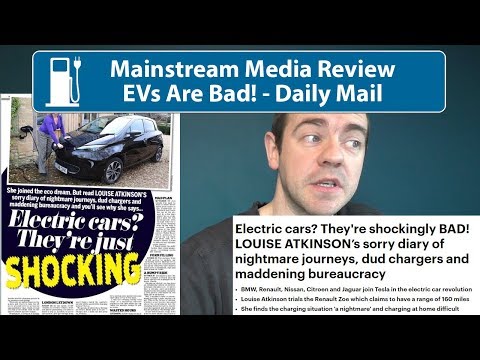
EVs Are Shockingly Bad According To The Daily Mail
The reviewer critically analyzes a Daily Mail article that paints electric cars in a negative light, particularly focusing on the author's person... moreal experience with a Renault Zoe. While acknowledging the validity of some points regarding the chaotic and disorganized public charging infrastructure, the reviewer argues that the article's overwhelmingly negative portrayal is largely due to the author's apparent lack of research and preparedness. Key criticisms include the author's failure to investigate charging methods, home installation options, and available incentives before purchasing the vehicle, leading to a "nightmare" experience that the reviewer believes could have been largely avoided with basic due diligence. The reviewer highlights that the author's own experiences with cost savings and the eventual successful home charging installation contradict the sensationalist headline, suggesting the article prioritizes clickbait over constructive information for potential EV buyers. less

Hyundai Kona Electric - Wipes The Floor With The Leaf!
The Hyundai Kona Electric is presented as a significant leap towards mass EV adoption, offering a compelling package that the reviewer believes "... morewipes the floor" with competitors like the Nissan Leaf. Key strengths highlighted include its impressive real-world range, with the larger battery version achieving around 300 miles, and its significantly better efficiency compared to the Leaf, attributed partly to effective thermal battery management. The reviewer praises the responsive infotainment system, comfortable interior for front passengers, and the intuitive paddle shifters for regenerative braking, calling them a "cracking idea." However, the Kona Electric is not without its drawbacks. The reviewer notes a "cheapness" in some interior plastics and a brake pedal feel that is described as "on or off" and not progressive. A significant criticism is the excessive power and torque for a rear-wheel-drive vehicle, leading to wheel spin even in Eco mode, suggesting it might be "too much power for its own good" and that a lesser-powered version might be more drivable. Rear passenger space is deemed adequate but not generous for taller individuals, and a specific design flaw is identified where a large cubby hole under the center console is difficult to access due to seat placement. Despite these points, the reviewer expresses a strong liking for the car, considering it an "evolutionary step" in the EV market, especially given its price point relative to other EVs like Tesla. less

Electric Highway (Ecotricity) - A Help Or Hindrance To EV Adoption?
This discussion critically examines Ecotricity's 'Electric Highway' charging network and its impact on EV adoption. The consensus is th... moreat while the network was a pioneering effort and initially free, its current unreliability is a significant hindrance. Reviewers highlight frequent charger failures, issues with the app, and a lack of transparency and maintenance from Ecotricity. This unreliability forces drivers to plan backup routes, negating the convenience expected from motorway services and providing ammunition for EV skeptics. While Ecotricity's founder claims financial losses necessitate scaled-back support, the continued monopoly on prime service station locations is a major point of contention. The discussion suggests that opening these prime spots to competition from more reliable networks like Instavolt or Polar, or at least a significant investment in maintenance and communication, is crucial for fostering trust and encouraging EV adoption. less

Living With An Electric Car
This video offers a practical, week-long perspective on living with an electric vehicle, specifically a Nissan Leaf, focusing on its day-to-day usabil... moreity for commuting. The reviewer highlights that despite initial concerns about range and charging, the reality of daily EV ownership is far less daunting than perceived. Key benefits emphasized include the significantly lower running costs compared to a petrol equivalent (estimated at around 10% of fuel costs for the week), the rapid cabin heating, and the quiet, smooth driving experience, particularly in traffic. The reviewer addresses common anxieties, demonstrating that everyday features like heating and lights have minimal impact on range, and that charging at home overnight is a simple, routine task. While acknowledging that EVs might still be a higher initial purchase cost, the long-term savings are presented as substantial, especially for those who cover significant mileage. The video effectively debunks the myth that EVs require drastic lifestyle changes for commuting, concluding that for households with a second car for longer journeys, an EV like the Leaf is a perfectly viable and economical daily driver. less
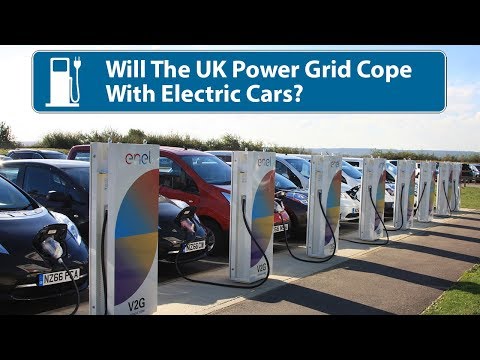
UK Power Grid and Electric Cars? Can It Cope?
This video debunks the prevalent fear that the UK's power grid will collapse under the strain of increased electric vehicle adoption. The present... moreer systematically dismantles sensationalist headlines from the Daily Mail, arguing they misrepresent official reports and lack factual basis. Key points include clarifying the 2040 ban on new petrol/diesel car sales, explaining that hybrid vehicles don't require daily charging, and highlighting the role of smart meters and time-of-use tariffs in managing charging demand. The presenter emphasizes that official bodies like National Grid and Ofgem confirm the grid's robustness and ability to adapt, even with aggressive EV uptake. The core message is that fears of blackouts and grid collapse are largely fabricated misinformation, and practical solutions are already in place or being developed. less

True Depreciation Of Electric Cars
This video tackles the often-misunderstood topic of electric vehicle depreciation, using the presenter's own Nissan Leaf as a case study. The cor... moree argument debunks sensationalist media claims by focusing on actual purchase price rather than inflated list prices. The presenter demonstrates a personal depreciation of 17.2% over two years (£1,350 per year), which is presented as exceptionally low for any car. Even when considering the average market price at the time of purchase, the depreciation remains competitive at 23.5% over two years. The review highlights that used EV prices, particularly for models like the Leaf, are currently strong due to high demand and low supply, exacerbated by long waiting times for new EVs. The presenter also addresses and dismisses the myth of mandatory battery replacement, citing manufacturer warranties and real-world examples of long-lasting batteries. The video concludes that EVs, in general, are not depreciating faster than their ICE counterparts and, in many cases, are depreciating less. less
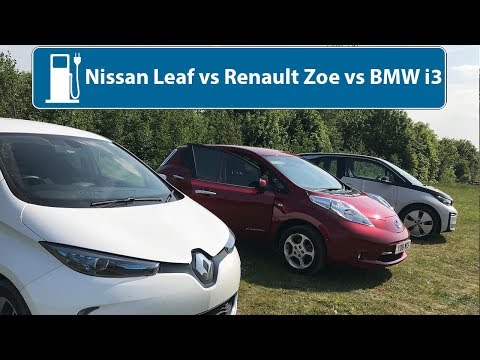
Nissan Leaf vs Renault Zoe vs BMW i3 - Which Is The Best Used Electric Car?
This video compares three popular used electric cars: the Nissan Leaf, Renault Zoe ZE40, and BMW i3 (94Ah). The reviewer breaks down the comparison in... moreto seven categories: practicality, fun, comfort, value, range, looks, and build quality. The Renault Zoe excels in range, offering up to 170 miles in summer and 155 in winter, with the reviewer believing over 200 miles is achievable. For practicality, the Nissan Leaf is the winner due to its five-seater capacity, larger boot, and split-folding rear seats, compared to the i3's four seats and tiny boot, and the Zoe's lack of split-folding rear seats. In terms of looks, the Zoe is deemed the most stylish with its European chic. Build quality is superior in the BMW i3, using better materials than the Leaf and Zoe, though none are considered poor. Comfort is a close call between the Leaf and Zoe, but the Leaf edges it due to its greater interior space. The BMW i3 is the undisputed winner for fun, being the quickest and most engaging to drive. Value is a complex category, but the reviewer ultimately crowns the Nissan Leaf as the best value due to its lower purchase price, practicality, and availability, while discounting the Zoe due to its battery leasing model and scarcity, and the i3 for its higher cost despite strong residual values. less
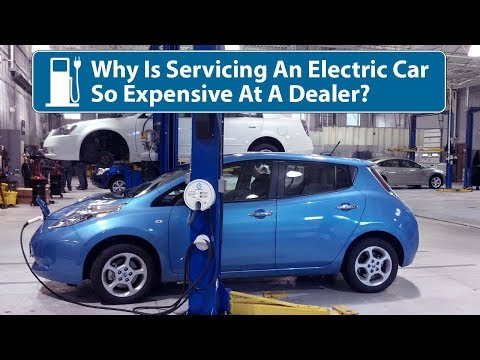
Electric Car Servicing - Is It A Rip Off?
The reviewer questions the value proposition of electric car servicing, particularly highlighting a significant price increase for the Nissan Leaf... more9;s second-year service. While acknowledging that EV servicing is generally cheaper than internal combustion engine (ICE) vehicles due to fewer moving parts (no oil changes, belts, etc.), the reviewer expresses frustration over a 50% price hike on the Leaf's service within a year, from £99 to £150. They argue that the service itself remains basic, involving a diagnostic check, screen wash top-up, and potentially a pollen filter change, which they deem insufficient to justify the cost. The reviewer contrasts this with other EVs like Tesla, where services, though potentially more expensive, seem to offer more value. The core issue is not the absolute cost, but the justification for such a steep price increase for minimal work, leading to a feeling of being 'ripped off'. less