
Auto Expert John Cadogan positions itself as a vital resource for navigating the complexities of the automotive world, particularly within the highly competitive Australian market. The channel delves into the everyday realities of car ownership, addressing common frustrations and offering insights into the decision-making processes behind purchasing and maintaining vehicles. It aims to demystify the automotive landscape for consumers, providing expert guidance on a range of topics.
With a focus on practical advice and in-depth analysis, Auto Expert John Cadogan covers essential aspects of vehicle ownership, from the nuances of upgrading older cars to the critical factors influencing tyre performance and safety. The channel also engages with contemporary issues such as electric vehicle (EV) technology, exploring both the potential and the challenges associated with their widespread adoption and integration into existing infrastructure.
With a focus on practical advice and in-depth analysis, Auto Expert John Cadogan covers essential aspects of vehicle ownership, from the nuances of upgrading older cars to the critical factors influencing tyre performance and safety. The channel also engages with contemporary issues such as electric vehicle (EV) technology, exploring both the potential and the challenges associated with their widespread adoption and integration into existing infrastructure.

When Should I Upgrade My Old Car? | Auto Expert John Cadogan
John Cadogan tackles the perennial question of when to upgrade a vehicle, offering a pragmatic perspective that challenges the industry's push for constant turnover. He argues that keeping a car longer significantly reduces depreciation and environmental impact, directly refuting the "greenwashin...




Latest Additions
Showing 24 of 285 total titles. Page 1 of 12.

New Electric Ute (and It's Not Chinese) | Auto Expert John Cadogan
The KGM Musso EV represents a bold entry into the electric ute market, particularly notable for its non-Chinese origin and aggressive pricing. The rev... moreiewer praises its surprisingly appealing design, which avoids the "loser" aesthetic, and highlights the top-spec dual-motor variant as the clear choice due to its significantly better performance (266kW/630Nm) and exceptional value at $64,000 drive-away. However, significant concerns are raised regarding its real-world range, with estimates suggesting a maximum of 300km for the dual-motor model, drastically reduced when towing. Charging speeds are also questioned, with the claimed 300kW charger capability appearing to average much lower (94kW). Off-road capability is deemed limited, especially for the front-drive model, and the reviewer cautions potential buyers about being "lab rats" due to the vehicle's newness and uncertain resale value. Ultimately, it's deemed suitable for urban and light-duty use, but falls short for serious towing or off-roading. less

Best Thing About Chinese Cars (It's Not What You Think)
John Cadogan highlights the significant advantage Chinese car manufacturers, exemplified by Leap Motor, hold over established automakers: their agilit... morey in delivering over-the-air (OTA) software updates. While traditional manufacturers are bogged down by inertia and lengthy decision-making processes, Leap Motor can rapidly enhance existing vehicles with new features like integrated dash cams and refined ADAS, often for free. Cadogan praises Leap Motor's C10 for its ability to allow users to customize ADAS settings, a workaround for overly intrusive regulations. Despite acknowledging Leap Motor's current commercial obscurity and the risks associated with buying from a new, unproven brand (especially with Stellantis as a distributor), Cadogan argues that this nimbleness poses a serious threat to the complacent Australian automotive establishment. He believes this competitive pressure will ultimately benefit consumers by forcing legacy brands to improve their offerings and customer support more rapidly. less

Polestar Is Now A Joke
John Cadogan delivers a scathing critique of Polestar's new 'Space' showroom in Penrith, Australia. He dismisses the structure, built f... morerom Cross-Laminated Timber (CLT), as a "glorified plywood humpy" and "a shed with delusions of relevance." Cadogan heavily criticizes Polestar's "greenwashing" claims regarding the sustainability of CLT, arguing that the embodied energy in concrete and steel foundations negates any environmental benefits. He also mocks the brand's "metaphysically Swedish" identity, emphasizing its ownership by Chinese conglomerate Geely. The reviewer finds the choice of location, surrounded by tattoo parlors, massage studios, and fast food outlets, to be ironically fitting for what he perceives as a brand lacking genuine innovation and long-term viability. Cadogan's overall verdict is that Polestar is a "joke" and a "massive loss maker" whose new showroom is emblematic of its questionable business practices and marketing. less

Hyundai EV Fire Sale Highlights Net Zero Hypocrisy
John Cadogan critically examines Hyundai's aggressive discounting on its EV lineup, particularly the Ionic 6, highlighting significant price redu... morections of up to $35,000. He argues these substantial discounts, applied to 2023 model year vehicles, signal desperation rather than strong demand, questioning the long-term viability of EV sales strategies. Cadogan expresses concern over the impact on resale values for early adopters and the potential battery health issues of EVs stored for extended periods. He contrasts the perceived hype around EVs with the practical challenges of infrastructure and consumer adoption, suggesting that the 'net zero' agenda is unrealistic given current market realities and Australia's reliance on fossil fuel exports. The review posits that a focus on efficiency and improved public transport would be a more achievable and beneficial approach than the current EV push. less

Electric Fire Truck Fail - After Costing Taxpayers Millions
This video critically examines the ACT government's procurement of a plug-in hybrid electric fire truck, labeling it a 'net zero ideology fi... moreasco' and an 'operability disaster.' The reviewer highlights that the truck, costing $1.6 million (significantly more than a conventional diesel equivalent), has been inoperable for 83% of its life, amounting to only 137 days of service over nearly two years. A fully electric logistics support truck, costing nearly $2 million, has also reportedly never been in service. The core criticism is that these expensive, unreliable vehicles are a result of bureaucratic ideology rather than evidence-based decision-making, failing to prioritize the primary function of emergency services: saving lives and property. The reviewer contrasts this with the proven reliability and significant emission reductions of modern diesel engines, questioning the real-world benefit and cost-effectiveness of the current electrification push in emergency services. less

Chinese SUV: $14,500 Problem
This video addresses a significant issue faced by a GWM H6 owner, KT, who is facing a $14,500 repair bill for catastrophic engine failure. The core of... more the problem appears to stem from missed vehicle servicing, with KT being 9,000 kilometers over her last scheduled service. John Cadogan emphasizes that timely servicing is crucial and that neglecting it voids warranty and consumer law protections. He debunks common misconceptions, such as the oil warning light indicating oil level rather than pressure, and stresses the importance of regular manual oil checks. While KT alleges a pattern of recurring engine failures and lack of manufacturer accountability, Cadogan suggests that delayed servicing is a common 'get out of jail free card' for manufacturers, making it difficult to prove a design defect. He advises owners who have missed services to seek independent, cost-effective repairs, while encouraging those with properly maintained vehicles experiencing similar issues to come forward. less
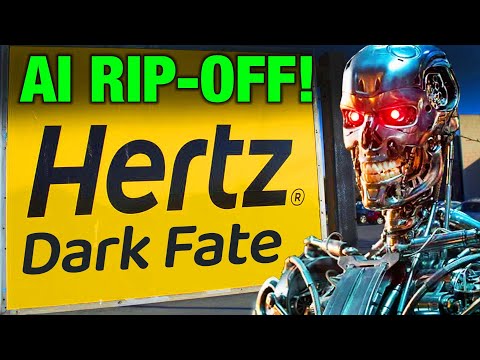
Hertz AI Is a Car Rental Nightmare
John Cadogan delivers a scathing critique of Hertz's recent foray into AI-powered vehicle damage assessment, labeling it a "nightmare" ... moreand a "scam." He details Hertz's costly past investment in Tesla vehicles, which resulted in significant financial losses due to depreciation, high operating costs, and charging inefficiencies. The core of the review focuses on Hertz's new AI system, which automatically scans rental cars for damage and bills customers without human oversight. Cadogan highlights numerous customer complaints, including being charged for non-existent damage and facing an unhelpful, automated customer service system. He argues this AI implementation is a "cash grab" that prioritizes corporate profit over customer satisfaction, drawing parallels to dystopian AI scenarios from science fiction. The review concludes that while Hertz claims transparency and efficiency, the reality for customers is a frustrating and potentially costly experience, with even US Congress investigating the practice. less
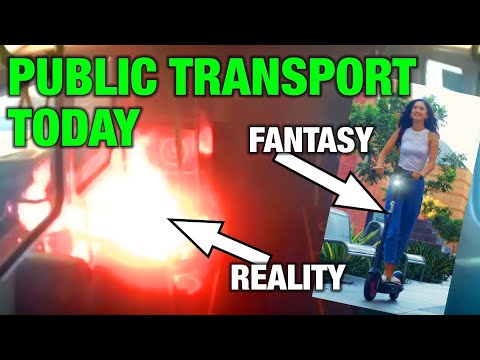
The Toxic Truth About Ebikes and Scooters on Trains
John Cadogan delivers a scathing critique of the ABC's 7:30 report on e-bikes and scooters, labeling it as "tabloid dog shit journalism"... more; riddled with factual errors and a lack of basic journalistic integrity. He highlights the severe dangers posed by thermal runaway in lithium-ion batteries, particularly the release of toxic compounds like hydrofluoric acid in enclosed spaces such as train carriages. Cadogan emphasizes the critical need for public safety, urging viewers to avoid e-bikes on public transport and criticizing the lack of effective regulation and safety measures. He also points out significant errors in the report, including mispronunciations and factual inaccuracies regarding e-bike power limits, underscoring a broader issue of declining scientific literacy in media production. The review concludes by advocating for better risk management and separation of hazards from the public, drawing parallels to industrial safety practices. less

Pay Up, Monthly, or Go Slow: The New VW 'Extortion' Business Model
John Cadogan delivers a scathing critique of Volkswagen's proposed subscription model for unlocking additional power in the ID3 electric vehicle.... more He vehemently argues that charging a monthly fee for functionality already baked into the car is akin to extortion, drawing parallels to past corporate malfeasance by Volkswagen, such as Dieselgate. Cadogan highlights that this practice is also being explored by other German manufacturers like BMW and Mercedes-Benz, and presents global consumer survey data indicating significant opposition to such subscription services. He contrasts this with the value offered by Chinese manufacturers, who provide more power and features at a lower upfront cost. The reviewer concludes that this subscription model is a desperate attempt by German automakers to generate revenue in the face of increasing competition, questioning the very notion of vehicle ownership when full potential is locked behind a paywall. less

Hyundai Just Updated Santa Fe & Tucson For 2026
John Cadogan provides an overview of the 2026 updates for the Hyundai Tucson and Santa Fe. The Tucson sees a price reduction of $1,000 to $2,500 acros... mores its variants, with a revised color palette including a new 'Ecotronic Gray' and updated 17-inch alloys for the base model. The Santa Fe, however, experiences a slight price increase of $400, but gains standard Digital Key 2 and 18-inch alloys for the entry-level model. A significant shift for both models, particularly the Tucson, is the move towards hybrid powertrains, with the 1.6 turbo engine discontinued. Cadogan expresses skepticism about Hyundai's 'Digital Key 2' system, citing past unreliability and privacy concerns, while praising the practicality and efficiency of hybrid technology in the Australian market. He concludes that both vehicles remain solid propositions for mainstream buyers, suggesting his platform can secure better deals than dealership pricing. less

10 Things You'll Love About The Chinese GWM Cannon Alpha PHEV Ute
John Cadogan provides an in-depth look at the GWM Cannon Alpha PHEV ute, focusing on its strengths. He highlights the vehicle's exceptional value... more for money, especially when compared to its competitors like the Ranger and Hilux, with pricing significantly lower for comparable features. The powertrain is lauded for its impressive 300kW/750Nm output, offering staggering acceleration and a unique multi-speed transmission that allows for true off-road capability with low range and diff locks, differentiating it from other PHEVs. Cadogan also praises the premium and feature-rich interior, comparing it favorably to European SUVs, and commends the excellent reversing and surround camera system. The innovative split-fold tailgate is another positive, offering practical access to the load space. While acknowledging potential drawbacks (detailed in a separate video), Cadogan concludes that the Cannon Alpha offers a compelling package of performance, off-road prowess, and value, making it a strong contender in the ute market. less

10 Things You'll Hate About The Chinese GWM Cannon Alpha PHEV Ute
John Cadogan delivers a critical, yet thorough, assessment of the GWM Cannon Alpha PHEV ute, focusing on ten aspects he detested. While acknowledging ... morethe brand's effort to include a spare tire and the premium feel of the cabin, Cadogan highlights significant drawbacks. He criticizes the steel spare wheel, the vulnerable placement of the battery pack, and the stark contrast between the luxurious interior and the basic tray finish, noting the lack of a protective hoop and a secure roll-top cover. The vehicle's extreme complexity, combining combustion and electric systems, is flagged as a potential long-term reliability concern, with owners potentially becoming 'lab rats'. Furthermore, the low payload capacity (685kg) is deemed a major limitation for heavy towing or fully loaded trips, and the ADAS system is described as overly intrusive and prone to false positives. The reviewer also points out the lack of direct HVAC controls on the touchscreen and the basic Gitty tires as areas for improvement. Despite these criticisms, Cadogan praises the vehicle's overall engineering and build quality, which he finds surprisingly high for a Chinese-manufactured vehicle. less
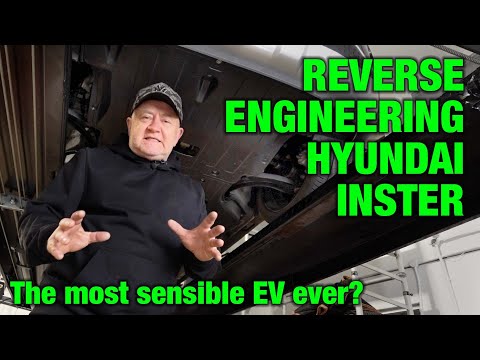
Reverse-Engineering the Hyundai Inster (aka Casper Electric) EV
John Cadogan provides an in-depth technical review of the Hyundai Inster (Casper Electric), focusing on its underpinnings and engineering. He highligh... morets the extensive plastic underbody sheathing, suggesting it's for water spray protection rather than impact resistance, and notes the necessity of an active cooling system for the battery due to this. Cadogan praises the Inster's surprisingly good driving dynamics, attributing it to effective tuning despite the use of a low-tech torsion beam rear suspension. He contrasts this with the standard MacPherson strut front suspension. The review delves into the complexity of the EV's 'engine bay,' emphasizing the importance of checking coolant and brake fluid, and explaining the roles of the radiator, 12V battery, heat pump, inverter, and electric motor. Cadogan also analyzes the pricing, deeming it competitive within its segment when compared to other small cars and EVs. He speculates that the power differences between Inster variants stem from battery voltage rather than different motors. A significant critique is leveled at the charging port's front-end placement, citing vulnerability to damage, inconvenience for home charging, and potential security risks. The lack of wireless Apple CarPlay/Android Auto and the cargo bay's inefficient design, including a non-retracting cargo blind and a poorly designed sliding floor, are also noted as drawbacks. Despite these criticisms, Cadogan gives the Inster a strong endorsement for its societal benefit as an EV, awarding it a maximum two thumbs up. less

Hyundai Inster Gets 4 Stars From ANCAP: But Is It Safe Enough? | Auto Expert John Cadogan
The Hyundai Inster (also known as Casper Electric) has received a four-star safety rating from ANCAP, a result the reviewer argues is presented with a... more misleadingly negative context compared to Euro NCAP's "creditable" assessment. The core of the critique lies in ANCAP's perceived overemphasis on the four-star rating as a "death trap," contrasting with Euro NCAP's view that it is "deserving of praise or approval." The reviewer highlights that the Inster's R&D dates back to 2017-2018, predating current ANCAP protocols, and notes the EV version is 350kg heavier than its combustion counterpart. While acknowledging mass is crucial in collisions, the reviewer contends that ANCAP's interpretation of the results is a disservice to consumers, especially given that four stars in 2025 is arguably safer than five stars from 2019 due to evolving standards. The piece also questions ANCAP's relevance and funding priorities, suggesting taxpayer money could be better allocated to addressing more significant road safety issues like dangerous driving. less

Hyundai Inster EV (Casper Electric) First Drive | Auto Expert
The Hyundai Inster EV, also known as the Casper Electric, is presented as a misunderstood city-friendly EV that challenges the notion of what electric... more vehicles should be. The reviewer argues that unlike larger, resource-intensive EVs, the Inster's smaller battery (40-49 kWh) and compact size (800mm shorter than a Corolla) make it a more environmentally virtuous choice. Despite its narrow cabin, the Inster offers surprising headroom and a spacious feel due to its long wheelbase relative to its length, contributing to its 'chuckable' and fun driving dynamics, reminiscent of hot hatches. The reviewer praises its solid build, flat cornering, and engaging driving experience, particularly the accessible regenerative braking controls. However, criticisms include the confusing naming convention (why not 'Ionic 2'?), a poorly designed rear luggage space that struggles to accommodate the charging brick, and the lack of a spare tire. The reviewer also disputes the common media assessment that the Inster is 'too expensive,' arguing that its premium feel, brand recognition, and city-friendly nature justify its price point, comparing it to the value proposition of premium brands in other consumer goods. The video also touches on the vehicle's four-star ANCAP safety rating, attributing it to its older platform design, and expresses frustration with overly intrusive and unproven ADAS systems, which are mandated for safety ratings but often train drivers to ignore them. less

Nves: The Government's New 'Stealth Tax' On New Cars Starts Today
This video critically examines Australia's new Vehicle Efficiency Standard (NVES), labeling it a 'stealth tax' on consumers. The presen... moreter, John Cadogan, argues that while the government aims to reduce CO2 emissions, the policy is fundamentally flawed due to low consumer demand for EVs, high purchase prices, and inadequate infrastructure. He highlights that car manufacturers will likely pass on compliance costs to buyers, particularly impacting sales of popular vehicles like the Hilux and Ranger. Cadogan expresses agreement with industry body FCAI's concerns about affordability and infrastructure, suggesting the NVES targets are unattainable. He concludes that the policy is a form of social engineering that doesn't align with Australian consumer preferences for larger vehicles and advocates for scrapping the NVES in favor of more practical emissions reduction strategies. less

EV Fires Finally Sink Car Carrying Ship Morning Midas
The sinking of the car carrier ship Morning Midas, which caught fire and subsequently sank in the Pacific Ocean, is examined in this report. The autho... morer, John Cadogan, argues that while the exact cause of the fire is unknown and may not have been an EV, the presence of lithium-ion batteries in EVs and hybrids significantly exacerbated the fire's intensity and made it unmanageable with conventional suppression systems. He highlights that unlike internal combustion engine vehicles, EVs cannot have their batteries disconnected for shipping, and their batteries can decompose and release oxygen, fueling the fire. Cadogan criticizes the industry's and authorities' handling of EV integration into shipping, suggesting a lack of preparedness for these specific fire risks, evidenced by similar incidents like the Felicity Ace. The core argument is that 'net zero' initiatives are being implemented without adequate safety considerations, leading to potentially catastrophic environmental consequences. less

GWM Cannon Alpha PHEV Chinese Ute: Full Underbody Deep-Dive
John Cadogan conducts a thorough underbody inspection of the GWM Cannon Alpha PHEV, focusing on construction quality and component integration rather ... morethan traditional off-road tests. He finds the chassis, welding, and cable routing to be of high quality with no 'dodgy' red flags, praising the precision and efficiency of the manufacturing. The battery's rearward placement is noted as a potential vulnerability to rear impacts, though mitigated by a robust crossmember and a significant distance from the cabin in case of thermal runaway. Cadogan highlights the extensive thermal management plumbing and the complexity of the PHEV system, cautioning potential owners about modifications due to the high-voltage components. He commends the coil-sprung rear suspension for on-road handling but emphasizes the reliance on diff locks for articulation. A significant positive is the inclusion of rear disc brakes, a feature he notes is surprisingly absent on many competitor utes, deeming it a major advantage over established brands. less
Everything Wrong With The News
John Cadogan delivers a scathing critique of automotive journalism in Australia, using a recent report on BYD's new operating chief as a case stu... moredy. He argues that the report, published by 'Lesser Expert', failed to mention critical details about the appointee's tenure at Honda, specifically the dramatic 66% decline in Honda's sales during his leadership. Cadogan contends this omission is indicative of a broader trend of shallow, advertiser-influenced reporting. He praises the audience's insightful comments on the original article, suggesting they are braver and more insightful than paid journalists. While acknowledging the appointee's past successes with performance Hondas, Cadogan expresses concern about his appointment at BYD, given Honda's sales trajectory under his watch. The review highlights the perceived conflict of interest where media outlets prioritize advertiser satisfaction over journalistic integrity, ultimately treating the audience as mere 'monkeys' in a performance for car manufacturers. less

BYD's Radical Honda Transplant
This video report from Auto Expert John Cadogan focuses on BYD's strategic shift in Australia, moving from an independent importer to a factory-b... moreacked distribution model. The review highlights the appointment of Steven Collins, formerly of Honda Australia, as the new COO, a move Cadogan views with a critical, almost cynical, eye, questioning the necessity and implications of appointing a local COO for an overseas parent company. While acknowledging the impressive nature of BYD vehicles like the Shark 6, Cadogan dismisses the company's claims of 'shaping the future of automotive innovation' in Australia, arguing that their current role is primarily distribution rather than genuine innovation. The review is characterized by its sharp, often sarcastic, commentary on corporate practices and the automotive industry's local landscape, ultimately predicting strong sales for BYD despite his critical stance on their corporate messaging. less

A Week-Long EV Fire Claims Another Giant Ship
This video critically examines the challenges and risks associated with transporting electric vehicles (EVs) and other electrified vehicles by sea, hi... moreghlighted by the recent fire on the Morning Midas Rorow ship. The presenter argues that current shipping protocols are inadequate for EVs, particularly due to their propensity to enter thermal runaway and generate their own oxygen, rendering conventional fire suppression systems ineffective. The piece also touches upon the broader environmental and societal costs associated with battery technology and resource extraction, questioning the narrative of electrification as a purely planet-saving endeavor. While acknowledging the necessity of batteries in modern life, the presenter calls for better regulatory oversight, specifically mandating battery recycling. The video critiques the overhyped potential of alternative battery technologies like redox flow batteries, citing their unreliability and commercial failures. It concludes by reframing the environmental impact of nickel mining, arguing that its primary use is in stainless steel, not predominantly EVs, and that demonizing Chinese EVs is a misdirection from the real issues with resource extraction and government regulation. less

Why Chinese Carmakers Are Unstoppable in Australia
The video provides an in-depth look at GWM's rapid ascent in the Australian automotive market, highlighting its strategic positioning and product... more development. The GWM Cannon Alpha Plug-in Hybrid ute is presented as a significant disruptor, offering compelling specifications like 300kW, 750Nm, a large battery, and 3.5-ton towing capacity at a price point under $70,000, undercutting key competitors like the Ford Ranger Wildtrak X and Toyota Hilux Rogue. The reviewer emphasizes that while not perfect, the Cannon Alpha is a credible alternative, particularly for those seeking advanced powertrain technology and luxury features at a competitive price. GWM's focus on technological advancement, particularly its plug-in hybrid system and the integration of engineering talent like Rod Trani to refine ride and handling, is seen as crucial for its future growth. The brand aims to move beyond price competitiveness to establish intrinsic value and a superior ownership experience, challenging established players and aiming for a top-five market position by 2030. The discussion also touches upon the broader shift in the Australian market, with an increasing number of Chinese brands and the potential consolidation of the market. less

Net Zero Is a Curse on Ordinary Australians
John Cadogan critically examines the 'net zero' agenda, arguing it's a burden on ordinary Australians rather than a genuine solution. H... moree posits that the prosperity and technological advancements enjoyed today are largely thanks to hydrocarbon energy, which has enabled unprecedented mobility, healthcare, and living standards. Cadogan contends that demonizing hydrocarbons and rushing towards renewables, which he claims are not cheaper or as reliable, will disproportionately harm Australians struggling with the cost of living. He advocates for leveraging Australia's abundant hydrocarbon resources to improve domestic prosperity and foster innovation, suggesting that technological advancement, driven by STEM expertise, is the true path to solving global challenges, not a premature and economically damaging shift to 'net zero'. The review touches on the practicalities of electric vehicles like the Canon Alpha plug-in hybrid, but frames them within this broader critique of energy policy. less

First Drive: GWM Cannon Alpha PHEV (on Australian Roads) | Auto Expert John Cadogan
John Cadogan provides an initial assessment of the GWM Cannon Alpha PHEV, addressing viewer Andrew's query about its suitability for towing and g... moreeneral use. Cadogan highlights the vehicle's appeal as a comfortable, hybrid ute with significant towing capacity and a coil-sprung rear end, contrasting it with more agricultural alternatives. He commends GWM's 16-year operational maturity in Australia, differentiating it from newer Chinese brands. Initial impressions praise the luxurious interior, quiet operation, and refined ride quality, particularly for an unladen ute. However, a significant drawback identified is the relocation of the spare tire to accommodate the battery, resulting in a less-than-ideal mounting solution. Cadogan suggests the Cannon Alpha PHEV is well-suited for towing moderate loads (2-2.5 tons) due to its substantial weight and size, offering a more stable towing experience than lighter utes. He also points out the practical benefit of EV mode for daily commuting, offering a zero-emission option and reducing range anxiety compared to pure EVs on long trips. While acknowledging the environmental debate, he emphasizes the vehicle's versatility and refinement as key advantages over traditional utes. less