
Autoline Network is a premier distributor dedicated to delivering comprehensive automotive news and insights to enthusiasts and industry professionals alike. Specializing in global automotive developments, the network provides in-depth coverage of everything from cutting-edge EV and AV technology to ICE advancements, car sales trends, and financial earnings reports. Viewers can expect expert analysis and reviews of the latest vehicles, ensuring a well-rounded understanding of the automotive landscape.
The channel distinguishes itself through exclusive content, featuring top auto executive interviews and detailed breakdowns of automotive innovations. With a focus on clarity and expert opinion, Autoline Network serves as an essential resource for anyone seeking to stay informed about the dynamic world of automobiles, from technological breakthroughs to market performance.
The channel distinguishes itself through exclusive content, featuring top auto executive interviews and detailed breakdowns of automotive innovations. With a focus on clarity and expert opinion, Autoline Network serves as an essential resource for anyone seeking to stay informed about the dynamic world of automobiles, from technological breakthroughs to market performance.

World's First Cybertruck Teardown - Steer-by-Wire, 48V, Battery & Gigacastings
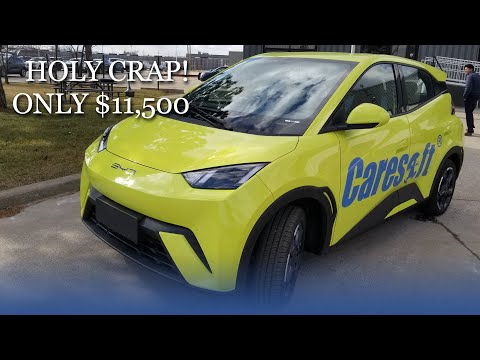
This video provides an in-depth look at the initial stages of Caresoft's teardown of the Tesla Cybertruck, focusing on key technological advancements. The review highlights the innovative steer-by-wire system, noting its separation from traditional mechanical linkages and the implementation of re...


Latest Additions
Showing 24 of 868 total titles. Page 4 of 37.

Bob Lutz Talks GM, Ford & Stellantis
This episode of Autoline After Hours features a compelling discussion with automotive legend Bob Lutz, alongside Jack Keebler, Gary Vasilash, and John... more McElroy. The panel delves into the current challenges facing the automotive industry, particularly the EV transition, China's growing influence, and the legacy of current leadership. Lutz expresses skepticism about the current pace and practicality of EV adoption, highlighting issues with charging infrastructure, battery costs, and the politicization of the technology. He argues that while EVs are the future, significant improvements in battery energy density and charging speed are crucial for mass adoption. The discussion also touches upon the strategic decisions of GM and Ford, the importance of profitable truck sales, and the need for bold leadership and agility in overcoming industry inertia. Lutz emphasizes that while internal combustion engines have had 125 years of refinement, EVs are still in their infancy, and a balanced approach, including plug-in hybrids, may be necessary in the medium term. less
What Makes a Car a Classic Car?
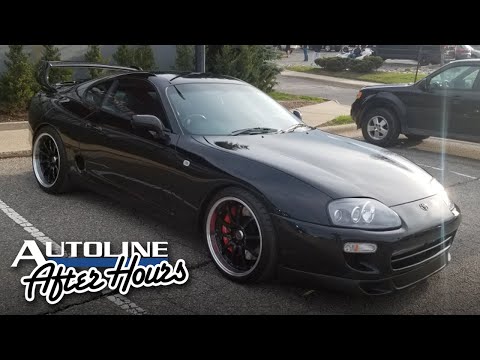
This episode of Autoline After Hours delves into the evolving definition of a 'classic car,' exploring generational shifts in automotive app... morereciation and the cultural significance of vehicles. The panel, featuring experts from Hagerty and SeekingAlpha, discusses the rise of 80s and 90s vehicles as modern classics, driven by Gen X and Millennial nostalgia. They highlight upcoming events like Radwood and Cars at the Station in Detroit, emphasizing their role in celebrating car culture beyond just the vehicles themselves. The discussion also touches upon the preservation vs. restoration debate, the challenges facing legacy brands like Chrysler, and the inventory issues at Stellantis, particularly with Jeep. The segment on the Ford Bronco's success and its impact on the Jeep Wrangler market provides insight into competitive strategies. Finally, the conversation touches on the future of off-roading with EVs and the significant financial pressures facing Volkswagen. less

The Saar Is Slowing, That Wasn't Supposed to Happen
This episode of Autoline After Hours delves into the surprising slowdown of the U.S. new car sales (SAAR), which is tracking below the initially optim... moreistic 16 million unit forecast, now hovering around 15.2 million. Panelists attribute this to a combination of persistently high vehicle prices and elevated interest rates, leading to unaffordable monthly payments for the average consumer, effectively turning the market into a luxury segment. While incentives are rising, they remain below historic levels. The discussion also touches upon the global market, noting cooling demand in Western Europe due to similar affordability issues, while China's price war shows signs of stabilizing. A significant portion of the conversation highlights the struggles of the EV market, particularly in Germany where sales have plummeted, contrasting sharply with the strong performance of traditional hybrids. The panel expresses skepticism about the rapid widespread adoption of robo-taxis and questions the ambitious sales targets set by automakers like Hyundai, especially in competitive markets like China and Southeast Asia. Finally, the episode revisits Tesla's legal battles against state direct-sales bans, pondering the potential for a Supreme Court challenge. less

He Invented the EV Skateboard, Now He Wants to Reinvent Mobility
Chris Borroni-Bird, a pioneer in EV skateboard technology, discusses his vision for reinventing mobility. The interview highlights his past work on GM... more's Autonomy concept and the en-V electric networked vehicle, emphasizing their forward-thinking autonomous, connected, and electric nature. Borroni-Bird then pivots to his current focus: developing affordable, sustainable mobility solutions, particularly through lightweight, locally manufactured electric kits (e-kits) that can retrofit non-motorized vehicles. He advocates for right-sizing vehicles for specific needs, leveraging existing automotive technologies for fleet services, and empowering local communities to build their own transportation solutions. The discussion also touches on the potential for cities to ban cars from centers, creating opportunities for these new vehicle types, and how traditional automakers can adapt by exploring new markets and sustainable practices. His upcoming book, 'Putting the Heart Back into Technology,' aims to consolidate these ideas for global application. less

The Data Super Highway in Your Car and How It Works
This episode of Autoline After Hours delves into the complex world of automotive networking, specifically the transition from traditional wiring harne... moresses to Ethernet-based systems. Experts Dave Robins and Colt Correa from Intrepid Control Systems explain the evolution from CAN bus to modern Ethernet, highlighting the increasing data demands of advanced vehicle features like sensors, cameras, and software-defined architectures. The discussion emphasizes how Ethernet's higher bandwidth and flexibility are crucial for enabling features like advanced driver-assistance systems (ADAS) and over-the-air software updates, which are key to the software-defined vehicle (SDV) concept. While CAN bus remains prevalent for diagnostics and certain functions due to cost and legacy support, Ethernet is presented as the future for high-data-rate applications and centralized computing, despite its own complexities and the significant architectural shifts required by automakers. less

Crisis at Hand: China's Strategy for Global Domination
This episode of Autoline After Hours delves into the significant competitive advantage held by Chinese automakers, with AlixPartners estimating a 35% ... morecost advantage. The panel, featuring experts from AlixPartners, Bloomberg, and Autoline.tv, argues that legacy automakers must undergo "quantum changes" to survive. Key takeaways include China's rapid product development cycles (as short as 20 months), higher vertical integration, and extensive over-the-air update capabilities. The discussion highlights a stark contrast in market dynamics, with EVs becoming price-competitive or even cheaper than ICE vehicles in China, a situation not yet mirrored in Western markets where EVs still carry a significant price penalty. The experts emphasize that incremental improvements are insufficient; a fundamental restructuring of product development, manufacturing, and organizational culture is necessary. They suggest that creating entirely new, separate companies or internal startups might be the most effective way for legacy automakers to adapt, rather than attempting to reform existing structures. The conversation also touches upon the role of government industrial policy, labor costs, and the potential for Chinese companies to dominate global markets if Western firms fail to reinvent themselves. less

The Reckoning: EVs, AVs & ICEs
This episode of Autoline After Hours features a panel discussion on the evolving automotive landscape, focusing on autonomous vehicles, the future of ... moreinternal combustion engines (ICE), and the impact of Chinese brands. The discussion highlights the significant challenges in achieving profitability for robotaxi services, with Waymo's substantial investment from Alphabet underscoring the capital-intensive nature of the market. Panelists debated the viability of various AV players, the complexities of business models, and the regulatory hurdles, particularly concerning driverless operation waivers. The conversation also delved into the growing presence of Chinese automakers like MG and BYD in global markets, exploring their potential impact on the domestic industry, consumer acceptance, and manufacturing strategies, including plans for production in Mexico. Finally, the panel examined the strategic collaborations between automakers like Honda and Nissan on software-defined vehicles and electrification, questioning whether such partnerships necessitate full mergers or can stand alone to drive efficiency and innovation. less

100K of Code Makes EV Motors More Efficient – Autoline Exclusives
Autoline Exclusives features Tula's innovative Dynamic Motor Drive (DMD) technology, a software-based solution designed to enhance electric motor... more efficiency. By pulsing electricity to the motor instead of a continuous flow, DMD reduces energy consumption, offering automakers the flexibility to either extend EV range or reduce battery size and cost. The technology, developed by a company with a proven track record in engine efficiency (Dynamic Skip Fire for GM), operates by pulsing at higher torques with lower relative losses, averaging out to the required lower torque with less overall energy. The system overlays a lower frequency pulsing strategy onto the vehicle's existing PWM control, requiring minimal additional computing power and memory (less than 100KB). Tula claims efficiency improvements of 0.3% to 2% on WLTP cycles, potentially translating to significant cost savings per vehicle. The company is licensing this technology competitively, positioning it as a cost-effective alternative to solutions like Silicon Carbide (SiC) and a strong enabler for wound rotor motors, reducing reliance on rare-earth magnets. Tula anticipates first production in China later this year, with ongoing engagement in Europe and the US. less

Torev's Axial Flux Motor Is Smaller, Lighter & Cheaper – Autoline Exclusives
This Autoline Exclusives segment introduces Torev, a startup revolutionizing electric motors with their "double axial flux" pancake design. ... moreThe core innovation lies in maximizing conductor volume over permanent magnets, significantly reducing reliance on rare earth metals and mitigating supply chain issues. This approach yields motors that are approximately one-third the size and weight of traditional radial flux motors for equivalent power output, while also offering higher torque. Torev claims their motors can achieve cost parity with standard motors and are 20-25% cheaper than existing axial flux designs. The company has secured significant funding and is developing a 150kW flagship product, aiming for production within 12 months. The interview highlights the company's impressive traction, including interest from major automakers and a win at the GAMIC awards, positioning Torev as a key innovator in the EV powertrain space. less

Honda Jumps Into the EV War
This episode of Autoline After Hours features Lance Woelfer of American Honda discussing the brand's current sales performance, its approach to e... morelectrification, and its strong commitment to the North American market. Honda has seen significant growth, outperforming the industry, with a focus on maintaining a healthy 30-day supply for dealers. Woelfer highlights Honda's surprising success on the cars.com 2024 American-Made Index, with multiple models in the top 10, underscoring their localization strategy. The conversation delves into the recently launched Prologue and ZDX EVs, with expectations that a majority of buyers will be loyal Honda customers, though conquest sales are also anticipated. The panel also discusses the strong performance of Honda's hybrids, noting that they were well-prepared for the market's renewed interest in this segment. The discussion touches on the future of sedans, Honda's continued success with the Odyssey minivan, and potential for more extreme off-road vehicles. The latter half of the show shifts to industry-wide issues, including Tesla's declining profits and aging model lineup, the rise of Hyundai/Kia in the EV space, and the broader challenges and recalibrations in the EV market, with a particular focus on the slowing adoption rates and the strategic missteps of some automakers. less

2025 Kia Carnival Gets SUV Touches & Hybrid Powertrain
The 2025 Kia Carnival receives a significant update, moving away from traditional minivan aesthetics towards a more rugged, SUV-like appearance with i... morets 'modern boldness' design theme and optional Dark Edition styling. The interior also sees enhancements, including an updated panoramic curved display with 12.3-inch screens, a new shift-by-wire dial, and the introduction of ambient lighting and first-ever 14.6-inch dual rear entertainment monitors. Kia emphasizes the Carnival's appeal to a broader demographic beyond families, including older buyers and those seeking a more executive-like experience, thanks to features like power ottomans and extensive rear-seat adjustability. The major highlight is the introduction of an optional hybrid powertrain, featuring a 1.6L turbo gasoline engine paired with a 54kW electric motor, delivering a combined 242 horsepower and targeting an impressive 32 MPG. This hybrid option is positioned as a premium offering, starting at $40,500, while the ICE models begin at $36,500. The reviewer highlights the vehicle's versatility, styling, and the compelling new hybrid option as key strengths, suggesting it successfully blends practicality with a more desirable image. less

Nano-Tech Can Make Brake Rotors Last Forever
This episode of Autoline After Hours features a discussion on PureForge's innovative nano-tech treatment for brake rotors, promising a lifespan o... moref up to 200,000 miles. The technology, a Physical Vapor Deposition (PVD) process, hardens the rotor surface without significantly increasing thickness, leading to virtually no rotor wear. This not only drastically reduces replacement costs for fleets but also eliminates brake dust, keeping vehicles cleaner. While the initial cost is higher, the long-term savings and environmental benefits are significant. The panel also touches upon the broader automotive industry trends, including the impact of China's price war on EVs, the challenges of EV adoption, and the critical importance of cybersecurity in the automotive sector, highlighted by a recent cyber attack on CDK. The discussion also covers the Center for Automotive Research's new 'CAR 2.0' initiative and their upcoming Management Briefing Seminars. less

eVTOLs and Why So Many Automakers Want In
This episode of Autoline After Hours delves into the burgeoning field of eVTOLs (electric Vertical Takeoff and Landing vehicles), also known as "... moreflying cars." The discussion highlights the significant investments from major automakers, aircraft manufacturers, and airlines, signaling a serious push towards this new mode of transportation. While the technology is advancing rapidly, with companies like Archer Aviation and Joby Aviation securing contracts for urban air mobility services starting in 2026, the panel acknowledges the challenges. Key concerns include regulatory frameworks, air traffic control for eVTOLs, and the public's general unawareness of this developing industry. The conversation also touches upon the automotive industry's current inventory situation, noting the dominance of ICE vehicles but the growing interest in hybrids as a bridge technology. The potential for eVTOLs to alleviate traffic congestion and reduce emissions is a major draw, though widespread personal ownership is likely a distant prospect, with urban air mobility services being the initial focus. less

Deep Dive Into Tesla's 48-Volt Architecture - Caresoft Teardown
This video provides an in-depth look at Tesla's pioneering adoption of a 48-volt electrical architecture in the Cybertruck, as explained by Cares... moreoft President Terry Woychowski. The core benefit highlighted is the significant reduction in wire gauge, weight, and cost by increasing voltage and decreasing amperage, a concept illustrated with clear analogies and direct comparisons to the Model Y's 15-volt system. While the Cybertruck didn't convert every component to 48 volts, the adoption for unique or high-draw systems like the wiper motors, fans, and modules is presented as a strategic move to reduce complexity and cost. The discussion also touches upon the engineering challenges, the benefits of zonal architecture, and the clever design of body control modules for easier assembly and grounding. The overall verdict is that Tesla's move to 48 volts, though not fully implemented, is a significant engineering feat with substantial cost and efficiency advantages, encouraging other automakers to adopt it quickly. less

No More Proving Grounds? The New Way to Develop Cars
This episode of Autoline After Hours delves into the evolving landscape of automotive development, featuring ZF's innovative 'Cubix' sy... morestem. The core of the discussion revolves around how Cubix enables engineers to tune chassis, steering, and braking parameters using a laptop, drastically reducing the time and cost associated with traditional proving ground methods. Oliver Spiess of ZF highlights the system's ability to adapt to various vehicle architectures, including those with electronically controlled components, and its potential to compensate for actuator failures in real-time. The panel also touches upon the significant cost advantages held by Chinese automakers and how ZF's technology aims to help Western manufacturers compete. A secondary but crucial topic is the steel industry's response to the rise of aluminum gigacastings, with the steel sector innovating new alloys and processes to maintain its market share. While gigacastings offer part consolidation, the steel industry emphasizes its established infrastructure and potential for cost-effective integration, setting the stage for a competitive future in vehicle manufacturing. less

Legacy OEMs May Not Survive the Automotive Apocalypse
This episode of Autoline After Hours, marking its 700th installment, features a panel discussion on the tumultuous state of the automotive industry, p... morearticularly focusing on the challenges faced by legacy automakers and EV startups. The conversation highlights Fisker's bankruptcy filing, attributing it to market and macroeconomic headwinds despite delivering its Ocean SUV. The panel also touches upon Elon Musk's substantial pay package and Lucid's efficiency gains, achieving 5 miles per kWh. A significant portion of the discussion revolves around the UAW's organizing efforts, the struggles of EV startups like Fisker and Lordstown, and the strategic decisions of legacy manufacturers such as Stellantis, which is reportedly looking to cut costs by shifting manufacturing overseas. The experts express skepticism about the long-term viability of many EV startups, emphasizing the need for a solid product, efficient production, and a clear path to profitability, contrasting this with Tesla's early success and ongoing challenges. The segment concludes with a look at the evolving EV market, including the potential of range extenders and the strategic importance of diversified powertrains, while acknowledging the significant hurdles traditional OEMs face in adapting to the new landscape. less

Hybrid? BEV? Hydrogen? Which Way Would You Go?
This 'Autoline After Hours' episode delves into the complex future of automotive powertrains, featuring insights from Bosch's Mohammad ... moreFatouraie, Cox Automotive's Jason Fogelson, and Gary Vasilash. The panel discusses the evolving landscape of hybrids, plug-in hybrids (PHEVs), extended-range EVs (EREVs), battery electric vehicles (BEVs), and hydrogen fuel cells. A key takeaway is Bosch's technology-neutral approach, investing in electrification and hydrogen while acknowledging the continued relevance of hybridization. The discussion highlights the challenges of infrastructure development for hydrogen and the consumer confusion surrounding PHEVs, with a DOE study indicating a return to ICE vehicles for many. EREVs are presented as a potential solution, offering EV-like driving with an onboard generator to mitigate range anxiety and emissions concerns. The conversation also touches on the potential of e-fuels and hydrogen combustion engines, particularly for heavy-duty applications, emphasizing that a "silver bullet" solution is unlikely, and consumer adoption will ultimately drive the market. The panel stresses the importance of a holistic view, considering total cost of ownership and environmental impact beyond just tailpipe emissions. less

China Smackdown: We Drive 4 of China's Top EVs - Caresoft
This video provides a comparative drive of four prominent Chinese EVs against the Tesla Model Y, serving as a benchmark. The reviewer highlights the T... moreesla Model Y as the standard, with the XPeng G6 emerging as a strong, cost-effective competitor, priced $3,000-$5,000 lower and featuring similar architecture and a more premium interior feel, though some minor rattles were noted. The Zeekr X, priced around $30,000, impressed with its advanced features like automatic doors and a surprisingly quiet, smooth ride, offering significant value for its segment, despite some initial build quality concerns on the hood. The Avatr 12, a more upscale $55,000 offering, showcases advanced technology with multiple lidar systems and cameras, though its simulated engine sounds were deemed unnecessary and its throttle response was described as too modulated for immediate acceleration needs. Overall, the review suggests Chinese EVs offer excellent quality and value, posing a significant challenge to legacy automakers. less

The Brilliant and Abysmal Relationships Between Automakers and Suppliers - AAH 698
This episode of Autoline After Hours delves into the critical, yet often strained, relationships between automakers and their suppliers, featuring ins... moreights from Dave Andrea of Plante Moran's annual supplier survey. The discussion highlights a significant disparity in supplier satisfaction, with Toyota and Honda consistently leading due to their engineering-driven culture and focus on human relationships. Conversely, Ford and Stellantis languish at the bottom, struggling with supplier trust and fair treatment, a situation exacerbated by organizational changes and purchasing practices. The conversation also touches upon the increasing importance of supplier relationships in the EV transition, where access to new technologies and capacity is paramount. While legacy automakers face challenges in cost reduction and adapting to new business models, the episode underscores that strong supplier partnerships are not just beneficial but essential for long-term success, impacting quality, innovation, and overall competitiveness. less

Autoline's 2024 Industry Report Card
Autoline's 2024 Industry Report Card provides a data-driven ranking of global automakers based on seven key financial and sales metrics: revenue,... more operating profit, operating margin, profit per unit, vehicle sales, R&D spending, and quality. Toyota leads in vehicle sales, while Volkswagen Group tops revenue. Toyota also excels in operating profits, though Stellantis and Mercedes-Benz lead in operating profit margin. BMW dedicates the largest portion of its revenue to R&D, and Mercedes-Benz achieves the highest profit per vehicle. Toyota and General Motors score highest in quality, with Toyota having a significant lead. Ultimately, BMW is ranked the best-run automaker globally for 2024, followed by Toyota and Volkswagen Group. The report highlights significant shifts, including BYD's entry into the top 10 for sales, and notes that while luxury brands generally lead in profitability per unit, broader operational efficiency is crucial for overall ranking. less
How Legacy Automakers Can Solve Their Software Problems
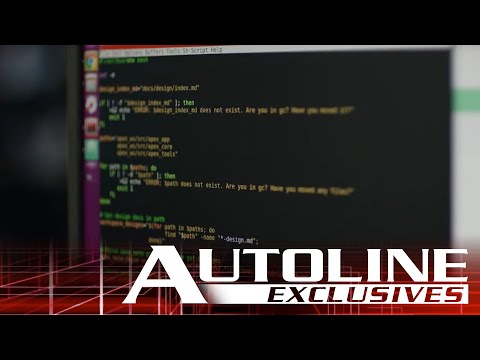
This Autoline Exclusives episode features Jan Becker, CEO of Apex.ai, discussing the significant software development challenges faced by legacy autom... moreakers. Becker argues that traditional, siloed organizational structures and a cost-centric approach are ill-suited for the transition to software-defined vehicles. He advocates for a paradigm shift towards centralized computing, integrated development workflows with a few core suppliers, and a focus on value over cost. Becker highlights Tesla's rapid development of features like "dog mode" as an example of what's achievable with in-house software control and agile methodologies. He suggests that automakers need to embrace cultural and organizational changes, potentially hiring top-tier developers at high costs and empowering smaller, decision-making teams. While acknowledging the difficulty of this transition, Becker points to Apex.ai's software development kit (SDK) as a tool that can significantly accelerate the process, drawing parallels to the smartphone industry's development model. less

Catch Up to China? Here's the Only Way
This episode of Autoline After Hours features a discussion on how automakers can compete with the rapidly advancing Chinese automotive industry. The p... moreanel, including Barry Caldwell from Dassault Systèmes, Brett Smith, and Tu Le, emphasizes that the key to competition lies in designing cost out of vehicles, rather than simply cutting suppliers or de-contenting. Caldwell highlights how Dassault Systèmes' simulation software and the concept of 'virtual twins' enable a more holistic and efficient product development process. This digital approach significantly reduces the need for physical prototypes, cutting development time from years to months and allowing for greater optimization. Tu Le provides insights from his recent trip to China, noting the impressive quality and technological advancements of Chinese vehicles, even in traditional ICE powertrains. He also discusses the potential for increased tariffs on Chinese EVs by the EU and the broader implications for global automakers. The conversation touches on the cultural shift required for legacy automakers to adopt these new digital tools and the challenges of talent acquisition in the evolving automotive landscape. less

AIAG Relaunches To Be More Relevant - Autoline Exclusives
The Automotive Industry Action Group (AIAG) is undergoing a significant relaunch to enhance its relevance in the modern automotive landscape. CEO Matt... more Pohlman explains that while the organization has existed for 42 years, its role in setting industry standards and best practices for OEMs and suppliers is not widely known. The AIAG, originally founded by the Big Three (GM, Ford, Chrysler) to streamline processes and reduce costs through standardization (e.g., packaging, EDI), is now focusing on critical contemporary issues. These include software validation for software-defined vehicles, quality, sustainability, and supply chain transparency. A major emphasis is placed on addressing material risks, such as forced labor and conflict minerals, with recent news highlighting automakers facing scrutiny for parts sourced from regions like the Uyghur region. The AIAG is actively seeking volunteers and collaborating with global members, including EV startups, to tackle these complex challenges. Pohlman stresses the need for the AIAG to adapt its processes to the industry's accelerated pace, particularly in software development, and aims to ensure the organization's continued value for the next 42 years by fostering collaboration and developing auditable standards and training. less
Struggling To Sell EVs: Getting Inside The Consumer's Head
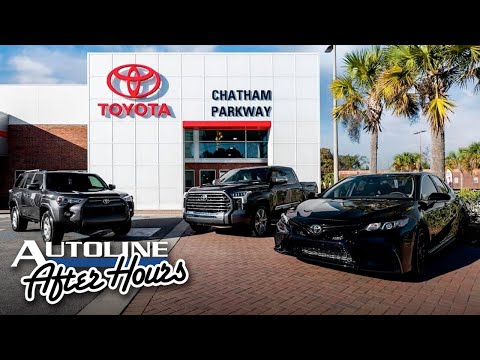
This episode of Autoline After Hours features Elizabeth Krear of J.D. Power discussing the complexities of consumer adoption of electric vehicles. Kre... morear highlights that while EV interest has softened slightly from 29% to 22% of new vehicle shoppers, key barriers like public charging availability and affordability remain consistent. She notes a correlation between gas prices and EV interest, and points out that younger generations (Gen Y and Gen Z) show higher interest but are impacted by inflation and interest rates. Availability is also a significant factor, with a lack of EVs in popular segments like midsize SUVs hindering adoption. Despite these challenges, Krear emphasizes that 96% of current EV owners would buy an EV again, indicating strong owner satisfaction, particularly with home charging. The discussion also touches on the potential impact of Tesla's Supercharger network opening to other brands, the evolving landscape of hybrids and plug-in hybrids, and the critical need for automakers and other industry players to educate consumers about incentives and EV benefits. The conversation concludes by exploring the challenges automakers face in balancing regulatory requirements with profitability, especially in segments like full-size pickup trucks, and the varying consumer perceptions of new EV brands and the environmental benefits. less