
The EV Geek is a dedicated channel exploring the multifaceted world of electric vehicles. Focusing on real-world ownership, the distributor delves into aspects such as daily driving, charging infrastructure, long-distance road trips, and comprehensive reviews of new electric models. Their content also extends to broader themes of sustainable energy, offering viewers a holistic perspective on the EV ecosystem.
As a recognized authority, The EV Geek provides insights into current and upcoming electric vehicles, including detailed overviews and driving experiences of popular models like the Mustang Mach-E and Hummer EV. The channel also offers practical advice, highlighting top electric vehicles available and cautionary guidance on potential purchasing pitfalls, making it an essential resource for anyone interested in the electric vehicle revolution.
As a recognized authority, The EV Geek provides insights into current and upcoming electric vehicles, including detailed overviews and driving experiences of popular models like the Mustang Mach-E and Hummer EV. The channel also offers practical advice, highlighting top electric vehicles available and cautionary guidance on potential purchasing pitfalls, making it an essential resource for anyone interested in the electric vehicle revolution.

The Mustang Mach-E Keeps Getting Better! 2025 Mustang Mach-E Overview and Drive
The 2025 Ford Mustang Mach-E receives notable updates, particularly for the base Select trim. This review highlights the inclusion of the LFP battery pack and new standard features like improved wheels and the column shifter, which replaces the previous dial shifter, freeing up console space. The...


Latest Additions
Showing 24 of 197 total titles. Page 8 of 9.

Secret Hacks to Maximize EV Range
This episode of the EV Geek Podcast focuses on practical strategies to maximize electric vehicle range, addressing common concerns about range anxiety... more. Hosts Joel and Sebastian offer seven key tips, emphasizing gradual acceleration, maintaining moderate highway speeds (around 70 mph), and the benefits of planning long trips with apps like A Better Route Planner. They highlight the importance of preconditioning the vehicle while plugged in, utilizing Eco modes, and optimizing climate control by using heated seats/steering wheels and directing vents strategically. The discussion also covers the advantages of regenerative braking, especially in city driving, and the often-overlooked impact of tire pressure and type on efficiency. While the advice is generally applicable, the hosts note that most modern EVs offer sufficient range for daily use, making these tips most relevant for longer journeys or specific situations. less

The Truth About European EV Ownership
This episode of the EV Geek Podcast features Graham, a UK-based EV owner, sharing his extensive experience with electric vehicles. Graham highlights t... morehe significant cost savings on fuel in the UK compared to the US, driven by high petrol prices. He details his positive experience with the Volkswagen ID.3, praising its performance and the convenience of home charging. A key takeaway is the rapid growth of EV adoption in Europe, outpacing infrastructure development, leading to crowded public chargers during peak times. Graham also touches on the UK's extensive public charging network, aided by apps like Zap-Map, and discusses the diminishing government incentives. He contrasts European and US EV adoption, noting the US is about two years behind but has more choice. Graham debunks range anxiety, emphasizing the ease of charging and the overall pleasurable driving experience of EVs, advising potential buyers to test drive and do their research. less

GM Electric Vehicles Unlock Tesla Supercharger Access
The EV Geek podcast covers a significant development: GM vehicles now have access to Tesla's Supercharger network, effective September 18th. Whil... moree this expands charging options for GM EV owners, the $225 adapter cost, sourced from Tesla or Electron, is noted as a markup and a departure from potential free offerings. Some 2019-2020 Bolt models may require a software update, with dealers uncertain until charging is attempted. The podcast also touches on Rivian's new first-party used EV sales, Norway's EV market surpassing gas cars (though diesel remains highest), Dodge opening orders for the Charger Daytona with a VIP experience, and concerning charging speeds for the Cybertruck in Europe, potentially due to thermal management issues with its 4680 battery pack. Finally, Fiat is suspending production of the 500e for the third time due to low demand, planning a shift to hybrid models, a move unsurprising given its limited range and price point. less

Exclusive: Lucid Gravity NACS, EVgo/GM Partnership Revealed Plus More!
This episode of The EV Pulse covers several key developments in the electric vehicle landscape. A significant announcement is Lucid's decision to... more equip the upcoming Gravity SUV with a native NACS port as standard, aiming to provide owners access to Tesla's Supercharger network upon its 2025 launch. However, concerns remain about charging compatibility with older Supercharger versions and high-voltage systems. The partnership between GM and EVgo to deploy 400 ultra-fast DC chargers across the US is highlighted, featuring 350kW units and amenities, with a notable mention of potential NACS cable inclusion. The episode also touches on ChargePoint's recent layoffs, attributing them to a business model focused on hardware sales rather than recurring revenue from managed charging infrastructure. Other news includes Kia's strong EV3 sales in South Korea, Volvo's extensive software update for 2.5 million vehicles, Stellantis's significant investment in retooling Michigan plants for EVs, and the Rivian R1T being the sole truck awarded an IIHS Top Safety Pick+ for 2024. The discussion around Tesla's Sentry Mode footage being used in police investigations raises privacy and legal questions. less

Why Choose a $6,000 Nissan Leaf? Uncovering Its Value and Benefits | The EV Geek
The EV Geek podcast reviews a 2019 Nissan Leaf S trim, highlighting its surprising value proposition at a $6,000 price point after tax credits. While ... moreacknowledging its base model limitations, such as a small infotainment screen, lack of Apple CarPlay/Android Auto, and basic interior features, the hosts were impressed by its practicality. They noted the surprisingly large cargo space, comfortable seats, and decent acceleration, even in Eco mode. The reviewer pointed out the Leaf's 40 kWh battery, estimating around 120-130 miles of range with some degradation after 80,000 miles, and cautioned about its air-cooled battery's susceptibility to degradation from frequent DC fast charging. The unique CHAdeMO charging port was also discussed. Despite its age and limitations, the hosts concluded that for its price, the Leaf is a competent and surprisingly enjoyable commuter car, especially as a second vehicle or for a new driver, challenging their previous negative perceptions of the model. less

Are EV Sales Declining (and Why it Matters)?
This episode of The EV Geek Podcast debunks the narrative of declining EV sales, presenting data that shows a year-over-year growth of 11.3% in Q2 202... more4, reaching a record volume. While Tesla's market share has dipped below 50% due to an aging lineup and increased competition from legacy automakers like GM, Kia, and others, overall EV sales are still on an upward trajectory. The discussion highlights the significant role of leasing, with 45% of new EVs being leased, driven by aggressive incentives and low monthly payments. The podcast also touches upon the substantial drop in used EV prices (over 20%), making EVs more accessible. Key hurdles for continued growth identified are pricing, the complexity and uncertainty surrounding tax credits, and the need for increased charging infrastructure to combat range anxiety. Despite these challenges, the hosts remain optimistic about the long-term growth of the EV market, emphasizing the increasing variety of models and the eventual mainstream adoption driven by improved technology and infrastructure. less

Refreshed Ioniq 5 with NACS, Tesla Smart Summon, Volvo Scales Back EV Plans - Plus More EV Stories
The EV Pulse podcast's inaugural episode covers significant updates in the EV landscape, with a primary focus on the refreshed 2025 Hyundai Ioniq... more 5. The hosts highlight key improvements including a new XRT off-road trim with increased ground clearance and all-terrain tires, a native NACS port (making it one of the first non-Tesla EVs in the US with this feature), and importantly, increased battery sizes for both standard (63 kWh) and long-range (84 kWh) models. A welcome addition is the rear wiper. While acknowledging the NACS port, they express curiosity about its performance on Tesla Superchargers due to potential voltage limitations. The podcast also notes the Ioniq 5's record US sales in August, attributing its success to consistent updates and appealing products. Other news includes Tesla's re-release of 'Actually Smart Summon' (ASS), Honda's surprisingly strong EV sales driven by the Prologue, and Volvo's revised 2030 EV targets. The Ford F-150 Lightning saw a significant sales surge, and BYD's global dominance is discussed. Finally, a concerning recall for the 2019 Jaguar I-Pace due to battery fire risks, with no permanent fix yet, is highlighted. less

Unveiling Ford and GM's Surprising Shift in EV Strategy
The EV Geek podcast hosts, Joel and Sebastian, discuss the recent strategic shifts by Ford and General Motors to scale back their EV production plans,... more focusing instead on hybrid technology. Ford is delaying a new large electric pickup by 18 months to 2027, scrapping a three-row electric SUV, and reducing EV capital budget from 40% to 30% due to significant losses in its EV division. Sebastian expresses concern that Ford's current EV models, the Mustang Mach-E and F-150 Lightning, introduced in 2021, will fall behind technologically by 2027 without major updates. GM, while not in as dire a position as Ford, is also ceasing to advertise its 2025 EV production plans and is no longer committed to its 1 million EV target by 2025, citing a slowdown and customer demand. However, GM's EV lineup (Equinox, Blazer, Lyriq, Silverado, Sierra) is newer and based on the modular Ultium platform, offering more flexibility. The hosts note that most GM EVs currently qualify for federal tax credits, making them more price-competitive, especially the Equinox. Ultimately, the choice between Ford and GM is difficult, with the Lightning praised for its ride quality but criticized for its aging platform, while GM offers newer tech and an 800-volt architecture in its trucks. less

The Truth About Owning Electric Vehicles for 14 Years
David Hrivnak, a 14-year EV veteran, shares his extensive experience, highlighting the significant evolution of electric vehicles from early niche mod... moreels like the Tesla Roadster to the practical and advanced Tesla Model 3. He recounts initial challenges with charging infrastructure and range anxiety, contrasting them with the current ease of rapid charging and widespread availability. Hrivnak debunks common misconceptions about battery longevity, noting that early Roadster batteries and his own Model 3 battery at 130,000 miles still performed exceptionally well. He emphasizes the shift from efficiency-focused EVs to exciting, high-performance vehicles that capture imagination. The interview also touches upon the future of EVs, drawing parallels to Kodak's digital transition, and stresses the importance of home charging accessibility for new adopters. Hrivnak's insights underscore the growing practicality and desirability of EVs, positioning them as the clear future of personal transportation. less

The Future of Dodge: Electric Charger Revealed!
The EV Geek podcast discusses the highly anticipated Dodge Charger EV, marking Dodge's significant entry into the electric vehicle market. The ho... morests highlight the Scat Pack trim's impressive performance figures, aiming for 3.3-second 0-60 mph times and a 11.5-second quarter mile, positioning it as a true electric muscle car. Key features include a 670 horsepower dual-motor AWD system, a 100 kWh battery pack, and innovative elements like the 'Fratzonic Chambered Exhaust' speaker system designed to mimic V8 sounds. While the exterior and interior design are praised for evoking classic Charger aesthetics with modern minimalist touches, the reviewer expresses some reservations about the artificial exhaust sound, particularly during aggressive maneuvers like donuts. The 'Power Shot' boost feature, requiring a button press for temporary extra power, is also met with skepticism. The vehicle will be available in two-door and four-door configurations, with the two-door model launching first. Pricing starts around $61,000 for the Daytona RT and goes up to $75,000 for the Scat Pack, with neither currently qualifying for tax credits. Charging is estimated at 20-80% in 27 minutes. The hosts conclude that while Dodge is a late entrant, the Charger EV appears to be a compelling package that successfully blends traditional muscle car ethos with electric performance, potentially appealing to both EV enthusiasts and traditional Dodge fans. less

Tesla Model 3 vs Toyota Camry: Which Is the Better Choice?
This episode of The EV Geek podcast pits the Tesla Model 3 against the Toyota Camry, evaluating them across seven key categories. The hosts highlight ... morethe Model 3's technological prowess, rapid acceleration (especially the Performance trim), and impressive range, noting its continuous over-the-air updates as a significant advantage. However, they point out the minimalist interior's learning curve, particularly the removal of physical stalks and the reliance on the central screen for gear selection and controls. The Camry is praised for its traditional reliability, practicality, and lower upfront cost, especially in its new hybrid-only configuration. Its interior is described as more conventional and durable, with physical controls for climate. The review notes the Model 3's higher insurance costs and the need for specialized service centers, while the Camry incurs typical internal combustion engine maintenance costs. For environmental impact, the Model 3 is presented as having a lower lifetime footprint, even with coal-heavy electricity sources, whereas the Camry hybrid offers reduced emissions compared to traditional gasoline cars but still involves manufacturing impacts for its battery. The verdict suggests the Model 3 is ideal for tech enthusiasts and those prioritizing performance and innovation, while the Camry is the safe, reliable choice for everyday commuting. The used Model 3 market is also highlighted as a compelling entry point for EV adoption. less

Tesla Rear Screen: This Accessory Is a Game Changer
The EV Geek podcast reviews the Hansshow rear entertainment display for the Tesla Model Y, deeming it a "game changer" for family road trips... more. The installation process is highlighted as surprisingly easy, taking approximately 10-15 minutes. The screen offers a range of functionalities including climate control, heated seat adjustments, music control, and access to apps like Netflix, Disney+, and TikTok, though these require a mobile hotspot connection. The reviewer praises the seamless integration, with the screen powering on and off with the car, and the added convenience of rear passengers being able to adjust front seats. After a two-week trial, the reviewer reiterates their strong recommendation, particularly for families with children, noting it as one of the best accessories purchased. A minor point of confusion was setting the time zone, which is managed by "districts" rather than standard time zones. A discount code "EVGEEK" for 22% off is provided for Hansshow products. less
Ev Myths Busted: What You're Getting Wrong
In this episode of 'EV Geek Podcast,' hosts Joel and Sebastian tackle common myths surrounding electric vehicles, separating fact from ficti... moreon. They address concerns about EV reliability and maintenance, asserting that EVs generally require less upkeep due to fewer moving parts compared to internal combustion engine vehicles, though repairs can be costly. Safety is another key point, with the hosts debunking the myth that EVs are less safe, citing rigorous testing, high safety ratings, and design advantages like a lack of an engine in the front crumple zone. They also highlight data showing gasoline cars are significantly more prone to fires than EVs, with hybrids showing a higher fire risk than both. The discussion extends to EV performance in adverse weather, emphasizing their design for various conditions, often aided by all-wheel-drive systems and lower center of gravity. A significant portion is dedicated to charging infrastructure, acknowledging that while it's improving, it remains a challenge, especially in rural areas, though most daily charging occurs at home. Finally, they address battery lifespan, noting modern EV batteries are designed for longevity, often covered by extensive warranties, and that battery replacement costs, while high, are comparable to engine replacements and becoming rarer with technological advancements. The episode concludes by encouraging viewer engagement and sharing of personal experiences. less

Understanding Electric Vehicle Charging
This podcast episode provides a comprehensive overview of electric vehicle charging, breaking down Level 1, Level 2, and Level 3 (DC Fast Charging) in... more an accessible manner. The hosts clearly explain the technical differences, charging speeds, and equipment requirements for each level. Level 1 is presented as the most basic, suitable for low-mileage drivers, while Level 2 is highlighted as the current standard for home and many public charging scenarios, offering a significant speed increase. Level 3 is positioned as essential for long-distance travel, enabling rapid recharges. Key takeaways include the importance of understanding home electrical capacity for Level 2 installations, the cost-effectiveness of home charging versus public DC fast charging, and how ubiquitous Level 2 and Level 3 charging infrastructure is crucial for alleviating range anxiety and driving broader EV adoption. The discussion also touches on safety considerations and the evolving cost landscape of public charging. less
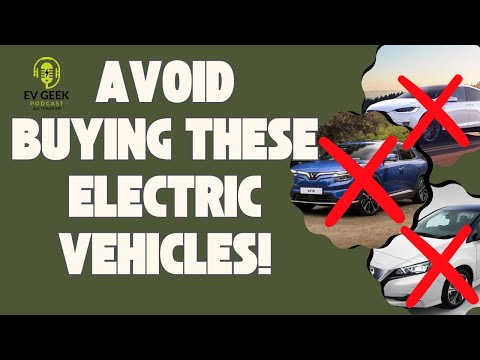
Why You Shouldn't Purchase These Electric Vehicles
This episode of EVChannels critically examines several electric vehicles that, despite the overall growth and improvement in the EV market, have misse... mored the mark. Hosts Joel and Sebastian highlight cars that are either too expensive for their limited range and features (Fiat 500e, Mazda MX-30), plagued by significant reliability and repair cost issues (Tesla Model X, Jaguar I-PACE), or suffer from abysmal charging performance and limitations (Toyota bz4X/Subaru Solterra, Lexus RZ). The Fisker Ocean is noted for its cool design but fatal software and manufacturing flaws, leading to its demise. The Nissan Leaf is criticized for its outdated technology, lack of active battery management, and the dwindling CHAdeMO port. While acknowledging that some vehicles might suit niche urban use, the overarching theme is that 'just okay' is no longer sufficient in a market with increasingly strong competitors, making these models ones to avoid for most buyers. less

The Truth About Level 2 Charging Reliability in 2024
This episode of EV Geek Podcast delves into the reliability of Level 2 charging stations across Little Rock, Arkansas. Hosts Joel and Sebastian tested... more ten different locations, finding a generally positive experience with most ChargePoint and JuiceBox units performing as expected, delivering between 4 to 8 kilowatts. A notable exception was a newer ChargePoint unit at the Arkansas Supreme Court, which failed to initiate charging, raising questions about potential operator error or equipment malfunction. The review highlights the prevalence of ChargePoint units, noting their robustness despite some minor issues like broken handle clips. The hosts emphasize the convenience of tap-to-pay or card-based charging over app-dependent systems. While most chargers were reliable and affordable (ranging from free to $0.15/kWh), the video underscores the importance of local knowledge and testing chargers before relying on them, especially for travelers. less

Tips for a Successful Electric Vehicle Road Trip Adventure
This episode of The EV Geek podcast offers practical advice for planning and executing successful electric vehicle road trips. Hosts Sebastian and Joe... morel emphasize the necessity of pre-trip planning, highlighting tools like the Tesla app, PlugShare, and A Better Routeplanner (ABRP) for identifying charging stops and assessing charger quality. They stress the importance of hotel charging to start days with a full battery, potentially saving a charging stop. The "Always Be Charging" (ABC) mantra is introduced, encouraging drivers to utilize any available charging opportunity, even during short stops. The discussion also covers understanding vehicle efficiency, accounting for factors like weather and speed, and the benefits of shorter, more frequent charging stops, especially with children. Finally, the hosts acknowledge that EV road trips inherently take longer than gasoline counterparts but frame this as an opportunity to enjoy the journey, while also advising preparedness for unexpected events and knowing alternate routes. less

Our Family EV Road Trip Part 2: South Carolina to Arkansas
This video documents a family's ambitious one-day, 845-mile road trip from South Carolina to Arkansas in a Tesla Model 3. The reviewer highlights... more the challenges and rewards of long-distance EV travel, emphasizing the need for careful planning and flexibility. Key takeaways include the effectiveness of utilizing multiple shorter charging stops (around 15-18 minutes each) rather than fewer, longer ones, which the reviewer found to be a successful strategy for this trip. Despite encountering traffic congestion and heavy rain in Alabama, which slowed progress, the family ultimately completed the journey in 16 hours. The reviewer debunks the myth that EVs are insufficient for long road trips, stating it's achievable with some planning and flexibility, and expresses willingness to repeat the experience. The average energy consumption was noted at 330 Wh/mile, considered typical for this vehicle. less

Escalade IQ vs Wagoneer S | Escalade IQ vs G-Wagen EV | Wagoneer S vs Escalade IQ
This episode of 'Charged Up' provides a first look at three high-end electric SUVs: the Jeep Wagoneer S, Mercedes-Benz G-Wagen EV, and Cadil... morelac Escalade IQ. The hosts express skepticism about the Wagoneer S's 400-volt architecture and charging claims, finding it less compelling than expected for a flagship model, particularly its lack of a third row. The Mercedes-Benz G-Wagen EV is noted for its iconic styling and off-road capabilities, though its "EQ technology" branding and the "tank turn" feature are seen as gimmicks. The Cadillac Escalade IQ emerges as the favored vehicle, praised for its luxurious interior, extensive technology (including Super Cruise and a 55-inch display), impressive range (up to 450 miles), and a more competitive starting price compared to the G-Wagen. The Escalade IQ's 800-volt architecture and high-speed charging are also highlighted as key advantages. less

I Tried Tesla's FSD Beta - 10 Mile Review
In this episode of The EV Geek Podcast, the host conducts a 10-mile, unedited test drive of Tesla's Full Self-Driving (FSD) Beta software in a Te... moresla Model Y. The journey included a mix of residential streets, highways, and construction zones. The reviewer was generally impressed, noting only one significant intervention required to avoid a collision upon arrival at the destination and a few instances of needing to apply force to the steering wheel. The FSD system successfully navigated roundabouts, traffic lights (including a right turn on red), and highway merges. The reviewer highlighted positive changes in the FSD interface graphics following a recent software update (v12.36). While acknowledging minor hard braking incidents and one instance where manual lane change was needed, the overall verdict is highly positive, deeming the system "99% Flawless" and noting significant improvements since initial purchases. less

Is a 130K Mile Tesla Model 3 a Good Buy?
This episode features John, a Tesla Model 3 owner with over 130,000 miles, sharing his extensive road-tripping experiences. John unequivocally praises... more the Model 3 as the best car he's ever owned, highlighting its low maintenance costs, with original brakes still performing well after 130k miles. He notes a slight reduction in peak horsepower at lower states of charge due to software updates, recommending keeping the battery above 85% for optimal performance. Autopilot is lauded as a "huge" feature for long-distance comfort, significantly reducing driver fatigue compared to conventional vehicles. One-pedal driving is also a revolutionary aspect for him. John details a meticulous approach to long-distance travel, manually planning supercharger stops and utilizing drafting techniques to optimize efficiency and minimize charging times to around 9-12 minutes per stop. He also addresses common EV skepticisms, emphasizing the reality of quick charging and long battery life. The discussion touches on battery degradation, with his car showing less than 10% after 130k miles, and the benefits of specialized EV tires for efficiency and longevity. less

Unbelievable First Impressions: Kia EV3, Volvo EX30, Chevy Equinox
This episode of 'Charged Up' provides a comprehensive first look at three highly anticipated budget-friendly electric vehicles: the Kia EV3,... more Volvo EX30, and Chevrolet Equinox EV. The hosts highlight the EV3's attractive design, inspired by the EV9, and its two battery options offering up to 320 miles of range. However, concerns are raised about Kia's software interface, which is described as dated and not user-friendly, and the 400-volt architecture potentially impacting charging speeds. The Volvo EX30 is praised for its minimalist Scandinavian design, sustainable interior, and impressive performance figures, especially the dual-motor AWD variant. Despite its appealing features and a competitive estimated starting price, the lack of Android Auto support and potential for software glitches are noted as drawbacks. The Chevrolet Equinox EV emerges as the most readily available option, offering a spacious interior, a large touchscreen, and the potential to qualify for the full $7,500 tax credit. Its Ultium platform, Google Automotive OS integration, and available Super Cruise are highlighted as significant advantages, though its slower acceleration in front-wheel-drive and a somewhat ambiguous charging metric (77 miles in 10 minutes) raise questions. Overall, the episode suggests these three vehicles represent strong contenders in the growing affordable EV market, each with distinct strengths and weaknesses. less

Rivian's Game-Changing Updates
This episode of the EV Geek Podcast provides a comprehensive overview of Rivian's significant Gen 2 updates for the R1S and R1T. Host Joel and gu... moreest Sebastian from Kilowatt Station delve into the details, highlighting exterior tweaks like dynamic LED light bars and new color options, alongside interior updates such as an improved infotainment UI and new material choices. A key focus is the powertrain, with the introduction of a new tri-motor option and an updated quad-motor, all featuring in-house developed motors and all-wheel drive. The discussion also covers new battery options, including an LFP standard pack, and the potential impact on range and charging. Sebastian expresses particular excitement for the standard pack's thermal tolerance and the software advancements, including the new Rivian Autonomy Platform with enhanced driver assistance features. While some features like the camp speaker and air compressor are now optional to reduce manufacturing costs, the overall sentiment is positive, emphasizing Rivian's efforts to improve efficiency and technology without drastically altering the starting price. The introduction of the 'Connect Plus' subscription service for $15/month is also noted as a sensible move for recurring revenue. less

Two Week Driving Review of the Nissan Leaf and You Might Be Surprised!
Matt Harris shares his initial two-week ownership experience with a 2022 Nissan Leaf SV, highlighting its suitability as a secondary vehicle for local... more commuting and errands. He praises its compact size, ease of parking, comfortable ride, and the instant torque characteristic of EVs, which he finds surprisingly engaging. Harris notes the practical benefits of home charging with a Level 2 setup and appreciates the low maintenance expectations and the included battery warranty. He advises potential buyers to consider the Leaf primarily as an in-town car due to its limited range (estimated at 130 miles in real-world conditions) and strongly recommends purchasing a used model to take advantage of significant depreciation and available tax credits, making it an excellent value proposition. While not ideal for long road trips, the Leaf has exceeded his expectations, making him a convert to electric mobility for his daily needs. less