
Auto Expert John Cadogan positions itself as a vital resource for navigating the complexities of the automotive world, particularly within the highly competitive Australian market. The channel delves into the everyday realities of car ownership, addressing common frustrations and offering insights into the decision-making processes behind purchasing and maintaining vehicles. It aims to demystify the automotive landscape for consumers, providing expert guidance on a range of topics.
With a focus on practical advice and in-depth analysis, Auto Expert John Cadogan covers essential aspects of vehicle ownership, from the nuances of upgrading older cars to the critical factors influencing tyre performance and safety. The channel also engages with contemporary issues such as electric vehicle (EV) technology, exploring both the potential and the challenges associated with their widespread adoption and integration into existing infrastructure.
With a focus on practical advice and in-depth analysis, Auto Expert John Cadogan covers essential aspects of vehicle ownership, from the nuances of upgrading older cars to the critical factors influencing tyre performance and safety. The channel also engages with contemporary issues such as electric vehicle (EV) technology, exploring both the potential and the challenges associated with their widespread adoption and integration into existing infrastructure.

When Should I Upgrade My Old Car? | Auto Expert John Cadogan
John Cadogan tackles the perennial question of when to upgrade a vehicle, offering a pragmatic perspective that challenges the industry's push for constant turnover. He argues that keeping a car longer significantly reduces depreciation and environmental impact, directly refuting the "greenwashin...



Latest Additions
Showing 24 of 285 total titles. Page 9 of 12.

National Greenwashing Champions: The Tyre Industry
John Cadogan critically examines Continental Tires' recent Australian Good Design Award for its Conti.re.tex technology, which uses recycled PET ... morebottles. While acknowledging the technical achievement of incorporating recycled materials into tire construction, Cadogan argues this is a minor positive in the face of the overwhelming environmental impact of the tire industry. He highlights that 95% of tires in Australia end up in landfill or are exported for burning, and points to research indicating tire wear particles are a far greater pollutant than vehicle exhaust emissions, particularly impacting electric vehicles due to their weight. Cadogan dismisses Continental's efforts as 'greenwashing' and a 'bridge too far,' urging a focus on the larger issues of tire disposal and the significant environmental cost of tire manufacturing, rather than celebrating small recycling initiatives. less

2023 Ioniq 5 Ev Announced: Bigger Battery/More Range | Auto Expert John Cadogan
The 2023 Hyundai Ioniq 5 receives a significant update, primarily focused on increased battery capacity and improved range. The new 77.4 kWh battery, ... moreshared with the Kia EV6, boosts the WLTP range to 507 km for the RWD model and 454 km for the AWD version. Power outputs see modest increases across the board. The reviewer highlights the Ioniq 5's excellent bespoke EV platform, which avoids the compromises found in combustion-derived platforms, resulting in superior ride and handling dynamics. Key new features for the flagship 'Epic' trim include digital side mirrors, a high-efficiency heat pump, and battery conditioning for optimal charging and performance in cold weather. While the reviewer praises the driving experience and clever interior packaging, he notes that the higher trims, particularly the flagship Epic, remain inaccessible to the mainstream market due to their price point, emphasizing the need for more affordable EV options. less

X-Trail E-Power E-4orce: Nissan's Most Ridiculous Hybrid Ever (And Why)
John Cadogan delivers a scathing critique of the Nissan X-Trail e-POWER e-4ORCE, labeling it 'ridiculous' and a 'crime against physics.... more' While acknowledging the cleverness of the variable compression ratio engine, he finds the overall hybrid system to be overly complex, heavy, and inefficient. Cadogan highlights that the system offers minimal fuel economy improvement over a much simpler and cheaper diesel Hyundai Tucson, while costing significantly more. He criticizes the small battery capacity and the powertrain's inability to consistently deliver its stated peak output. The reviewer strongly advises potential buyers to be wary of the marketing hype, citing Nissan's past battery reliability issues and the inherent inefficiencies of the complex e-POWER architecture. His verdict is that the X-Trail e-POWER e-4ORCE is a poorly executed concept, failing to justify its premium price and complexity. less

Inside the Latest Toyota EV Tantrum
This video critically examines statements made by Toyota's Sean Hanley regarding the company's approach to electrification and decarbonizati... moreon. The reviewer, John Cadogan, argues that Toyota, despite its claims, engages in significant "bullshitting" by focusing on hybrid technology and downplaying the urgency and necessity of full electrification. Cadogan highlights the hypocrisy of Toyota promoting carbon neutrality while manufacturing millions of high-emission vehicles like the Hilux and LandCruiser. He points out inconsistencies in Hanley's past statements about hybrids versus plug-ins and criticizes the company's slow adoption of new technologies. The review emphasizes that while reducing CO2 is crucial, the car industry's contribution to manufacturing emissions is substantial, and focusing solely on powertrains overlooks larger issues like the need for mass transit and work-from-home policies. Ultimately, Cadogan suggests Toyota's "diversity of technology" approach is a marketing tactic that delays meaningful climate action, and that the impact of switching all vehicles to EVs, even with current manufacturing emissions, would be more significant than Toyota's hybrid strategy. less

Hyundai Tech-Heads Just Declared War on Tesla
Hyundai has announced a significant investment and strategic shift towards becoming a software-defined vehicle (SDV) manufacturer, aiming to transform... more customer experience and mobility through evolving software technology. The company plans extensive over-the-air (OTA) updates for all models by 2025, aiming to enhance performance and functionality. A key focus is the development of an internally built connected car operating system (ccOS) to deliver personalized services and process data rapidly. Hyundai also intends to build an open ecosystem through partnerships, potentially leading to new revenue streams via software subscriptions. While the move promises continuous vehicle upgrades and improved used values, concerns are raised about data privacy, the potential for intrusive advertising, and the ethical implications of subscription models for features already equipped with hardware. The company is also investing heavily in autonomous driving technology, partnering with Nvidia and planning Level 3 autonomous features on models like the Genesis G90, though significant challenges remain regarding unpredictable human drivers and the necessary legislative framework. less

Can You Power Your House With Your EV?
This video tackles the practicalities of using an Electric Vehicle (EV) as a home power source, specifically addressing Vehicle-to-Load (V2L) capabili... moreties. Host John Cadogan explains that while the concept of powering a house from an EV's battery is appealing, especially with renewable energy, current limitations are significant. He highlights that not all EVs support V2L, and those that do, like the MG ZS EV, offer limited output (2.5kW), insufficient for running an entire household with multiple appliances. Cadogan also points out regulatory hurdles and the potential need for expensive home wiring upgrades to safely implement V2L for whole-house power. He strongly advises against replacing a functional combustion car solely for V2L, deeming it economically irrational. Instead, he suggests dedicated home battery solutions like the Bluetti AC500 as a more cost-effective and practical alternative for home energy storage, while acknowledging the potential for V2L for smaller, off-grid applications. The reviewer also debunks myths about imminent revolutionary battery technology, emphasizing the current limitations of lithium-ion chemistry. less

Polestar 2 EV Loses Space Race - But Does Anyone Care?
John Cadogan delivers a scathing critique of Polestar, labeling the brand and its Polestar 2 model as 'fake.' He questions the brand's ... moreSwedish authenticity, given its Chinese ownership and manufacturing. Cadogan also criticizes the Polestar 2's design as a mere styling exercise on the Volvo XC40 platform. A significant portion of his review focuses on the environmental impact, citing Polestar's own declaration that producing a Polestar 2 generates 25 tons of CO2, primarily from materials like aluminum and steel, not the powertrain itself. He argues this contradicts the brand's 'virtuous' image. The review also mocks the opening of Polestar's 'Space' retail concept in a shopping mall, deeming it pretentious and out of touch. Cadogan concludes that Polestar, particularly the Polestar 2, is not a solution to the climate crisis and embodies a 'fake virtue.' less

New Hyundai Ioniq 6 EV Fails Basic Energy Efficiency Test
John Cadogan critically assesses the Hyundai IONIQ 6's claims of energy efficiency, deeming them factually untrue and mediocre at best. He highli... moreghts that the advertised 614 km WLTP range applies only to the "shitbox two wheel drive one with the big battery," with the all-wheel-drive version losing approximately 100 km. Cadogan dismisses the significance of aerodynamic drag in city driving, where the car is likely to spend most of its time. He also criticizes Hyundai's supply chain issues, noting the IONIQ 5's low sales figures due to lack of availability, and questions the "advanced battery technology" claims as standard lithium-ion tweaks. The review concludes that the IONIQ 6 is heavier and less energy-efficient than the older, smaller IONIQ (the car), and even less efficient than competitors like the Tesla Model 3 and Y, and the Polestar 2, despite its advanced platform and aerodynamic design. The core verdict is that the car's efficiency claims are misleading. less
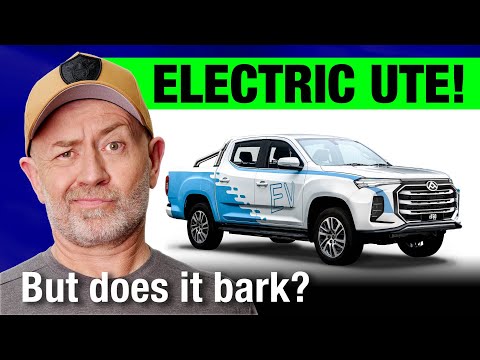
Reverse-Engineering the LDV eT60 - Our First Electric Ute
This video provides an initial, critical look at the LDV eT60, an electric ute. The reviewer, John Cadogan, expresses significant skepticism about the... more vehicle's viability and market position, questioning its purpose and value proposition. While acknowledging it as an electric ute, the core of the review leans towards a negative assessment, suggesting it may not meet the expectations of potential buyers or the demands of the Australian market. The lack of detailed technical specifications or driving impressions in the transcript suggests a high-level overview focused on the concept rather than a comprehensive evaluation. Further details would be needed to ascertain its strengths and weaknesses. less

Electric Vehicles in Lobbyland: Policy, Surveys & Media Manipulation
John Cadogan critically dissects a press release from the Electric Vehicle Council of Australia, challenging its claims about range anxiety and EV cos... moret savings. He argues the survey, based on 741 Tesla drivers, is not robust enough to dismiss range anxiety, particularly for long trips where charging infrastructure is unreliable. Cadogan highlights the vested interests of the EV Council's members, including fossil fuel companies and car manufacturers with past environmental scandals, suggesting their agenda is profit-driven rather than altruistic. He disputes the reported savings on fuel and maintenance, asserting that the high upfront cost of EVs makes them economically irrational for most Australians, especially younger demographics. Cadogan concludes that the EV Council's "research" is a PR exercise to influence policy for the benefit of its members, rather than a genuine effort towards sustainability. less

Should You Buy a 2023 BYD Atto 3 Electric Car in Australia? | Auto Expert John Cadogan
John Cadogan critically assesses the BYD Atto 3, cautioning potential buyers in Australia. While acknowledging its appeal for local commuting, he stro... morengly advises against using it for long-distance travel, particularly to remote areas, due to range limitations and charging challenges. Cadogan highlights the significant discrepancy between claimed NEDC and WLTP ranges, estimating a real-world range of around 300km. He also expresses serious concerns about BYD's nascent support network, citing the limited 'experience centers' and the questionable reliability of their service partner, 'My Car' (formerly Kmart Tyre & Auto). The reviewer finds the warranty terms confusing and inconsistent. Furthermore, he debunks the practicality of carrying a generator and fuel for charging in remote locations, deeming it inconvenient, dangerous, and time-consuming. Cadogan's verdict is clear: for long-distance or remote travel, an internal combustion engine SUV, preferably diesel, is a more sensible choice. He advises potential buyers to let others be the 'lab rats' for new EV brands and wait for established reliability and support before investing. less

Sorry, Mercedes - Your Evito Electric Courier Van Is Just Not Good Enough
John Cadogan delivers a scathing review of the Mercedes-Benz eVito courier van, deeming it significantly underperforming and overpriced. He highlights... more its substantially lower battery capacity, power, and torque compared to the upcoming Ford E-Transit Custom. Cadogan criticizes the use of outdated NEDC range figures and points out the eVito's real-world range is likely much lower. He also notes its heavier weight and reduced payload compared to its diesel counterpart, and criticizes its slow charging capabilities, particularly the limited AC charging speed. The review concludes that the eVito, priced at nearly $90,000 plus on-road costs, is a poor value proposition, especially when compared to more capable and cheaper alternatives like the Hyundai Ioniq 5. Cadogan strongly advises potential buyers against it. less

MG ZS EV: Australia's Most Practical Electric Car? | Auto Expert John Cadogan
John Cadogan positions the MG ZS EV as a pragmatic and affordable choice in Australia's EV market, contrasting it with numerous expensive or unav... moreailable alternatives. He highlights its improved range (officially 320km WLTP, realistically 250-260km), greater battery capacity (50.3kWh), and a competitive price point, particularly for the fully-loaded Essence trim at $48,990 driveaway. Cadogan praises its practicality, V2L (Vehicle-to-Load) capability for home power backup, and MG's ability to maintain supply, a significant advantage over competitors. However, he notes compromises due to its adaptation from an internal combustion platform, leading to potential dynamic compromises (soft vertical, stiff roll) and a substantial weight increase. Despite these, he concludes that for mainstream EV adoption in Australia, the ZS EV, especially the Essence, is a compelling option and difficult to overlook, though he cautions about potential depreciation. less

Fake Leather? BMW Pledges Fully Vegan Plant-Based Interiors From 2023
John Cadogan critically dissects BMW's announcement of plant-based vegan interiors for 2023 models, labeling it a prime example of 'greenwas... morehing' and 'woke appeasement.' He argues that replacing leather with plant-based plastics does not significantly reduce CO2 emissions, as the primary source of emissions from cattle is methane from rearing, not hide processing. Cadogan cites research suggesting leather is a valuable byproduct, and its non-use turns it into waste, potentially worsening environmental impact. He dismisses the 85% CO2 reduction claim as factually untrue and highlights that animal products will still be used in non-visible areas. The review concludes that BMW's move is a superficial marketing ploy rather than a genuine environmental initiative, failing to address the core issues of automotive production's carbon footprint. less

Reverse-Engineering Ford's E-Transit Custom (EV Van) for Australia
John Cadogan provides an in-depth reverse-engineering analysis of the upcoming Ford E-Transit Custom for the Australian market. He critically examines... more Ford's claims, particularly regarding battery technology and range, debunking the "next-generation battery" marketing as current-generation lithium-ion. Cadogan estimates a real-world range of approximately 250 km for couriers and 218 km for "tradie hoarders" (fully loaded), significantly lower than Ford's claimed 380 km WLTP figure. He highlights charging times, noting that 11kW AC charging takes over 11 hours on single-phase power, while DC fast charging from 15-80% takes 41 minutes. Cadogan suggests the E-Transit Custom could be a viable option for specific use cases, such as local business run-arounds or tradies with predictable daily routes, provided charging infrastructure is available. However, he cautions that for high-mileage couriers or those needing consistent full-day operation without reliable charging, the range and charging limitations may be prohibitive. less

Bluetti Eb3a Portable Power Station Review
John Cadogan reviews the Bluetti EB3A portable power station, highlighting its versatility and value. He emphasizes its utility for digital nomads, ca... morempers, and DIYers needing portable power. The EB3A offers multiple output options including pure sine wave 240V AC, USB-A, USB-C, and 12V DC, plus an integrated wireless charging pad. Cadogan contrasts its price and capacity favorably against expensive camera batteries and multiple power tool batteries, noting its 268Wh capacity and 509Wh price point. He praises the lithium iron phosphate battery's longevity (2500 charge cycles to 80% capacity) and the integrated AC charger, which reduces the need to carry extra components. The unit supports solar charging up to 200W, allowing simultaneous charging and usage. While the SOS light function is deemed a gimmick, the overall user interface and app control are commended. Cadogan concludes that the EB3A is a superior, portable solution compared to permanently wired vehicle inverters, especially for those who move between vehicles or want to avoid vehicle modifications. less

E-Scooter vs Electric Car (Mearth GTS Max Review) | Auto Expert John Cadogan
John Cadogan reviews the Mearth GTS Max electric scooter, positioning it as a practical and economical alternative to electric cars for short urban co... moremmutes. He highlights its potential to significantly reduce personal carbon emissions and offer a rapid return on investment, potentially paying for itself within eight months. The scooter boasts a powerful 1200W dual-motor system, a 150kg payload capacity, and a claimed range of 70-100 km. Cadogan contrasts its efficiency with that of electric cars, emphasizing the vastly lower energy consumption per person transported. However, he notes the scooter's substantial 41kg weight, which could be a barrier for some, and criticizes the restrictive and seemingly arbitrary regulations in New South Wales that limit its public use, despite its potential benefits for congestion and air quality. The review also touches on the scooter's robust build, capable of withstanding rough handling, and its potential to alleviate household budgets and contribute to national energy security if adopted widely. less

Electric Utes: The Big Problem With EV Pickups
John Cadogan critically examines the feasibility of battery-electric utes, particularly for Australian conditions. He argues that current battery tech... morenology and vehicle weight present insurmountable challenges for creating an EV ute that can match the capabilities of its internal combustion engine (ICE) counterparts. Cadogan introduces a 'Range Specific EV Battery Capacity' metric to illustrate that heavier vehicles require disproportionately more energy, leading to a vicious cycle where larger batteries increase weight, thus demanding even more energy. He highlights that a hypothetical electric ute capable of towing 3.5 tonnes and carrying 1000kg payload would require a battery exceeding 260 kWh, making it impractically heavy (around 3.5 tonnes empty) and prohibitively expensive (estimated at $200,000+). The review concludes that without significant advancements in battery technology to drastically reduce mass, EV utes capable of performing essential tasks like towing and long-distance travel at a comparable cost and performance to ICE utes are not currently possible, and likely won't be in the near future. less

PM Anthony Albanese Doesn't Seem to Grasp the Problem with EV Utes
The reviewer critically assesses Australian Prime Minister Anthony Albanese's comments regarding electric utes, arguing that the PM misunderstand... mores the current limitations of EV technology for this vehicle segment. The core of the critique is that while EVs are progressing, they are not yet practical or affordable for the Australian market's preferred use case: heavy-duty utes. The video highlights the significant size, weight, and cost discrepancies between US-market electric utes (like the F-150 Lightning) and traditional Australian utes, projecting a prohibitive cost of around $175,000 AUD for an electric F-150 equivalent in Australia. Furthermore, real-world towing tests reveal drastically reduced range (160km when towing 2.8 tons), making them impractical for long distances or heavy loads. The reviewer concludes that internal combustion engine utes will remain the only viable option for towing, off-roading, and extensive travel in Australia for at least another decade, suggesting that the focus for EV adoption should instead be on lighter, smaller vehicles like e-bikes and scooters, which offer a more practical and financially sound transition. less

You Just Bought 50 Public EV Chargers for $900,000 | Auto Expert John Cadogan
John Cadogan critically examines a recent government funding allocation of nearly $900,000 to Intellihub for the installation of 50 public EV chargers... more. He questions the project's value and necessity, particularly given the high cost per installation ($40,000) and the primary beneficiaries being affluent Sydney residents who may not have off-street parking. Cadogan highlights the discrepancy between the government's ambitious EV sales targets for 2025 and the current reality of low sales and vehicle unavailability. He argues that the funds could be better allocated to essential services like aged care or bushfire preparedness. The reviewer also expresses skepticism about the "100% green power" claim, citing the logistical challenges of matching renewable energy production with charging demand. Overall, Cadogan views the project as a prime example of taxpayer money being inefficiently spent in pursuit of a "green utopia." less

PHEV: The Truth About Buying a Plug-in Hybrid EV. Is It Worth the Money? | Auto Expert John Cadogan
John Cadogan delivers a stark reality check on the value proposition of plug-in hybrid electric vehicles (PHEVs). While acknowledging their potential ... morefor urban commuting and reducing tailpipe emissions, he strongly advises against purchasing them solely for fuel savings. Cadogan meticulously breaks down the significant price premium of PHEVs compared to their internal combustion engine counterparts, demonstrating that the break-even point, even under ideal conditions (free solar, consistent EV-only driving), is often beyond the typical ownership period. He highlights that the "EV-only" driving fantasy is frequently shattered by real-world power demands and inconsistent charging habits, leading to PHEVs becoming mere heavy hybrids. However, he identifies compelling use cases: reducing urban air pollution, offering EV-like convenience without range anxiety or reliance on Australia's poor charging infrastructure for occasional long trips, and potentially serving as a home backup power source. He also touches on national energy security as a minor benefit. Ultimately, Cadogan concludes that PHEVs are a sensible choice for specific user profiles who are committed to daily charging and gentle driving, but a poor financial decision for those expecting significant fuel cost reductions. less
Academics Say Industry CO2 Plan Will Stifle EV Uptake (And They're Right)
John Cadogan critically dissects the Australian automotive industry's proposed CO2 emissions plan, labeling it a 'delaying tactic' orch... moreestrated by the Federal Chamber of Automotive Industries (FCAI), which he argues is heavily influenced by Toyota. Cadogan contends that the FCAI's proposal would allow Australia to maintain high car CO2 emissions compared to leading nations, effectively making it a dumping ground for polluting vehicles. He highlights Toyota's history of greenwashing and lobbying against stricter regulations globally, citing their poor performance in emissions standards and even issues with their EV models like the bZ4X. The review also touches upon the lack of EV charging infrastructure in Australia compared to the UK, questioning the efficacy and societal benefit of subsidizing expensive EVs when more pressing public funding needs exist, such as infrastructure, healthcare, and disaster preparedness. Cadogan advocates for a clearer government policy and questions whether subsidies should prioritize EVs or charging infrastructure. less

Car Industry Launches Absurd 'Decarb' Climate Plan
John Cadogan critically dissects the Australian Federal Chamber of Automotive Industries' (FCAI) 'decarb' climate plan, labeling it an ... more'absurd' and 'disingenuous' marketing ploy. He argues the plan's core objective is not genuine environmentalism but rather to pressure the government into incentivizing new car sales, particularly Toyotas. Cadogan dismisses the plan's three points – 'agree on the destination,' 'remove the roadblocks,' and 'go the distance' – as vague platitudes. He refutes the notion that Australia's vastness necessitates long-distance driving, presenting data to show most driving occurs in urban areas. The expert proposes practical, fact-based solutions for reducing vehicle emissions, such as free public transport, encouraging remote work, and efficient driving techniques, noting these measures are effective but do not drive new car sales, hence their omission from the FCAI's plan. less

Is Internal Combustion Dead? It Depends Whether You Respect the Facts.
John Cadogan critically dissects a recent agreement by five Australian automotive organizations on a national fleet transition strategy. He dismisses ... morethe agreement as a "crayon-powered audition" and a "masturbatory policy soiree," arguing that the organizations are out of touch with reality and the capabilities of the current market. Cadogan highlights the vast disparity between EV sales (1.5% of the market) and internal combustion engine (ICE) vehicle sales (98%), emphasizing that popular vehicles like the Toyota Hilux and Ford Ranger have no direct EV equivalents. He contends that a rapid transition to EVs is impossible due to infrastructure limitations, the sheer number of vehicles involved, and the time required to replace the existing ICE fleet. Cadogan also criticizes the lack of transparency and consumer protection in areas like novated leasing, which he sees as a vehicle for potential exploitation. His overall verdict is that the proposed "utopia" is unrealistic and based on fraudulent concepts, lacking respect for factual constraints. less