
Autoline Network is a premier distributor dedicated to delivering comprehensive automotive news and insights to enthusiasts and industry professionals alike. Specializing in global automotive developments, the network provides in-depth coverage of everything from cutting-edge EV and AV technology to ICE advancements, car sales trends, and financial earnings reports. Viewers can expect expert analysis and reviews of the latest vehicles, ensuring a well-rounded understanding of the automotive landscape.
The channel distinguishes itself through exclusive content, featuring top auto executive interviews and detailed breakdowns of automotive innovations. With a focus on clarity and expert opinion, Autoline Network serves as an essential resource for anyone seeking to stay informed about the dynamic world of automobiles, from technological breakthroughs to market performance.
The channel distinguishes itself through exclusive content, featuring top auto executive interviews and detailed breakdowns of automotive innovations. With a focus on clarity and expert opinion, Autoline Network serves as an essential resource for anyone seeking to stay informed about the dynamic world of automobiles, from technological breakthroughs to market performance.

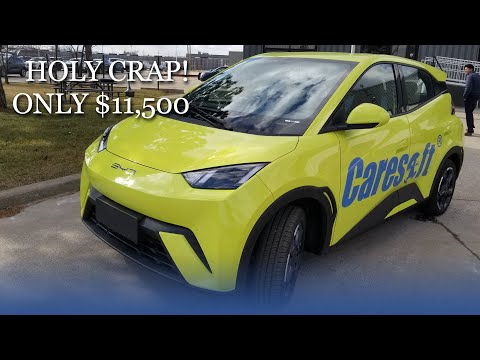
World's First Cybertruck Teardown - Steer-by-Wire, 48V, Battery & Gigacastings
This video provides an in-depth look at the initial stages of Caresoft's teardown of the Tesla Cybertruck, focusing on key technological advancements. The review highlights the innovative steer-by-wire system, noting its separation from traditional mechanical linkages and the implementation of re...


Latest Additions
Showing 24 of 868 total titles. Page 24 of 37.
Fca, Psa, & Looking For A Parking Spot - Autoline After Hours 389
This Autoline After Hours episode delves into several critical automotive industry topics, including the potential sale of FCA to Chinese companies, t... morehe complexities of NAFTA renegotiations, and the future of diesel engines. A significant portion of the discussion revolves around the Ford Explorer, specifically addressing reports of carbon monoxide leaks affecting police vehicles. While the panel acknowledges the issue and potential causes like missing grommets, they also express skepticism about the limited scope of the problem. The conversation also touches upon PSA's innovative 'Free to Move' mobility strategy and its unique approach to entering the US market. The panel debates the viability of diesel passenger cars, concluding that increasing complexity, emissions regulations, and the improved efficiency of gasoline and hybrid alternatives make their future uncertain in the US market. The episode highlights the dynamic and often uncertain landscape of global automotive manufacturing and strategy. less

PSA Returns & CARB Will Not Back Down - Autoline After Hours 388
This episode of Autoline After Hours features a compelling discussion from the CAR Management Briefing Seminars in Traverse City. The primary focus is... more on emissions regulations and the future of vehicle powertrains. Annette Hebert from the California Air Resources Board (CARB) defends California's stringent emissions standards, emphasizing their feasibility and cost-effectiveness, and outlines plans for post-2025 rulemaking, with a strong push towards electrification and ZEVs. She acknowledges the need to address battery recycling and lifecycle emissions, advocating for renewable energy sources. In contrast, Robert Davis of Mazda North America champions the continued development and improvement of the internal combustion engine (ICE), highlighting Mazda's success with Skyactiv technologies in achieving fuel economy and low CO2 emissions without relying on hybrids or EVs. He argues for a broader, 'well-to-wheel' perspective and expresses concerns about consumer acceptance and the environmental impact of battery production and disposal. Larry Dominique of PSA North America details the company's methodical, 10-year plan to re-enter the US market, starting with mobility services under the 'free to move' brand before eventually introducing vehicle sales. He emphasizes a multi-brand approach to mobility and a focus on higher-margin service businesses, aiming to engage customers broadly before selling cars. less

Ford's Engine Story - Autoline This Week 2125
This Autoline This Week episode features Robert Fascetti, Ford's Vice President of Powertrain, discussing the company's diverse approach to ... morefuture propulsion. Fascetti emphasizes that internal combustion engines (ICE) will remain relevant for years, with a transitional phase involving mild and full hybrids, and plug-in hybrids. Ford aims to offer hybridized versions of popular models like the Mustang and F-150, focusing on optimizing utility and performance. The discussion touches on the potential crossover point for battery costs versus ICE, driven by increasingly stringent emissions regulations, particularly in California, Europe, and China. Fascetti also highlights Ford's confidence in its diesel technology for the F-150 and explores advancements like variable displacement engines and the push for higher octane gasoline. The conversation concludes with a look at transmission evolution, with a preference for robust, traditional step-shift automatics over CVTs for higher torque applications, and a brief mention of electrically heated catalytic converters as a future emission control strategy. less

Classic Cars At The Concours Of America - Autoline After Hours 386
This episode of Autoline After Hours features a deep dive into the Concours d'Elegance of America at St. John's, with special guest Diane Fl... moreis-Schneider. The discussion highlights the extensive three-day event, which includes a Hagerty motoring tour, track experiences at M1 Concourse, a "Battle of the Brands" evening event, and a charity gala. Key attractions include featured classes like "Maximum Muscle" and "Can-Am cars," a seminar on the five generations of Vipers, and a celebration of the Murphy of Pasadena coachbuilder. The show also touches upon the evolution of automotive design with a focus on aerodynamic styling and the induction of a Blue Street Graham into the National Registry. The panel also discusses broader industry topics, including the surprising decline in motorcycle sales, the challenges facing EV startups like Lucid and Faraday Future, and the potential for consolidation, with Tesla being the only likely standalone survivor in five years. The segment on electric vehicles also explores the potential for a GMC CUV based on the Chevy Bolt platform and compares the Bolt to the BMW i3. less

Monetizing Data - Autoline This Week 2124
This episode of Autoline This Week delves into the burgeoning field of data monetization within the automotive industry. The panel, featuring experts ... morefrom General Motors, Deloitte, and Movimento, explores how vehicle-generated data, termed 'digital exhaust,' can be transformed into significant revenue streams. Key takeaways highlight the critical importance of data anonymization and customer trust, exemplified by GM's 'Smart Driver' program which offers insurance discounts based on driving behavior. The discussion also touches upon the technological enablers, such as over-the-air updates and data marketplaces, and the immense market potential, estimated to reach hundreds of billions of dollars annually by 2030. While acknowledging consumer privacy concerns, the consensus is that a mutual value exchange, where customers benefit directly through improved experiences or cost savings, is essential for widespread adoption and opt-in. less
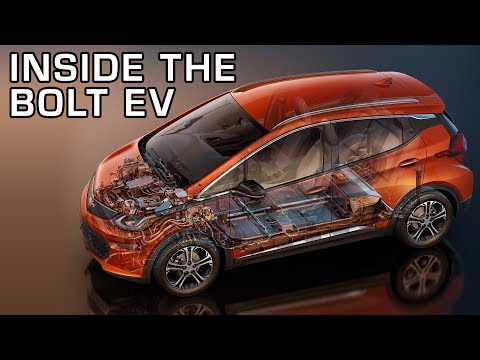
Tearing Into The Chevy Bolt EV - Autoline After Hours 385
This episode of Autoline After Hours features Sandy Munro's detailed tear-down of the Chevrolet Bolt EV, commissioned by UBS. The discussion reve... moreals that the Bolt's manufacturing cost was significantly lower than anticipated, approximately $4,000 less than UBS's estimates, largely due to its reliance on LG Chem for the battery, propulsion system, and electronics. While GM initially faced criticism for the Bolt's design and cost, the analysis suggests a more positive outlook for the "B" model (Bolt) compared to the "V" model (Volt). The review highlights the advancements in battery technology, particularly the potential cost reduction with the move to 811 chemistry, and touches upon the long-term cost of ownership parity with internal combustion engines in Europe by 2025. Despite its utilitarian design and the fact that GM still incurs a loss per vehicle, the Bolt is praised for its driving dynamics and overall quality, though its appeal is limited by the market's current preference for crossovers over hatchbacks. less

Michigan's Automotive Recovery - Autoline This Week 2120
This episode of Autoline This Week delves into Michigan's remarkable automotive recovery following the 2008-2009 financial crisis. The discussion... more highlights a significant shift from a state crippled by the bankruptcy of GM and Chrysler to a leader in the future of mobility. Key factors contributing to this turnaround include unprecedented collaboration between government, industry, and labor, policy changes like 'right to work' legislation, and substantial investments in advanced manufacturing and connected/automated vehicle technology. The experts emphasize that Michigan's growth is not solely in traditional auto manufacturing but in diversifying into knowledge-based, high-tech sectors, attracting global tech companies. While acknowledging the cyclical nature of the auto industry and potential plateaus, the overarching message is one of resilience, strategic investment, and a proactive approach to shaping the future of personal mobility. The primary challenge identified is the need to develop and attract a skilled workforce for these evolving roles. less

Can The Atlas Lift Volkswagen? - Autoline After Hours 382
The Autoline After Hours episode 382 features Michael Lovati, VP of Product Line Mid/Full-Size at Volkswagen Group of America, discussing the 2018 Vol... morekswagen Atlas. Lovati emphasizes the Atlas's design and functionality tailored specifically for the American market, highlighting its spaciousness, versatile seating, and ample storage. He notes the vehicle's European styling and driving dynamics are balanced with a slightly softer ride preferred by American consumers, with selectable drive modes offering a sportier option. The Atlas is built on the adaptable MQB platform, allowing for cost-effective development. Powertrain options include a 2.0-liter four-cylinder and a VR6 with all-wheel drive, paired with an 8-speed automatic transmission. Key features include available Apple CarPlay/Android Auto, a digital cockpit, and standard automatic post-collision braking. While primarily an on-road vehicle, it possesses off-road capability. Pricing starts around $30,500 for the four-cylinder and $32,500 for the V6, with higher trims reaching $48,000. The Atlas is also slated for export to Russia and the Middle East, though deemed too large for Western Europe. Early sales figures are positive, with feedback being very encouraging. less

Why I Quit The UAW & Voted For Trump - Autoline After Hours 380
This episode of Autoline After Hours features Brian Pannebecker, a former UAW worker, discussing his reasons for leaving the union and his support for... more Donald Trump. Pannebecker details his disillusionment with the UAW, citing a mysterious $300 million loss from the strike fund and the union's shift towards political activism over worker representation. He recounts facing hostility and harassment from union officials after resigning. The discussion then pivots to politics, with Pannebecker expressing strong support for Donald Trump, believing him to be effective despite a lack of bipartisan support. He estimates that around 50% of his UAW co-workers voted for Trump. The panel also touches on the challenges facing the domestic auto industry, the future of the UAW, and Trump's criticisms of the German auto industry, with differing opinions on the validity and political motivations behind these statements. less

Toyota Puts Fuel Cells In Semis - Autoline After Hours 379
This episode of Autoline After Hours features Sheldon Brown from Toyota discussing the company's ambitious project to integrate fuel cell technol... moreogy into heavy-duty Class 8 trucks. The initiative, initially a 'skunkworks' project, aims to address pollution issues at ports like Los Angeles and Long Beach by offering a zero-emission alternative to diesel trucks. Toyota retrofitted a Kenworth glider with components from the Mirai fuel cell vehicle, developing new fuel tanks, motors, and batteries to achieve a target range of around 200 miles. The discussion highlights the scalability of fuel cell technology, contrasting it with battery-electric semi-trucks by emphasizing faster refueling times (20-30 minutes) and a lighter overall weight compared to large battery packs. While acknowledging the technology is still in the proof-of-concept phase, Toyota sees potential for drayage operations and other heavy-duty applications where its strengths align. The conversation also touches upon infrastructure development, the importance of total cost of ownership for fleet operators, and the potential for hydrogen fuel cells to be produced from renewable sources. less
Tier One Supplier CEOs - Autoline This Week 2119
This episode of Autoline This Week features a discussion with two Tier One supplier CEOs, Lon Offenbacher of Inteva Products and Rainer Jueckstock of ... moreFederal-Mogul Powertrain. The conversation delves into the significant role suppliers play in the automotive industry, contributing approximately 70% of a vehicle's value and driving much of its innovation. Key topics include the impact of President Trump's policies on the industry, with both CEOs expressing that their global operations and localized supply chains mitigate significant disruption, though they acknowledge potential for minor adjustments to trade agreements like NAFTA. The discussion also touches upon the challenges and opportunities presented by CAFE standards and the push for lightweighting and electrification, with both executives highlighting the industry's capability to meet these demands through technological advancement. Autonomous driving is seen as a long-term evolution that will impact interior design and vehicle usage, potentially increasing mileage and necessitating durable, easily cleanable components. Finally, the CEOs discuss the current state and outlook of the automotive business globally, noting a slight slowdown in the US but healthy markets elsewhere, with a particular focus on the cyclical nature of heavy-duty truck sales. less

Kia Niro? Yeah, It's Got A Hybrid - Autoline After Hours 378
Autoline After Hours 378 features Steve Kosowski from Kia Motors America discussing the 2017 Kia Niro. The conversation highlights the Niro's uni... moreque 'eco car' platform, engineered from the ground up to accommodate various powertrains, including hybrid, EV, and plug-in hybrid. A key takeaway is Kia's strategic decision to design the Niro as a C-segment utility vehicle rather than a traditional sedan-like hybrid, a move driven by market trends and consumer feedback favoring higher ride heights and crossover aesthetics over the 'wedgie' shape of competitors like the Prius. The reviewer praises Kia's choice of a DCT transmission over a CVT for a more engaging and efficient driving experience, noting the seamless integration with the electric motor for instant torque. While the Niro is praised for its design, fuel economy, and driving dynamics, the discussion also touches on its target demographic, competitive landscape (including the RAV4 Hybrid and Prius), and the potential for future electrified variants. The episode also delves into broader industry topics like diesel emissions, FCA lawsuits, Ford's workforce adjustments, and GM's market exits. less

From Diesels to Electrics - Autoline This Week 2118
This Autoline This Week episode features Dan Nicholson, VP of Global Propulsion Systems at General Motors, discussing the company's diverse power... moretrain strategy. Nicholson emphasizes that internal combustion engines (ICE) and electrification can coexist, with ongoing improvements in ICE technology and a commitment to offering consumer choice, including diesel options like the Cruze and upcoming Equinox, which offer significant highway MPG. He highlights that while electrification is advancing rapidly, ICE and hybrids remain relevant, especially for larger vehicles like trucks and SUVs where full EVs are not yet viable. The discussion also touches on the potential of higher octane fuels to improve efficiency and reduce emissions, advocating for a systems approach involving both fuel and engine design. Regarding future propulsion, Nicholson expresses confidence in both battery electric vehicles (BEVs) and fuel cells, noting GM's partnership with Honda for fuel cells and the success of the Chevrolet Bolt EV, which offers competitive range and affordability. He predicts that autonomous shared vehicles will be the first segment to be fully electric due to high power demands, and while battery degradation in high-utilization shared EVs is a concern, current battery technology is expected to suffice with ongoing evolution. GM aims to lead in EV manufacturing and profitability, particularly in the autonomous shared vehicle space. less

The Mind Behind The First Fuel Cell Car - Autoline After Hours 377
This episode of Autoline After Hours delves into the pioneering history of General Motors' Electrovan, the world's first fuel cell-powered r... moreoad vehicle, developed in 1966. Featuring insights from retired engineer Floyd Wyczalek and current GM fuel cell executive Charles Freese, the discussion highlights the immense challenges and innovative spirit behind this groundbreaking project. Wyczalek details the technical hurdles, including adapting Apollo program fuel cells and developing a testing infrastructure from scratch within a tight 10-month deadline. Freese contrasts this with modern fuel cell development, emphasizing the significant advancements in size, efficiency, and packaging, particularly with the Chevrolet Colorado ZH2. The conversation also touches upon the future of fuel cells, their synergy with battery electric vehicles, and the ongoing quest for efficient hydrogen production and storage. The episode underscores the Electrovan's pivotal role as the genesis of GM's current fuel cell endeavors, despite its limited operational history. less

The Wall Street Auto Analysts - Autoline This Week 2117
This episode of Autoline This Week features a panel of Wall Street analysts discussing the current state and future outlook of the automotive industry... more. The consensus among the analysts is a generally negative sentiment from investors, despite record profits, due to concerns about future margin compression, slowing sales, and the significant investments required for new technologies like autonomous vehicles and EVs. Key risks highlighted include the heavy reliance on leasing, potential for increased used car inventory, rising interest rates impacting affordability, and the accumulation of automotive debt. While the industry faces challenges, the analysts acknowledge potential opportunities in mobility services and data monetization, though the long-term profitability and competitive landscape for these ventures remain uncertain. The discussion also touches upon the unique valuation of Tesla, attributing it to its access to low-cost capital and a future-oriented investor base, contrasting it with the more traditional, capital-intensive nature of established automakers. less

Automotive Sculpting Or Bust! - Autoline After Hours 375
This episode of Autoline After Hours features a discussion on automotive sculpting with artist Don Tocco, who shares his journey and experiences creat... moreing busts of automotive leaders. The panel also delves into the evolving automotive software market share and growth rates, highlighting the increasing importance of safety and infotainment systems. A significant portion of the discussion focuses on the potential impact of autonomous driving technology on vehicle segments, particularly the resurgence of minivans and vans as efficient, configurable spaces for ride-sharing and autonomous fleets. The conversation touches upon Waymo's expansion, regulatory challenges, and the future of personal driving versus autonomous systems, with a brief mention of Ford's Intelligent Speed Limiter technology. less

City of Tomorrow - Autoline This Week 2115
Autoline This Week's discussion on the 'City of Tomorrow' features insights from Ford's Jessica Robinson and Kevin Leaden, alongsi... morede UMich's Robert Hampshire. The conversation centers on how evolving transportation technologies like electrification, shared mobility, and autonomy will reshape urban landscapes. Key takeaways include the potential for reduced congestion and parking needs, improved air quality, and enhanced accessibility for all demographics. Ford's representatives highlight the company's commitment to developing solutions that integrate these technologies, emphasizing electrification's crucial role in powering autonomous systems and improving overall efficiency. The experts agree that while fully autonomous vehicles are a long-term prospect, incremental improvements and the adoption of shared services are already transforming urban mobility, offering significant quality-of-life benefits and economic advantages. The human factor in adapting to these changes is also explored, with the consensus being that convenience and clear benefits drive rapid adoption. less

Buick's Future Is Avenir - Autoline After Hours 374
Autoline After Hours features an in-depth discussion with Jace Stokes, Product Manager for the Buick Enclave, focusing on the all-new 2018 Enclave, pa... morerticularly the first-ever Avenir trim. The Enclave is positioned as a luxurious seven-passenger midsize SUV, boasting a more athletic stance, a significantly refined interior with premium materials, and increased space, especially in the second and third rows and cargo area. A key highlight is the reduction of approximately 350 pounds and an upgraded powertrain featuring over 300 horsepower and a new 9-speed transmission, enhancing performance. The Avenir trim is presented as the highest expression of Buick luxury, targeting the premium mid-size SUV segment and competing with rivals like the Acura MDX and Infiniti QX60. Unique features such as an in-vehicle ionizer for air quality and sophisticated Avenir-specific lighting technology are emphasized. While the discussion touches on market trends, competition, and technology, the primary focus remains on the Enclave's luxury, space, and refined driving experience. less

Are Fuel Cells Ready for Prime Time? Autoline This Week 2114
This episode of Autoline This Week tackles the resurgence of hydrogen fuel cell vehicles, exploring their readiness for mainstream adoption. The exper... moret panel, featuring representatives from General Motors, Honda, and the National Renewable Energy Laboratory (NREL), confirms that the technology has overcome significant hurdles in durability, performance, and cost, making the vehicles themselves ready for consumers. Honda's Clarity Fuel Cell is highlighted as a prime example of a production-ready vehicle. However, the primary challenge remains the underdeveloped hydrogen fueling infrastructure, particularly outside of California. While progress is being made with state investments and a growing network of "hydrogen highways," widespread adoption hinges on further infrastructure development and cost reduction. The discussion also touches upon the efficiency advantages of fuel cells over battery electric vehicles, particularly in terms of range and refueling time, and the potential for hydrogen as a renewable energy storage medium. The consensus is that while fuel cells are no longer a distant prospect, their widespread success is contingent on building out the necessary infrastructure. less

Troubled Times for Tooling - Autoline This Week 2113
This episode of Autoline This Week delves into the critical issue of manufacturing constraints and skilled talent shortages impacting the automotive i... morendustry. The discussion, featuring two OEM executives and an auto expert, explores how these challenges could potentially slow down the introduction of new vehicles, materials, processes, and technologies. While the transcript does not provide specific vehicle reviews or performance data, it highlights a significant industry-wide concern regarding production capacity and the availability of a skilled workforce. The core takeaway is the potential for these manufacturing hurdles to affect the pace at which new cars and trucks reach dealership lots, suggesting a period of potential slowdown or increased complexity in automotive production. less

All You Wanna Know About The New York Auto Show
Autoline After Hours 373 delves into the 2017 New York Auto Show, featuring discussions with key automotive executives. A significant highlight is Toy... moreota's FT-4X concept, an entry-level SUV aimed at younger, active buyers, positioned as a more versatile alternative to the CH-R. The concept, designed with outdoor utility in mind and shown with AWD, drew considerable public interest, suggesting a strong potential for production. Infiniti showcased the QX80 Monograph design study, hinting at future SUV aesthetics with its bold grille and large exhaust tips, while also discussing the brand's strong performance in the New York market and its global strategy. Lincoln's design director elaborated on the brand's 'quiet luxury' philosophy, emphasizing serene interiors and elegant exteriors, exemplified by the production Navigator, which closely followed its concept. The panel also debated the growing impact of ride-sharing on private vehicle ownership and the automotive industry's adaptation to these trends. less
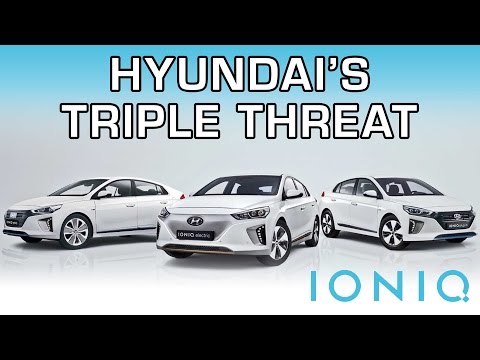
Hyundais Ioniq - Autoline After Hours 372
Hyundai's Ioniq is presented as a significant step forward in the hybrid and electrified vehicle market, aiming to appeal beyond traditional eco-... moreconscious buyers to those seeking a great car first. The vehicle's primary strength lies in its exceptional fuel economy, boasting 58 MPG combined, surpassing key competitors like the Prius. Hyundai emphasizes its focus on creating a compelling compact car that drives like a contemporary gasoline-powered vehicle, rather than a typical hybrid, achieved through innovations like a 6-speed dual-clutch transmission for better launch and shifting feel. The Ioniq offers three distinct powertrains (hybrid, plug-in hybrid, and pure EV), allowing consumers to choose their level of electrification. A key design philosophy is mainstreaming the technology with a visually conservative, attractive design, moving away from the polarizing aesthetics of some rivals. The vehicle also introduces innovative features such as using volcanic rock in interior plastics for a luxurious feel and eliminating the traditional 12V auxiliary battery by utilizing a portion of the main lithium-ion pack, thereby reducing weight, cost, and complexity, and eliminating a common failure point. While the pure EV model offers 124 miles of range, the company acknowledges consumer range anxiety but posits that right-sizing batteries for typical daily use offers efficiency benefits. The Ioniq is positioned as a strong value proposition, with pricing expected in the low $20,000s and a lifetime battery warranty, addressing common consumer concerns about hybrid ownership costs and reliability. less

Dealers, Consumers & Trump World - Autoline This Week 2112
This episode of Autoline This Week delves into the complex world of automotive financing, particularly in the context of a new administration and evol... moreving consumer lending practices. The discussion highlights concerns surrounding the Consumer Financial Protection Bureau (CFPB) and its past methodologies for assessing discrimination in auto loans, particularly regarding dealer reserves. While the CFPB has reportedly deprioritized this issue, the panel explores the impact of its previous actions, including a significant settlement with Ally Financial. A key takeaway is the industry's perspective that while transparency is important, a flat-fee system for dealer financing could hinder sales by reducing flexibility. The conversation also addresses the persistent narrative of a 'subprime bubble' in auto loans, with the CEO of the American Financial Services Association asserting that data does not support this claim, pointing to stable or improving credit scores and delinquency rates relative to the overall portfolio. However, the panel acknowledges the increasing average loan terms as a potential area for caution, especially if interest rates rise. The overarching theme is a call for regulatory balance, reducing perceived overreach to foster economic growth while maintaining consumer protection and access to credit. less

Threats Facing Today's Autos
This episode of Autoline This Week delves into the critical issue of cybersecurity threats facing the automotive industry. The discussion highlights t... morehe growing concern over hackers targeting connected vehicles, with experts from General Motors, the FBI, and state cybersecurity initiatives sharing their perspectives. While acknowledging the real and evolving threat, the consensus is that the industry, in collaboration with government agencies, is actively working to stay ahead. Key takeaways include the importance of a proactive approach, the value of coordinated disclosure programs to engage researchers, and the necessity of a layered defense strategy. The panelists emphasize that while a 'cyber-proof' car is an unrealistic goal, achieving an 'appropriate cybersecurity posture' through continuous vigilance and adaptation is achievable and essential. The collaboration between the automotive and defense sectors is seen as beneficial, though opportunities for deeper knowledge sharing exist. less