Out of Spec BITS is a premier digital channel dedicated to the dynamic world of electric vehicles (EVs). This distributor delves into the latest advancements in EV technology, charging infrastructure, and the practical realities of EV ownership. Through insightful coverage and engaging discussions, Out of Spec BITS provides a comprehensive look at the evolving landscape of electric mobility.
The channel's content offers a deep dive into weekly EV news, ownership tips, and explorations of emerging trends. From examining the performance of cutting-edge EV components to analyzing the infrastructure that powers them, Out of Spec BITS serves as an essential resource for enthusiasts and those curious about the future of transportation.
The channel's content offers a deep dive into weekly EV news, ownership tips, and explorations of emerging trends. From examining the performance of cutting-edge EV components to analyzing the infrastructure that powers them, Out of Spec BITS serves as an essential resource for enthusiasts and those curious about the future of transportation.

1550nm Vehicle Lidar Fried My Phone But Will It Ruin The Autopilot Cameras On My Tesla!?
This video investigates the potential for the Volvo EX90's 1550nm LiDAR system to damage camera sensors, a concern amplified by online reports. The hosts successfully demonstrate that the LiDAR can indeed fry smartphone cameras, causing permanent damage, even from a distance. They meticulously te...


Latest Additions
Showing 24 of 580 total titles. Page 20 of 25.

We Need Way More EV Charging Ports ASAP According To NREL
This episode of the Out of Spec Podcast delves into a crucial National Renewable Energy Laboratory (NREL) study predicting US EV charging infrastructu... morere needs by 2030. The hosts highlight the study's estimation of 30-42 million EVs on the road, emphasizing the significant gap between current infrastructure and future demand. Key findings reveal a substantial requirement for private charging ports (over 26 million), followed by public fast charging (182,000) and public Level 2 charging (167,000). While the study provides detailed regional analysis and considers various adoption scenarios, it deliberately omits the impact on the electrical grid, a topic the hosts express a desire to explore further. The discussion underscores the importance of a multi-faceted approach to infrastructure development, balancing public and private charging needs, and the potential benefits of specialization among charging providers. less

Owning An EV In India Is Easier Than You Think! Episode 150
This episode of the Out of Spec Podcast features Priyans Murarka, an EV owner in India, who shares his extensive experiences and data collection effor... morets. Murarka highlights the growing charging infrastructure in India, noting it has nearly doubled in six months, though challenges with app fragmentation persist. He discusses owning two EVs: the MG ZS EV (2022) and the Tata Tiago EV (2023), detailing their real-world ranges of approximately 400 km and 200 km respectively, which are slightly lower than advertised but sufficient for his needs. A key takeaway is the importance of meticulous planning for road trips, especially in less developed charging regions. Murarka also touches upon the initial cost barrier for EVs in India compared to ICE vehicles, despite a lower total cost of ownership. His work, documented on 'ExperiencesWithEVs', aims to demystify EV ownership in India and encourage wider adoption by sharing detailed data and insights. less

Don't Burn Your House Down Charging An EV! Follow These Simple Steps For Safe Charging
This episode of the Out of Spec Podcast delves into the critical safety aspects of at-home EV charging, featuring expert Tom Moloughney. The discussio... moren highlights the dangers of non-compliance with the National Electric Code's 80% rule for continuous loads, emphasizing the risk of overheating and fire, particularly with cheaper, uncertified charging equipment. Key takeaways include the necessity of proper installation, permitting, and inspection by a qualified electrician, the importance of using high-quality, industrial-grade outlets like Hubble, and the recommendation to hardwire chargers instead of relying on outlets. The episode also touches on the risks of using adapters and the benefits of smart chargers that can integrate with home solar systems. Moloughney stresses that cutting corners on EV charging infrastructure can have severe consequences, advocating for a structured, safety-first approach. less

EVgo Rolls Out kWh Pricing In All States Where It's Legal
The EVgo network is transitioning to kilowatt-hour (kWh) pricing across all states where legally permissible, a move the host, Francy, views positivel... morey for its fairness and consistency. This shift aims to charge drivers for the energy consumed, rather than the time spent at a charger, addressing concerns about slower chargers or vehicles with lower charging rates. The video details the complexities behind charging costs, including equipment, development, and operational expenses, with electricity and demand charges being significant factors. EVgo is actively working with utilities and regulators to develop solutions like commercial EV rates and low load factor rates to mitigate these costs. The review also highlights EVgo's partnership with Pilot Flying J to install 2,000 DC fast chargers at travel centers, offering convenient locations for road trips. While the transition to kWh pricing is generally seen as a fair improvement, the rising cost of electricity and its impact on EV charging prices are noted as areas to watch. less

Older Teslas Can't Charge On NACS Stations - We Explain
This episode of the Out of Spec Podcast delves into the complexities of the North American Charging Standard (NACS) transition, particularly for owner... mores of older Teslas. Hosts Francie and Kyle explain that while new Teslas are equipped for CCS compatibility, older models (pre-2021 without a specific retrofit) cannot utilize CCS adapters or NACS public chargers. The core issue stems from differing communication protocols: Teslas historically used CAN communication, while NACS and CCS rely on ISO 15118. The hosts highlight that older Teslas can still use Tesla Superchargers and CHAdeMO stations (with an adapter), but public NACS stations will be inaccessible without a physical service center retrofit of the charge port and ECU. They emphasize that this retrofit, costing a few hundred dollars, is highly recommended for older Tesla owners to unlock broader charging access, especially in regions with more CCS than Supercharger stations. The discussion underscores a significant potential for consumer confusion and charging failures as NACS becomes more prevalent, stressing the need for clear education from automakers and charging networks. less

First Public NACS Equipped Chargers Installed In The Wild! | Episode 141
This episode of the Out-of-Spec Podcast discusses the recent installation of the first publicly available NACS (North American Charging Standard) equi... morepped chargers in the US. Hosts Kyle and Francie highlight two specific sites: one at XCH Charge/MD7 headquarters in Allen, Texas, and another at ChargePoint's headquarters in Campbell, California. They emphasize that while Tesla Superchargers and some Magic Docks already use the NACS connector, these new installations are significant because they are public, non-Tesla branded chargers that allow Teslas to charge natively without an adapter, using the ISO 15118 communication standard. A key takeaway is that not all Teslas will be compatible; older models will require a CCS retrofit for communication. The hosts also touch upon the challenges of NACS cable supply chain development, the importance of UL certification for public chargers, and the potential confusion for consumers. They predict a future with many dual CCS/NACS ports and a decline in pure CCS or CHAdeMO ports as cables need replacement. less

Salvaged Teslas Can't Use Magic Docks! | Episode 140
This episode of the Out of Spec Podcast features Winston, an uncertified Tesla mechanic, discussing his experiences salvaging and rebuilding Teslas. T... morehe core issue explored is the inability of salvaged Teslas to utilize Tesla's Magic Dock Supercharger stations, despite being able to charge at other public CCS stations. Winston details how Tesla flags salvaged vehicles, disabling Supercharging and voiding warranties, and the high cost ($2,000-$2,200) and uncertain outcome of attempting a recertification. He argues that Tesla's current process is overly expensive and lacks transparency, suggesting a more nuanced inspection based on the vehicle's specific damage. The discussion also touches on the broader implications for salvaged EVs and Tesla's liability concerns, contrasting the restrictions on salvaged Teslas with the charging capabilities of other EV brands like the Mustang Mach-E. Winston also shares his personal projects, including retrofitting CCS to another salvaged Tesla and his interest in acquiring a Chevrolet Bolt for its battery pack. less

Home Energy Systems Are Super Important! Deep Dive Into Solutions Available Today
This episode of the Out of Spec Podcast features an insightful discussion with Shawn McLaughlin, CEO of Emporia Energy. The conversation delves into E... moremporia's mission to revolutionize home energy management, particularly in relation to EV charging. McLaughlin highlights the company's unique approach, leveraging his background in energy trading to create tangible, scalable solutions. Emporia differentiates itself by offering consumer-centric, cost-effective products like the Emporia View and Level 2 EV chargers, often priced significantly lower than competitors. A key innovation discussed is the intelligent load management system for EV chargers, which allows users to install Level 2 chargers even in homes with limited electrical panel capacity, potentially saving thousands in upgrades. The company's customer-driven R&D and in-house engineering team are emphasized as crucial to their agility and success, enabling rapid adaptation to market changes like the NACS standard. The episode underscores Emporia's holistic vision for home electrification, aiming to optimize energy usage, storage, and production. less

Tesla Drops Model Y Price For New Base Version! Everything We Know
The Out-of-Spec Podcast discusses Tesla's strategic price reduction and the introduction of a new base Model Y variant, potentially utilizing LFP... more battery technology. The hosts highlight that this isn't merely a price cut but a new offering, already popular in Europe and Asia, with speculation about its manufacturing origin, possibly Giga Shanghai. While the new RWD Model Y is priced attractively at $32,890 (before savings), the discussion delves into the benefits of LFP batteries, particularly their suitability for daily 100% charging, which is appealing even to current Long Range owners. The review touches upon the Model Y's enduring popularity and sales figures, positioning it as a key player in maintaining Tesla's market strength. Updates seen in the Chinese market, such as ambient lighting and fabric dash accents, are also mentioned as potential precursors to a broader Model Y refresh (Project Juniper), though these are not yet available in North America. The consensus is that Tesla's aggressive pricing and continuous improvements are effective strategies to capture market share amidst increasing competition. less

Kyle Drives The New BMW i5! More Details That Didn't Make The Full Review | Episode 136
Kyle provides an in-depth look at the BMW i5, focusing on the eDrive40 and M60 trims, following his trip to Portugal. He highlights BMW's enginee... morering prowess, particularly in suspension tuning and the smooth, rounded charging curve, which is a significant improvement over previous models like the i3 and iX. The reviewer praises the i5's overall competency and balanced package, noting its excellent driver assistance, suspension tuning, and comfortable interior, despite it not excelling in any single category. However, he points out a significant drawback in the cabin's noise insulation, attributing it to single-pane glass, and expresses disappointment over the lack of a front trunk. The M60 trim experienced an unexpected power derating during hard driving, an issue the engineers are investigating. Software integration, while improved with iDrive 8.5, still lags behind competitors like Tesla and Rivian, with route planning proving slow and cumbersome during testing. Despite these criticisms, Kyle finds the i5 to be a well-executed electric sedan that successfully embodies the 5 Series ethos, offering a compelling package at its price point, especially for those seeking a competent all-around electric vehicle. less

First EV Battery Made With Recycled Materials! Nanotech & BASF Partner In North America
This episode delves into the critical topic of sustainable EV battery manufacturing, focusing on the partnership between BASF and Nanotech Energy in N... moreorth America. The discussion highlights the industry's shift towards making sustainable solutions even more sustainable by utilizing recycled materials. Key takeaways include the environmental benefits of reducing CO2 footprints by up to 25% compared to primary metals, conserving resources, and potentially lowering costs. However, the hosts also address significant challenges such as limited initial supply of recycled materials, the complexity of the recycling process, the need for high-quality output, infrastructure development, and upfront investment. The episode emphasizes that while these cons present obstacles, they are surmountable with technological advancement and collaboration, particularly with government funding and strategic partnerships between legacy companies and startups. The overarching sentiment is that while not as 'sexy' as new car reveals, these advancements in battery recycling are essential for a truly holistic and sustainable EV ecosystem. less

Honda Prologue! Everything We Know About This New Electric SUV
The Honda Prologue marks Honda's significant entry into the all-electric SUV market, built on GM's Ultium platform. While praised for mainta... moreining Honda's signature reliability and approachable design, it falls short in offering cutting-edge EV technology. The reviewer notes that Honda could have pushed further with battery and charging capabilities, with charging speeds topping out at 155 kW, which is slower than many competitors. The estimated 300-mile range is considered adequate but not class-leading. Positives include the spacious interior, standard 11-inch digital display, available premium audio, and innovative safety features like rear cross-traffic braking. The Elite trim offers AWD and a sport driving mode. However, the starting MSRP just under $50,000, before incentives, positions it as a premium offering that might be out of reach for many. The Prologue appears to be a transitional vehicle, designed to ease existing Honda customers into EVs, with Honda aiming for a fully electric lineup by 2040. The reviewer expresses hope that future Honda EVs, built on their own e-architecture, will be more competitive. less

Koreans Going NACS? Hyundai, Kia, & Genesis Spotted At A Tesla Supercharger | Episode 133
This episode of the Out of Spec Podcast discusses compelling evidence suggesting Hyundai, Kia, and Genesis are preparing to adopt the North American C... moreharging Standard (NACS). The hosts analyze photos of these vehicles, including an unreleased Kia EV9, charging at a Tesla Supercharger, interpreting it as a sign of an imminent announcement. A key discussion point is the technical challenge posed by the 800-volt architecture of these Korean EVs, which exceeds the 500-volt limit of current Tesla V2 and V3 Superchargers. The hosts explore potential solutions, including Tesla upgrading its infrastructure, automakers enhancing their onboard charging capabilities, or a compromise involving limited charging speeds. The unusual joint appearance of Hyundai and Kia for this event suggests a directive from their Korean headquarters. While no official announcement has been made, the visual evidence and internal desire to compete on a level playing field strongly indicate a move towards NACS adoption, which would significantly benefit EV consumers by expanding charging access. less

What The Heck Rivian! Max Pack Is Super Lame, Especially For The Price | Episode 132
The Rivian Max Pack, discussed in this episode, is met with significant disappointment by the hosts. While it offers an EPA-rated range of 410 miles (... moreon 21-inch wheels), this is achieved with a dual-motor setup and a battery chemistry change, not an increase in physical cells or architecture. The $10,000 price premium is questioned, as the real-world range increase is modest (50-70 miles, less when towing) and charging speeds remain identical to the large pack due to the same 400-volt architecture and thermal limitations. The hosts argue that the improved charging infrastructure makes such extreme range less critical, and suggest the standard range LFP battery pack is a more practical and cost-effective choice for most users. They conclude that the Max Pack offers minimal practical benefit for its cost, especially compared to the large pack, and express a wish for Rivian to have focused on performance or charging improvements instead. less

My Friend Wants An Electric SUV But They’re Too Expensive! Finding The Right Vehicle | Episode 131
This episode tackles the common challenge of EV affordability for the average buyer, using a friend's car shopping dilemma as a case study. The h... moreosts explore the initial appeal of a Mazda CX-5 as a practical, budget-friendly ICE option, priced around $32,000. They then pivot to evaluating EVs, finding that new models like the Tesla Model Y and Volkswagen ID.4, even with tax credits, remain significantly more expensive upfront, with the Model Y costing around $42,380 after incentives and the ID.4 around $38,390. The RAV4 Prime is also discussed but deemed too expensive and hard to find. The core recommendation emerges: a used Tesla Model Y. The hosts highlight that a 2021 or 2022 used Model Y can be found in the mid-$30,000 range, making it comparable in price to the new CX-5, while offering superior performance, charging infrastructure, and long-term value. The Audi e-tron is also presented as a used luxury alternative, but the Model Y is favored for its simplicity, reliability, and lower potential for out-of-warranty repair costs. The episode concludes that for budget-conscious buyers, a used EV, particularly a Model Y, presents a compelling and financially sound alternative to new ICE vehicles. less

Ordering Rivian Dual-Motor vs Quad-Motor! Reservation Holders Must Make A Choice
This episode of the Out of Spec Podcast delves into the critical decision facing Rivian reservation holders: choosing between the Dual-Motor and Quad-... moreMotor configurations. The discussion highlights that for those with legacy pricing, the Quad-Motor is a near no-brainer due to minimal cost difference and superior resale value. However, at current pricing, the decision becomes more nuanced. The hosts suggest that for the majority of daily drivers who don't engage in extreme off-roading or track use, the Dual-Motor offers a more efficient, quieter, and potentially more thermally robust experience. The Quad-Motor is praised for its unique torque-vectoring capabilities, performance modes (like Rally and Drift), and superior off-road prowess in certain challenging terrains. A key point of contention is the Quad-Motor's thermal limitations and its less effective performance in extreme low-traction, single-wheel-drive scenarios compared to the Dual-Motor's brake-clamping workaround. Ultimately, the consensus leans towards the Dual-Motor for everyday use and value, while the Quad-Motor remains the choice for enthusiasts seeking ultimate performance and unique driving dynamics, especially if the price delta is small. less

System Outage ABB DC Fast Chargers Down Across Multiple Networks How Did It Happen Episode 129
This episode of the Out of Spec Podcast details a significant 12-hour outage affecting nearly all ABB DC fast chargers across multiple networks in the... more country. Hosts Kyle and Francie highlight the widespread impact, which took down networks like 7-Eleven, Circle K, and a large portion of EVgo. While ABB remained silent, the hosts, through industry contacts and user reports, deduced the issue was likely related to the chargers' built-in cellular connections or backend communication, rather than a hardware failure. A key takeaway is the lack of redundancy and preparedness among charging network operators, with most leaving drivers stranded. Circle K and Electrify America are commended for their systems defaulting to free vend mode during the outage, ensuring drivers could still charge, a stark contrast to the complete unavailability experienced elsewhere. The incident underscores the critical need for robust risk management, backup plans, and better communication from hardware manufacturers and CPOs to ensure reliable EV charging infrastructure. less

Huge Tesla Magic Dock Expansion Happening Now - Watch Your Local Supercharger
This episode of the Out of Spec Podcast delves into the expanding presence of Tesla's 'Magic Dock' chargers, which enable EVs with CCS ... moreconnectors to utilize the Tesla Supercharger network. Host Francie and guest Branden Flasch discuss the history of NACS and CCS, the initial rollout of Magic Docks in early 2023, a subsequent lull, and the recent, seemingly unannounced, resurgence of these adapters appearing across the US. While Tesla hasn't officially commented, users are actively tracking these new installations via sites like supercharge.info. The discussion highlights the potential revenue benefits for Tesla and the ongoing transition period where both NACS and CCS will coexist for several years. Flasch notes that while the Magic Dock aims to ease charging for non-Tesla EVs, it might also create a period of confusion. The conversation also touches upon the broader implications of NACS adoption by other automakers and the potential behind-the-scenes deals incentivizing Tesla's Magic Dock expansion, possibly linked to funding programs like NEVI. less
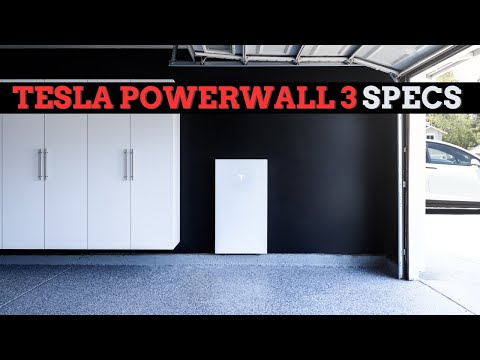
Tesla Powerwall 3 - Everything We Know
The Tesla Powerwall 3 represents a significant evolution in home battery energy storage, building upon the foundation of its predecessors. While the n... moreominal battery energy capacity remains consistent at 13.5 kWh, mirroring the Powerwall 2 and Plus, the Powerwall 3 boasts a substantially increased power output of 11.5 kW, a notable upgrade from the 5 kW of the Powerwall 2. A key change is the adoption of a Lithium Iron Phosphate (LFP) battery chemistry, utilizing prismatic cells known for higher efficiency and reduced heat generation compared to the lithium-ion cells in the Powerwall 2. However, a significant departure is the Powerwall 3's exclusively DC-coupled configuration, meaning it is not designed for retrofitting to existing solar systems, unlike the Powerwall 2. The reviewer highlights the sophisticated app, shared with Tesla vehicles, for optimizing energy usage and storage. Concerns are raised regarding the non-isolated PV inverter topology, emphasizing the importance of safety. Pricing and rebate eligibility remain TBD, but compatibility is limited to other Powerwall 3 units, not Powerwall 2s. less

Tesla Semi Testing Exceeds Expectations: A Look Into The Future Of EV Trucking
The "Out of Spec Podcast" episode delves into the "Run On Less" event, highlighting the real-world performance of Tesla Semi truck... mores. The hosts express significant optimism, noting that the Semis are exceeding expectations, particularly in range, with tested figures closely matching Tesla's promises. The event underscores the viability of electrifying heavy-duty trucking, with the Tesla Semis demonstrating impressive efficiency and performance, even on demanding routes. Key takeaways include the readiness of smaller depots for electrification, significant improvements in truck and charger technology since 2021, and the critical need for cost and weight reductions in batteries to improve total cost of ownership. While challenges remain, particularly concerning charging infrastructure deployment and grid capacity, the overall sentiment is positive, suggesting that electric trucking is moving from hypothetical to practical reality. less

Jaguar Announces The Switch To NACS! | Episode 124
Jaguar's recent announcement to adopt Tesla's North American Charging Standard (NACS) for its 2025 and later electric vehicles, alongside a ... morepartnership with Tesla, is a significant move towards streamlining the EV charging experience for its customers. The podcast hosts express little surprise, viewing this as an inevitable industry trend. They highlight that while the current I-Pace will eventually be phased out, future Jaguar and Land Rover models will natively support NACS. A key takeaway is the ongoing industry-wide shift, with many automakers either adopting or in talks with Tesla. The discussion also touches on the potential demise of CCS, the complexities of retrofitting charging infrastructure, and the importance of seamless charging experiences for mass EV adoption. The hosts are optimistic about Jaguar's pivot to a pure electric future, anticipating exciting new models and a more integrated ecosystem. less

World Tour On His Zero Electric Motorcycle! Full Interview With Roman Nedielka | Episode 123
Roman Nedielka shares his extraordinary experience undertaking a round-the-world trip on his Zero DSR/X electric motorcycle. The interview highlights ... morethe practical realities and surprising ease of long-distance electric motorcycle travel, debunking common misconceptions often portrayed in media. Nedielka emphasizes that with proper planning, range anxiety is largely unfounded, with his DSR/X consistently delivering reliable performance. He details his charging strategy, relying primarily on standard power outlets, and discusses navigating diverse charging standards, including successful use of adapters in China. A key takeaway is the motorcycle's impressive reliability, with minimal maintenance required even after extensive use in challenging conditions like rain and dust. The conversation also touches on the advantages of electric two-wheelers for urban mobility and the growing charging infrastructure globally, suggesting that electric motorcycles are a mature and viable option for adventure touring. less

Kyle’s Experience Reviewing The New Tesla Model 3 Refresh
The Tesla Model 3 refresh, internally codenamed 'Highland', is discussed in detail, focusing on its European and Chinese launch strategy and... more the implications for the US market. While Kyle couldn't drive the car, his hands-on experience at the IAA Mobility show highlighted several key improvements: a sharper exterior design, a new sound system, perforated seats, a revised steering wheel, and the controversial removal of physical stalks for turn signals and gear selection. The reviewer notes the lack of mechanical changes beyond suspension and aerodynamic improvements, which Tesla claims boost efficiency by 5-7%. A significant point of discussion is the absence of a performance variant announcement, with speculation about a potential 'Model 3 Plaid' or a detuned performance model to compete with rivals like the Hyundai Ioniq 5N and Kia EV6 GT. Despite these unknowns, the refreshed Model 3 is lauded as offering exceptional value, with its price increasing only slightly while adding numerous features, solidifying its position as arguably the best value EV on the market. less

Energy Storage With Second Life EV Batteries! Volvo Group Partners With Connected Energy | Episode 120
This episode of the Out of Spec Podcast delves into the burgeoning field of second-life EV batteries, focusing on the partnership between Volvo Group ... moreand Connected Energy. The discussion highlights the potential for repurposing used EV batteries, particularly from Volvo's commercial vehicles like trucks and construction equipment, for Battery Energy Storage Solutions (BESS). Key benefits explored include grid stabilization, peak shaving at charging hubs, and environmental advantages over immediate recycling. A significant point of discussion revolves around the health of these batteries when retired from their primary use, with an average of 80% health cited, though questions remain about acceptable degradation levels in industrial applications and the challenges of pricing and cell balancing for variable-capacity battery packs. The hosts also touch upon the slower-than-expected degradation of EV batteries, impacting the immediate supply for second-life applications, and compare reuse versus recycling strategies. Potential customers for these BESS units include DC fast-charging networks like Electrify America and EVgo, seeking to enhance sustainability and grid management. less