
Engineering Explained delves into the intricate world of automotive engineering, breaking down complex mechanical concepts into easily digestible explanations. Led by Jason Fenske, a mechanical engineer with a profound passion for vehicles, this channel serves as a comprehensive resource for car enthusiasts seeking to understand the inner workings of their favorite machines. From the fundamental principles of how cars operate to detailed analyses of specific models and technologies, the content aims to educate and satisfy the curiosity of a dedicated audience.
The channel's focus on automotive technology is evident in its exploration of diverse topics, including electric vehicles, performance cars, and engine development. By demystifying the engineering behind modern transportation, Engineering Explained provides valuable insights for anyone interested in the evolution and mechanics of automobiles, making it a go-to destination for automotive knowledge.
The channel's focus on automotive technology is evident in its exploration of diverse topics, including electric vehicles, performance cars, and engine development. By demystifying the engineering behind modern transportation, Engineering Explained provides valuable insights for anyone interested in the evolution and mechanics of automobiles, making it a go-to destination for automotive knowledge.

How Miserable Is A Tesla Road Trip?
The "Engineering Explained" channel embarks on an extensive 2,000-mile road trip in a Tesla Model 3 Performance to assess the practicality of electric vehicle long-distance travel. The reviewer highlights that the journey took 38 hours, 11 hours longer than Google Maps' estimate, with approximate...


Latest Additions
Showing 13 of 61 total titles. Page 3 of 3.
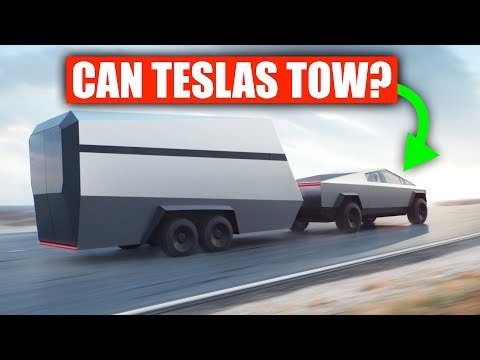
Why Teslas Are Bad At Towing
This video meticulously breaks down the physics behind why current electric vehicles, using the Tesla Model X as a primary example, struggle with towi... moreng. The core issue identified is not a lack of torque or capability, but insufficient onboard energy storage (battery size) to overcome the significant energy demands of towing, especially over inclines. Even with impressive efficiency, the Model X, when towing its rated 5,000 lbs, requires more energy than it carries for a 100-mile trip uphill, rendering the task impossible. While the Cybertruck with its larger battery pack shows more promise, it still operates at the edge of its capacity when towing its rated load. The analysis highlights that internal combustion engine vehicles, like the Ford F-150, have a substantial energy advantage due to larger fuel tanks, allowing them to complete similar tasks with much greater efficiency margins. The video concludes that while EVs are not inherently incapable of towing, significant improvements in battery energy density are required before they can match the practical towing capabilities of traditional vehicles. less

Are Teslas Actually Better For The Environment?
This video delves into the environmental impact of Tesla vehicles compared to internal combustion engine alternatives, focusing on efficiency and emis... moresions. The analysis, using data from a paper by Tesla's founders and conservative assumptions, reveals that electric cars, even when powered by fossil fuels, are significantly more efficient from 'well-to-wheel' than gasoline or diesel counterparts. The Model 3 Standard Range Plus achieves an equivalent of 60 miles per gallon-equivalent, while the Model S Long Range reaches 50 miles, far surpassing the best gasoline (35 mpg) and average gasoline (23 mpg) vehicles. Furthermore, even when assuming 100% of electricity comes from natural gas, Tesla's emissions per mile are substantially lower than gasoline cars, with the potential to become near-zero as the grid incorporates more renewables. The reviewer highlights that electric cars improve over time as the grid cleans up, unlike gasoline cars which have reached peak efficiency. The video also touches upon the production emissions of EVs, noting they can be offset within two years. less

How To Prevent Expensive Tesla Wheel Damage
This video addresses the common concern of expensive wheel and tire damage on the Tesla Model 3 Performance, particularly after a costly pothole incid... moreent. The reviewer details a switch from the standard 20-inch low-profile tires to 18-inch wheels with higher-profile tires, aiming to mitigate damage and reduce replacement costs. Key advantages highlighted include a significantly increased sidewall (42% more), offering a "crumple zone" effect against impacts and reducing the risk and cost of damage. The reviewer also notes a substantial weight reduction (8.6 lbs per corner, 34.4 lbs total unsprung/rotational mass), which theoretically improves ride quality and rotational inertia. While the reviewer couldn't subjectively feel a difference in ride comfort, objective tests showed a slight improvement in 0-60 mph acceleration (0.08 seconds faster) with the lighter, smaller wheels. Braking performance saw a minor decrease with the aftermarket wheels, attributed to the specific Tesla-OE Michelin PS4S tire having a wider contact patch. Aerodynamics are expected to improve slightly with the smaller, flatter wheel design. The reviewer praises Tesla's easy TPMS recalibration for aftermarket wheels and expresses a personal preference for the aesthetics of higher-profile tires, contrasting with the industry trend towards low-profile setups for perceived performance and looks. less

How Miserable Is A Tesla Road Trip?
The "Engineering Explained" channel embarks on an extensive 2,000-mile road trip in a Tesla Model 3 Performance to assess the practicality o... moref electric vehicle long-distance travel. The reviewer highlights that the journey took 38 hours, 11 hours longer than Google Maps' estimate, with approximately 8 hours spent charging. Charging stops averaged 40 minutes, often coinciding with meals. The reviewer emphasizes maintaining a 15% battery buffer, driving at a consistent 75 mph for optimal efficiency, and notes that the car, fully loaded with two occupants and luggage, still managed impressive efficiency, exceeding Tesla's highway MPGe rating. Comfort was a significant positive, with the seats described as plush and supportive, making long hours manageable. The reviewer also praises Tesla's integrated navigation and Supercharger network for simplifying trip planning, though suggests improvements for more flexible routing. A notable drawback was the experience of a flat tire due to a pothole, attributed to the low-profile tires on the Performance model, which will be detailed in a separate video. Overall, the trip proved that long-distance EV travel is feasible, albeit requiring more planning and time than a gasoline equivalent. less

How Does The Tesla Model 3 Handle Snow?
This video thoroughly investigates the Tesla Model 3's capability in snow, focusing on three key areas: tires, all-wheel drive, and ground cleara... morence. The reviewer highlights the Model 3 Performance's AWD system's effectiveness, particularly when paired with appropriate winter tires. While Tesla offers winter tire packages, the reviewer suggests aftermarket options like the Michelin Alpine PA-4, which are specifically designed for performance vehicles and offer superior performance on snow and ice compared to Tesla's Pirelli offerings, despite being originally intended for the Porsche Cayman GT4. The AWD system, utilizing dual motors and open differentials, is praised for its intelligent torque distribution, enhanced by brake application to the slipping wheel. The reviewer notes the Model 3's ground clearance is a limiting factor, with the Performance trim being slightly lower than other variants. The video also explores 'Slip Start' and 'Track Mode,' demonstrating their utility in challenging conditions, with Track Mode notably assisting in correcting oversteer. Overall, the Model 3 Performance, especially with the right tires, is deemed highly capable in snow, with its primary limitations being ground clearance and the availability of suitable tire options for larger wheel sizes. less

I Traded My Tesla For The Model 3 Performance - Regret Buying Mid-Range
The reviewer details his experience trading his Tesla Model 3 Mid-Range for the Performance variant, citing specific reasons for his regret. Key compl... moreaints about the Mid-Range included a noticeable delay in torque delivery from a standstill and at speed, attributed to its permanent magnet synchronous reluctance motor (PMSM) and potential Tesla tuning, as well as the inability to fully disable traction control. The Performance model, with its front induction motor, resolves these issues by providing instant torque and a more engaging driving experience. Mechanical differences highlighted include the Performance's more powerful dual-motor setup, larger battery, sport-tuned suspension, upgraded brakes, and the inclusion of Track Mode. While the Performance model is heavier, the reviewer found it superior in almost every aspect. Despite some minor cosmetic defects on the Performance model (a dent and cracks in the roof glass), the reviewer found its overall condition and panel gaps to be significantly better than his previous Mid-Range vehicle. less

Everything That's Wrong With My Tesla Model 3 - Quality Problems
This video meticulously documents a range of quality control issues encountered with a brand-new Tesla Model 3 upon delivery. The reviewer, aiming for... more objectivity, details numerous exterior paint defects, including scratches that penetrate the clear coat and dust trapped beneath it, as well as noticeable "orange peel" texture. More significantly, the review highlights inconsistent panel gaps across the vehicle, comparing them with measurements from a Subaru Crosstrek. Specific examples include uneven gaps on the hood, between the rear quarter panel and door, and around the glass roof panels, with some areas showing height differences rather than just width variations. While Tesla's customer service is acknowledged for offering to fix these issues, the core concern remains the condition of the vehicle as it arrived, prompting viewers to consider if these flaws are acceptable for a new car, especially one with a premium paint option. less

I Bought A Tesla Model 3 - Celebrating 2 Million Subscribers!
The reviewer, celebrating 2 million subscribers, has purchased a Tesla Model 3 Mid-Range and provides a detailed first impression. He highlights the R... moreWD configuration and lighter weight as key advantages for driving dynamics, contrasting it with the AWD variants. The exterior is noted for its multi-coat red paint and optional 19-inch wheels, while the interior receives praise for its premium features, including 12-way adjustable heated seats and a well-performing sound system, though the bass is perceived as stronger in the front. The expansive glass roof and functional frunk are also appreciated. Driving impressions focus on the responsive, albeit slightly delayed, acceleration in standard mode, the effectiveness of regen braking, and the numb but responsive steering. Visibility is excellent, and ride comfort is deemed good despite imperfect road conditions. A unique observation is the audible brake pad contact at low speeds due to the car's quiet nature. The central 15-inch touchscreen controls most functions, including a novel climate vent direction system. The reviewer finds the lack of a traditional instrument cluster surprisingly natural after initial adjustment. He expresses satisfaction with the rear-wheel-drive feel, noting a playful nature when accelerating out of corners. Autopilot is deemed not worth the $5,000 upgrade at this time, as the reviewer enjoys driving. The video also includes a tip for potential EV buyers to look for states with high incentives to reduce purchase costs. less

Living With An Electric Car Changed My Mind
After a six-month trial, the reviewer's perspective on electric vehicles (EVs) has significantly shifted, largely alleviating range anxiety. Whil... moree acknowledging that EVs aren't for everyone, the author argues that for households with multiple cars and home charging capabilities, an EV makes a compelling case as a second vehicle. Key advantages highlighted include instant torque, quiet and smooth operation, lower running costs (estimated at about a third of gasoline costs), and the convenience of starting each day with a full charge. The reviewer found the 2018 Nissan Leaf's acceleration addictive and its one-pedal driving (e-pedal) intuitive. However, criticisms include a frustrating Apple CarPlay connection process, a dead zone in the brake pedal when using the e-pedal, an overly cautious Pro Pilot Assist system, and the lack of telescopic steering. A significant drawback noted is the Leaf's air-cooled battery, which, unlike liquid-cooled systems in competitors, necessitates user-managed charging habits to mitigate degradation, making it less convenient for long road trips. Despite these points, the reviewer concludes that EVs are fun, practical, and improving rapidly, leading to a personal decision to purchase an EV. less

I Finally Drive A Tesla! Model S P100D
The reviewer, driving a Tesla Model S P100D for the first time, is overwhelmingly impressed by its performance, describing the acceleration as "c... morerazy fast" and "addictive." The P100D trim, featuring a 100 kWh battery and dual motors for all-wheel drive, delivers a 0-60 mph time of 2.5 seconds, which the reviewer highlights as astonishing given the car's nearly 5,000-pound weight. Beyond the raw speed, the reviewer praises the car's safety features, including a low center of gravity due to the battery placement and a substantial front crumple zone. The aerodynamic design, contributing to a claimed 315-mile range, and the minimalist, functional interior with a responsive 17-inch touchscreen are also noted positively. While visibility out the back is described as slightly cramped, the overall driving experience is lauded for its smooth ride, impressive handling for its weight, and precise throttle control. The reviewer concludes that the Model S P100D is a "ridiculously fast" and "super fun to drive" vehicle. less

2017 Acura NSX - A Casual Portland Drive
This video offers a detailed look at the 2017 Acura NSX, highlighting its hybrid powertrain and advanced torque-vectoring capabilities. The reviewer e... moremphasizes the car's sophisticated Integrated Dynamic System (IDS) with its four driving modes (Quiet, Sport, Sport Plus, Track), noting how it influences shift mapping, steering, sound, throttle response, and suspension. The unique 9-speed DCT, specifically made for the NSX, is praised for its quick and smooth shifts, with gears 1-5 on one set and 2-8 on another, and a dedicated launch mode. The hybrid system, combining a 500 HP twin-turbo V6 with three electric motors (one rear, two front), delivers a total of 573 HP and 476 lb-ft of torque, providing instant torque and enhancing performance across acceleration, braking, and cornering. The reviewer also touches on the car's heritage, comparing it to the original NSX and noting design cues like the thin A-pillars and the option for a black or carbon fiber roof. While the video doesn't delve into extreme performance testing due to time and traffic constraints, it effectively communicates the NSX's blend of supercar performance and everyday usability, with impressive fuel economy for its class (20 city/22 highway). less

2016 Chevy Volt Review - Can It Go 53 Electric Miles?
The 2016 Chevrolet Volt is put to the test to see if it can achieve its advertised 53 miles of electric-only range. While the initial range estimate u... morepon starting was lower than expected (43 miles), the reviewer embarked on a challenging fuel economy course. Despite encountering a significant uphill grade that depleted the battery faster than anticipated, the Volt ultimately exceeded the 53-mile target, achieving approximately 56 miles in real-world conditions, including rain and varied traffic. The reviewer praises the Volt's concept as an electric car with a range-extending generator, effectively mitigating range anxiety. Positives include comfortable seats, good visibility, and the effective regenerative braking paddle. Criticisms are minor, focusing on limited rear headroom and a slightly artificial feel to the brake pedal. The reviewer also expresses disapproval of Chevrolet's marketing campaign which bashes competitors like the Nissan Leaf. less

2014 Ford Fusion Energi Titanium - Review & Test Drive
The 2014 Ford Fusion Energi Titanium is presented as a capable plug-in hybrid sedan, offering a compelling blend of electric-only range and extended g... moreasoline operation. The reviewer highlights its impressive combined horsepower of 195 HP and a substantial total range of 620 miles. Key positives include the comfortable and spacious interior with ample legroom, the intelligent hybrid system that effectively regenerates energy during braking and downhill coasting, and the impressive real-world fuel economy, exceeding its EPA rating in gasoline-only mode. The reviewer also notes the quiet and comfortable ride quality. However, the most significant drawback identified is the severely compromised trunk space due to the battery placement, impacting the vehicle's practicality. Additionally, the brake pedal feel is described as having a noticeable "two-setting" sensation, lacking a smooth transition between regenerative and friction braking, which requires adjustment. Despite these criticisms, the Fusion Energi is deemed a sensible choice for those who can leverage its plug-in capabilities for daily commutes, offering the flexibility of long-range travel without constant reliance on charging infrastructure. less